dailynewsnblog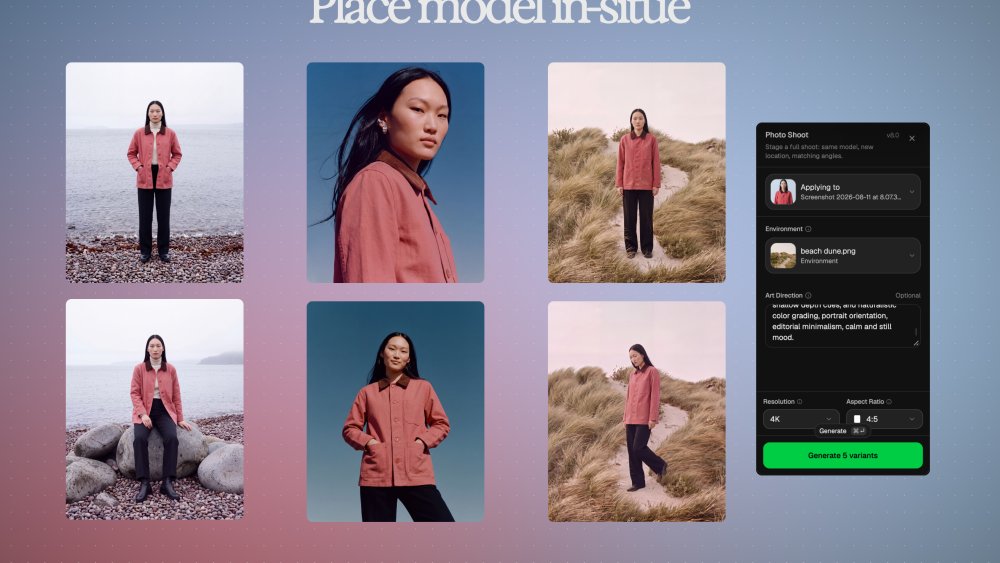
It has been more than three decades since Adobe first started. Before it became the go-to creative suite for any established and aspiring creative the company began in the early 1980s with PostScript, a product that, at its core, could translate a creative idea in a language a computer could understand to do something that was revolutionary for its time: print texts and images on paper.
Now, with generative AIs like ChatGPT, one creative idea can have a thousand iterations, and although this technology has also opened the floodgates to deepfakes and AI slop, its possibilities for creative expression are both undeniable and underexplored. Now is the time for a new creative suite that is made for the age of GenAI, and Flora, a startup which now has over a million users since it started in 2024, believes this is exactly what it is bringing to the market.
“We’re building the new Adobe suite,” Weber Wong, 28-year-old founder and CEO at Flora, told Sourcing Journal. The difference, he said, is that Adobe has a specific software for a particular purpose—such as Photoshop for image manipulation, Premiere for video editing, and Illustrator for vectors—which requires the user to switch between different windows, while Flora integrates all of that into one creative process, a digital canvas called Fashion Studio.
“I wanted to build a creative tool that helped creatives go from idea to their creative vision with as little friction as possible, but without sacrificing creative control—because we believe in great work. We don’t believe in just pumping out slop,” said Wong, who previously left investment banking to pursue a graduate program at NYU that has been described as an art school for engineers and an engineering school for artists. A version of Flora was launched as part of the course.

Flora Founder and CEO Weber Wong
Last week, Flora officially launched Fashion Studio, a digital canvas for the entire workflow of a fashion designer: from ideation and refinement to campaign and presentation. Underneath the surface, the Fashion Studio intuitively harnesses the cumulative power of leading AI models without overwhelming the designer with having to learn a new technology to do the same job. “We want to give creatives the cumulative power of all the models that are there—without needing to know all the models that are there,” Wong said.
There was demand for Fashion Studio even before there was a product. Flora started as a set of professional tools for creatives that accelerates workflows by combining top AI text, image, and video models. It found its first customer in Pentagram, the world’s largest independently owned designed studio, until it eventually found its way to creatives in leading brands such as Nike and Prada. Wong said majority of Flora’s paid users are in the fashion industry, and some of his most sophisticated customers used the tools to improvise a fashion studio, except it was a little too technical in AI know-how to be used by wider teams. Flora saw this opportunity and developed Fashion Studio, a product that was specifically made for fashion teams, with tools that are named after the specific design functions, as opposed to the AI models underneath.
“For Fashion Studio, we don’t even expose the [AI] model. What we do is we take responsibility for what is the best way to sketch to render. We pick the best models, we make the best workflows, and then we just deliver to them in a context they’re familiar with, so they don’t have to worry about that,” he said, noting that more traditional editing features will be added over time.
Flora, which has been recently featured on Forbes’ list of next billion-dollar startups, wants to be the next Adobe, if not more than that. In many ways, the Brooklyn-based startup is part of a new paradigm shift. Whereas before, a designer could spend hours on Adobe Illustrator making one asset out of many layers, now with GenAI, the same artist could make a single piece of media in seconds. Even Adobe has its own GenAI creative studio called Firefly, with one Adobe executives saying that artists will be left behind if they don’t embrace AI.
The difference between the two paradigms is the traditional way of doing things is “deterministic,” while the new one is “probabilistic,” Wong said, which also means the latter can explore a hundred different variations of an idea before refining one.
“But with the traditional way of working, you can’t explore 100 things at once. If you do, you have to move everything around a hundred times,” said Wong. “You’re just doing manual labor.”