dailynewsnblog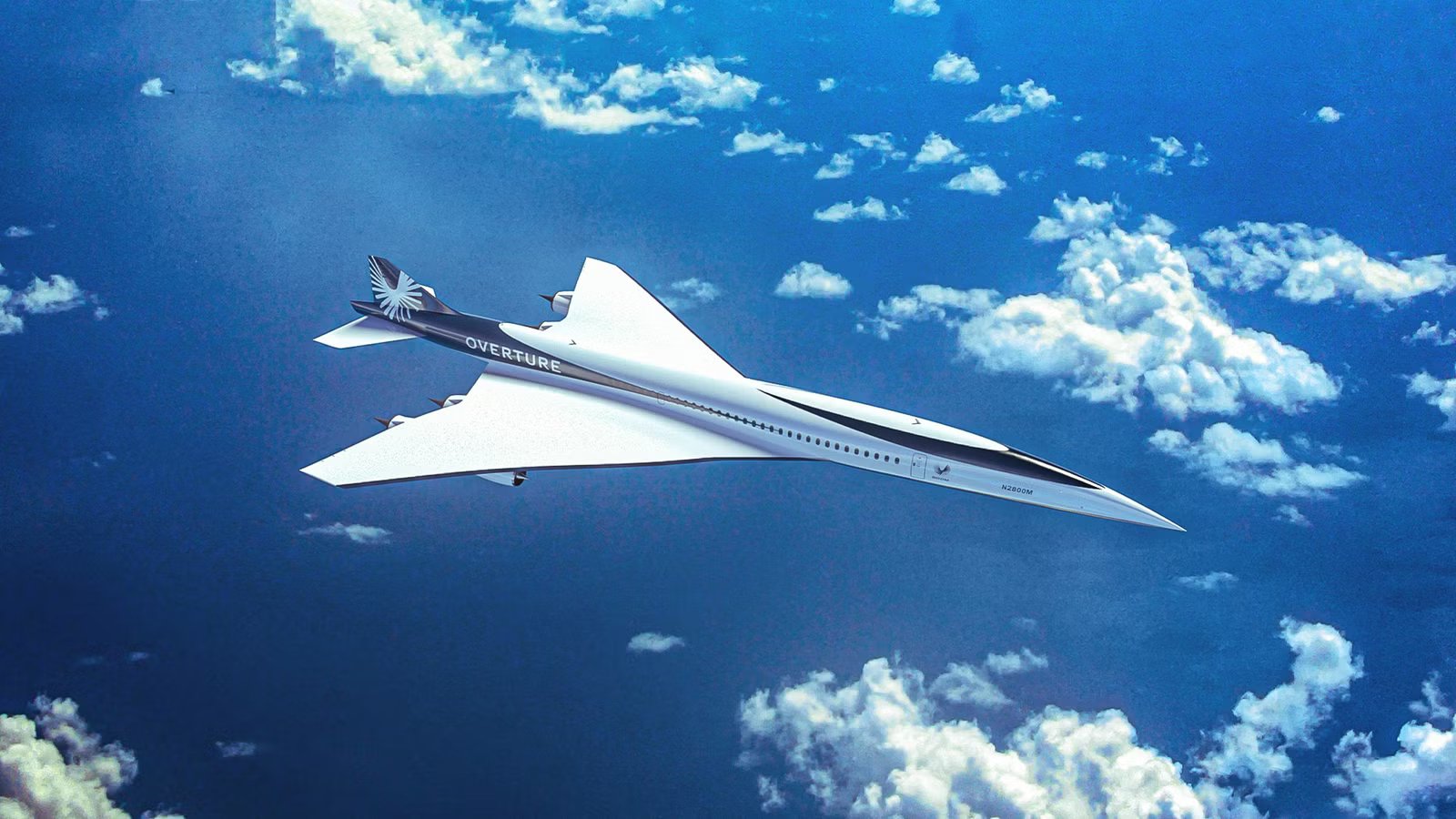
Supersonic passenger flight disappeared from the skies in 2003 when  British Airways and
  Air France retired the Concorde, ending a 27-year era of transatlantic crossings at twice the speed of sound. For the two decades that followed, the technology stalled, held back by a combination of regulatory barriers, unresolved acoustic problems, and a lack of serious commercial investment. That has changed decisively in the past two years.
A presidential executive order has dismantled the FAA’s half-century ban on overland supersonic flight. A privately developed supersonic demonstrator has broken the sound barrier for the first time since Concorde. NASA is actively flight-testing an aircraft designed to solve the sonic boom problem that grounded overland routes in the first place. And a small number of well-funded companies are now advancing commercial supersonic programs with real order books, real factories, and real target dates. The conditions that made supersonic travel impossible to sustain in the twentieth century are not all gone, but the landscape looks more promising than it has at any point since Concorde made its last commercial flight.
The Regulation That Changed Everything

For more than two decades, the regulatory landscape governing supersonic flight in the United States made commercial development of the technology almost impossible to pursue seriously. The FAA’s prohibition on overland supersonic flight, in place since 1973, meant that any viable transatlantic or transcontinental route would have been legally constrained before an aircraft ever left the ground. That changed on June 6, 2025, when President Trump signed an executive order directing the FAA to repeal the overland ban, establish an interim noise-based certification standard in its place, and repeal additional regulations that had been hampering supersonic research and development. The order also directed coordination across federal agencies to advance supersonic programs, signaling that the policy shift was intended as a foundation for sustained investment rather than a symbolic gesture.
The practical significance of the overland ban had always extended beyond American airspace. Because a large proportion of commercially attractive supersonic routes pass over land at some point, the prohibition effectively constrained the economics of the entire category. A supersonic aircraft that had to slow to subsonic speeds over populated areas would lose much of the time advantage that justified its existence, and building a business case around routes that happened to be entirely over water narrowed the viable network considerably. Repealing the ban and replacing it with a noise-based standard was a more logical regulatory framework, one that tied restrictions to measurable acoustic impact rather than a blanket speed threshold.
What the executive order did not do was solve the technical problem the noise standard was designed to address. Supersonic flight over land produces a sonic boom that, at the intensities generated by conventional supersonic aircraft, is loud enough to cause structural damage at ground level and has historically made overland routes politically untenable regardless of their legal status. The interim standard buys time for programs like NASA’s X-59 to demonstrate that quieter supersonic flight is achievable, but it does not guarantee that outcome. For the commercial programs now advancing toward certification, the regulatory door has opened.
Boom Supersonic’s Overture: The Program Closest To The Gate

Boom Supersonic has been building toward commercial supersonic flight longer than any other private program, and in 2025 delivered the milestone the company had been working toward since its founding. On January 28, Boom’s XB-1 demonstrator became the first independently developed supersonic jet and the first civil supersonic aircraft built in America to break the sound barrier, reaching Mach 1.122. The flight was a proof of concept for the aerodynamic and propulsion principles that will underpin Overture, Boom’s full-scale commercial aircraft, and it gave the program credibility it had previously lacked.
The Overture is designed to carry 60 to 80 passengers at Mach 1.7 with a range of 4,250 nautical miles, enough to connect New York and London at roughly half the current flight time while cruising at up to 60,000 feet. Boom’s order book stands at 130 aircraft, including commitments from American Airlines and United Airlines, and its Overture Superfactory in Greensboro, North Carolina, completed in June 2024, is capable of producing 33 aircraft per year.
The caveats are real. The airline commitments from American, United, and JAL are non-binding, and industry analysts have been candid that they represent commercial interests rather than firm capital. Boom has made more tangible progress than any competitor, but the gap between a supersonic demonstrator and a certified commercial aircraft remains significant.

Coast-To-Coast In 3 Hours: How The New Supersonic Bill Could Slash US Flight Times
Supersonic jets could revolutionary coast-to-coast travel in the US.
NASA’s X-59 And The Overland Problem

The overland supersonic ban that Trump’s executive order repealed was not arbitrary. It existed because supersonic flight over populated areas produces a sonic boom loud enough to rattle windows, damage structures, and generate the sustained public opposition that made overland routes politically impossible long before they became legally prohibited. Replacing the ban with a noise-based certification standard only works if aircraft can actually meet that standard, and that is precisely what NASA’s X-59 program exists to test.
Built by Lockheed Martin’s Skunk Works division, the X-59 is designed to fly at supersonic speeds while reducing the traditional sonic boom to what NASA describes as a sonic thump, a significantly quieter pressure wave produced by the aircraft’s elongated nose and carefully shaped fuselage. The X-59 completed its first flight on October 28, 2025, and by April 2026 had completed nine test flights, reaching altitudes of 43,000 feet and approaching Mach 0.95 as part of a gradual expansion of its flight envelope toward supersonic speeds.
The X-59 is a research aircraft, not a commercial prototype, and its findings will be used to inform future FAA noise certification standards rather than enter service itself. If the program demonstrates that quiet supersonic flight over land is achievable at scale, it validates the commercial case for overland routes that companies like Boom are counting on. If it falls short, the network economics of supersonic travel contract significantly, and the business case for the entire category becomes harder to make. Few NASA programs in recent memory have carried more direct commercial implications.
Beyond Mach 2: Hermeus And The Hypersonic Frontier

While Boom and NASA are focused on the Mach 1.5 to Mach 2 range, Hermeus is working on an entirely different order of magnitude. The Atlanta-based company is developing a passenger aircraft capable of Mach 5, a speed at which London to New York would take roughly 90 minutes and Tokyo to Los Angeles would fall under two hours. In March 2026, the FAA issued a Special Airworthiness Certificate for Hermeus’s Quarterhorse Mk 2.1, a test vehicle roughly the size of an F-16, powered by a Pratt & Whitney F100 engine, and nearly three times larger than its predecessor, clearing the way for supersonic flight testing at Spaceport America in New Mexico.
Hermeus is still deep in the research and development phase, and the Quarterhorse program is a technology demonstrator rather than a commercial aircraft program with a defined entry-into-service date. The company’s longer-term roadmap envisions a passenger aircraft called Halcyon, but the timeline between where the program sits today and a certifiable commercial hypersonic jet remains measured in decades rather than years. The engineering challenges involved in sustained Mach 5 flight, including thermal management, propulsion transitions between jet and scramjet modes, and materials capable of withstanding extended hypersonic operation, are categorically more complex than those facing conventional supersonic programs.
What Hermeus represents for this article is less a near-term commercial prospect and more a signal of where the ambition in this space is pointing. If Boom’s Overture is the program most likely to put passengers back above the sound barrier by 2030, Hermeus is the program imagining what the decade after that might look like.

President Trump Signs Executive Order Lifting Ban On Supersonic Flight Over The US
Travel time could once again be cut in half. This could see the entry of supersonic travel by the 2030s.
What Supersonic’s Return Would Actually Mean For Transatlantic Routes

The aircraft programs advancing through testing and certification right now are not designed to replace the modern widebody jet for most travelers. The Overture carries 60 to 80 passengers, a fraction of what a 787 or A350 moves on a typical transatlantic crossing, and the operating economics of supersonic flight at that scale will almost certainly produce ticket prices that place it firmly in the premium category. The more realistic near-term picture is a product aimed at business and first-class travelers on high-yield routes, where the time saving justifies a significant fare premium and the passenger volumes required to fill a smaller aircraft are actually achievable.
The routes that make the most immediate sense are the ones where the Overture’s range works cleanly, and demand is deep enough to support a premium product. New York to London is the obvious anchor, a route that already generates some of the highest yields in global aviation and where cutting flight time from seven hours to roughly three and a half has clear commercial appeal. New York to Paris, Boston to London, and a handful of other North Atlantic city pairs fit a similar profile.