dailynewsnblog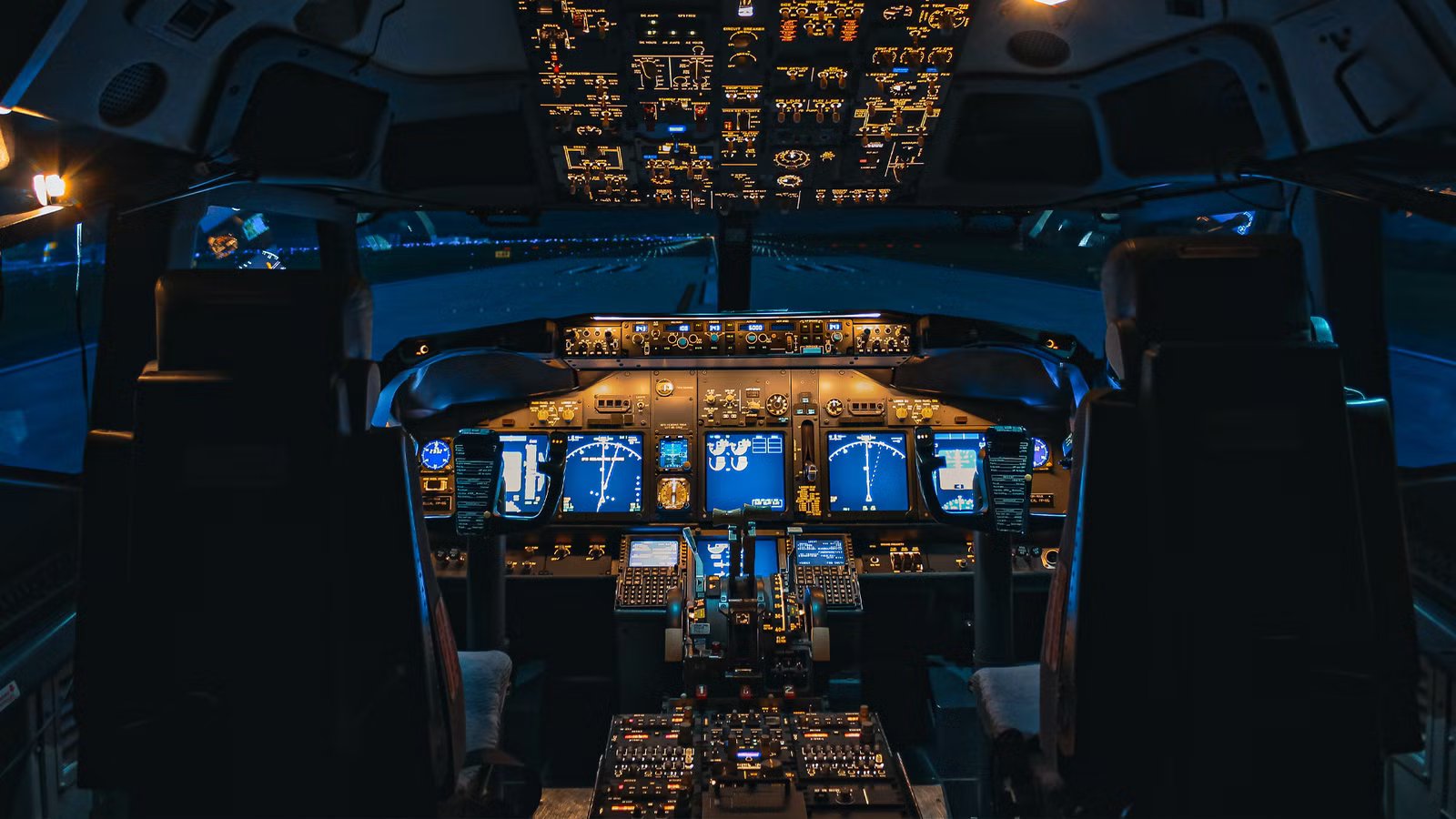
‘Automation’ surprises occur when a pilot is startled by their aircraft’s automated behavior, even if an error isn’t made. Issues occur when crews misread automation feedback and fail to predict the jet’s responses. These safety issues are most prevalent in edge cases, for example during non-standard approaches.
Automation and glass cockpits have reduced pilot workload, but that does not mean they are safer. The changes have ushered in a new risk where the plane does exactly what it is supposed to but still surprises the pilot. The Federal Aviation Administration (FAA) now instructs pilots to keep ‘mentally flying’ their aircraft to maintain an active role, while airlines have introduced surprise scenarios into their training.
The Causes Of Automation Surprise

Veritastech Pilot Academy reports that pilots using automated systems build a mental model of how they expect the aircraft will behave. This is formed from the factors influencing the aircraft that they are aware of, although it is impossible for them to fully know the enormous range of forces acting on their plane at any time. When the aircraft interacts with unknown forces in a way that differs from the pilot’s expectations, it can be worrying. The automation then increases the pilot’s workload while they work to understand the aircraft’s behavior.
The first type of automation surprise is mode confusion. This is where the pilot doesn’t understand which automation mode they are using. Unexpected mode changes happen when the automation suddenly switches logic without warning. Hidden system logic refers to the complex algorithms determining the way an aircraft flies, which are not immediately visible or clear to the pilot.
Automation surprise incidents are more common the less pilots are manually flying the aircraft, which gradually erodes their familiarity. Pilots may also become over-reliant on their plane’s automatic functions, trusting systems without actively monitoring them.
The Problem Is Unsettlingly Common

Shutterstock | Simple Flying
Joris Field, a researcher at the National Aerospace Library, completed a survey of 145 airline pilots. He found that each pilot experiences an average of two mode confusion events per year. Vertical Navigation (VNAV) was the greatest cause of issues, with approaches and landings being the most dangerous times. During this flight phase, pilots have to simultaneously manage altitude constraints, descent profiles, and speed profiles, all while the ground rushes up to meet them.
The FAA has also conducted research into automation surprise, including the “Operational Use of Flight Path Management Systems” report published in 2013, as reported by NBC Bay Area. The table below shows some of the worrying highlights:
Circumstance | Percentage of all |
|---|---|
Accident – pilot caught by surprise | 23% |
Accident – pilot made an error when selecting computer modes | 27% |
Accident – pilot made a manual flight error | 60% |
Safety incident – pilot caught by surprise | 45% |
Safety incident – flight management computer use error | 60% |
The data shows that, while manual flight errors remain an enormously significant cause of safety incidents and accidents, automation-related problems are far too common to ignore. Dr. Thomas Schnell, a University of Iowa researcher working with NASA on the issue, spoke with NBC Bay Area: “Everybody has had a little glitch with the car where they thought that the cruise control was off and then they realize, ‘Hey it’s still on.’ Now make it 10 times as complicated, and that’s what automation in the flight deck looks like. Every once in a while it will catch you in such a way that you didn’t anticipate.”
Automation Surprise Nearly Caused A Disaster In Melbourne

Issues with a plane’s automatic systems behaving in unexpected ways are not only unsettling, but they can also put the jet at risk of a serious accident. This occurred on July 24, 2011, during a passenger flight from Bangkok to Melbourne. The air traffic controller noticed that the Thai Airways Boeing 777-300 was lower than expected during its approach. They advised the pilot to check their altitude, before telling them to go-around. The pilots initially gave no response, and it was a minute before the aircraft began to climb. The crew then completed their go-around correctly and landed safely.
Catch what other flight trackers miss
Emergency squawks, holds, NOTAMs — live signals, no signup.
Open tracker
Catch what other flight trackers miss
Emergency squawks, holds, NOTAMs — live signals, no signup.
Open tracker
The Australian Transport Safety Bureau (ATSB) made a report on the incident. Flight Safety says that the regulator wrote that pilot-in-command, the first officer, “may not have fully understood some aspects of the aircraft’s automatic flight control systems and probably experienced ‘automation surprise’” when the autopilot performed an unexpected pitch change. The ATSB also found that had the pilot taken so long to respond to an air traffic control message about terrain or traffic, a disaster would have been likely. The regulator noted that errors in automatic systems are at least one of the factors in 20% of approach and landing accidents worldwide.
The pitch change became a problem because the aircraft was completing a non-standard approach. The first officer reported that they had not noticed the issue before, but they may not have known it was happening if the aircraft was on or above the expected flight path.
Disaster was averted in Melbourne, but sadly not with Asiana Airlines Flight 214 in 2013. The Boeing 777 crash-landed at San Francisco International Airport (SFO), striking the seawall short of the runway. Three died. Automation surprise led to poor situational awareness and the wrongful expectation that the autothrottle would maintain a safe airspeed.
How Pilots Can Avoid Automation Surprise

Shutterstock | Simple Flying
Airlines and regulators are taking steps to make the kind of issues that almost led to disaster in Melbourne much less commonplace. The FAA’s primary documentation on the problem is the AC 120-71B – Standard Operating Procedures and Pilot Monitoring Duties for Flight Deck Crewmembers. This circular was published in 2017.
AC 120-71B asks pilots to “stay in the loop by mentally flying the aircraft” regardless of whether they have engaged autopilot. Pilots should anticipate each climb, descent, and turn before the autopilot executes it so that they can make any necessary adjustments. They must also maintain instrumentation monitoring as if they were manually flying the aircraft. The key is to avoid assuming that the autopilot has everything in hand.
While this recommendation is about the headspace that pilots should occupy while at work, the FAA also has suggestions for tangible steps to execute. The primary one is verifying the Flight Mode Annunciator with each change that is made on the autopilot mode control panel. This display shows pilots which guidance modes are active at any time. Pilots can use it to confirm that their requested command is being properly performed and make immediate interventions if it is not.
Boeing And Airbus’ Competing Cockpit Philosophies Add More Complexity

The world’s two foremost commercial manufacturers have made things harder for pilots by taking fundamentally different approaches to automated flight. Airbus uses digital envelope protection, which means that the onboard computers protect the aircraft from the pilot. It is impossible for the pilot to take actions that exceed structural and aerodynamic limits. For Boeing aircraft, the pilot has final command authority. All automatic constraints can be overridden if an emergency makes that necessary.
The difference can immediately be seen in the manufacturer’s cockpits. Airbus planes have a small sidestick that transmits electronic requests to the control surfaces. Boeing has stuck with a more traditional central control column. The differences in how pilots fly Boeing and Airbus jets is displayed in the table below:
Feature | Airbus | Boeing |
|---|---|---|
Control location | Outboard sidestick | Floor-mounted between the pilot’s legs |
Feedback | Passive and spring centering | Active feedback (continues to operate on autopilot) |
Crew coordination | Electronic audio and visual alerts during dual input | Physical resistance while other pilot is operating the controls |
Trim management | Fully automatic | Manual speed and stability trim through yoke controls |
Airbus’ philosophy originated in the 1980s. The European firm developed the Airbus A320, with the narrowbody jet aiming to substantially reduce pilot workload and improve safety through automation. It wasn’t until the 1990s, with the Boeing 777, that the American manufacturer engineered its electronic control architecture.
Automation Issues Will Continue

Aviation’s automated systems will only get more advanced in the years to come. Recently developed aircraft like the Airbus A350 use automation to fly increasingly complex routes, manage fuel burn, and perform challenging approaches. Automated systems will continue to improve. However, a reduction in autopilot errors will mean they are more surprising when they come up, and the systems’ complexity will make it even harder for pilots to understand why their jet is behaving in certain ways.
The procedures that have been recommended and developed by the FAA will continue to have importance. Examples include using the flight mode annunciator to verify automated actions and changes. Steps like this will be more of pilots’ role as they take less manual control of the plane.
It’s all about not using autopilot as an excuse to switch off. As the Simple Flying reader Win commented on our article on the FAA’s advice, “Pilots coming from a “private pilot” certificate are used to thinking 20 miles or so ahead. In the corporate and airline business, the pilot better be thinking 100-200 miles ahead…ALL THE TIME.”

![Virgin Atlantic Launches Major New 14-Hour Nonstop Route In 2 Months [Map]](https://dailynewsnblog.com/wp-content/uploads/2026/08/643-virgin-atlantic-boeing-787-9-photosounds-_-shutterstock.jpg)