dailynewsnblog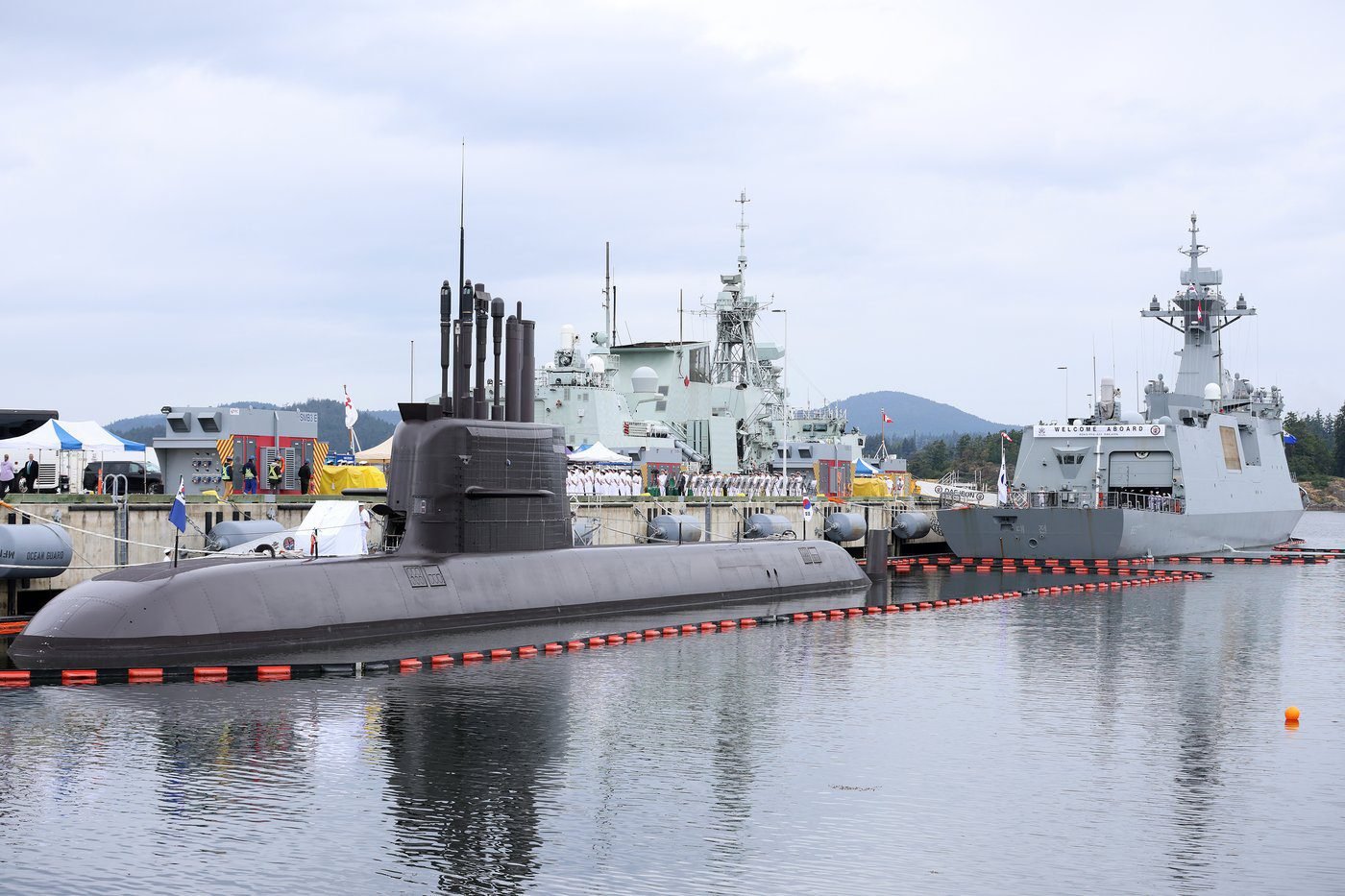
OTTAWA — The new commander of the Royal Canadian Navy, Vice-Admiral Dan Charlebois, told a recent change-of-command ceremony that submarines are the “ultimate deterrent” and Canada’s navy is getting back into the sub game in a big way — “faster than most will believe.”
The federal government is expected to soon name its preferred bidder for a contract to build a modern fleet of submarines to replace the aging Victoria class boats that will be retired by the mid-2030s.
Once those new boats are deployed, the Canadian military will be able to project force in ways it hasn’t been able to in decades — and the nature of its missions could change as a result.
Secretary of State for Defence Procurement Stephen Fuhr told reporters on Monday the government expects to announce its sub decision by the end of the month, “plus or minus a couple of days.”
That means the announcement will land just ahead of the next big NATO alliance summit, set to begin on July 7 in Ankara, Turkey.
“Submarines are a massive deterrent,” Fuhr said. “Any kind of top-tier military on the planet has a submarine capability.”
The Liberal government has said it wants a fleet of up to 12 subs that are stealthy, lethal and have the range and endurance to be deployed to the Arctic.
That will allow the navy to project force in all three oceans and to keep tabs on what countries such as Russia and China are up to in Arctic waters.
The two modern sub designs the federal government is considering — from South Korea’s Hanwha and Germany’s TKMS — represent a major upgrade over Canada’s current fleet.
The new subs are fitted with Air Independent Propulsion, a game-changer for conventional diesel-powered submarines. It allows them to generate power without surfacing or snorkelling, allowing them to remain submerged and undetected for weeks rather than days.
These diesel-electric subs would be outfitted with hydrogen fuel cells and lithium-ion batteries that hold a charge longer than lead-acid batteries.
“They have incredible range because they carry a lot of fuel and they’re really super fuel efficient. They’re like the Toyota Prius of submarines,” said former navy commander Mark Norman, now with the consultancy Samuel Associates.
Norman said the navy would look to deploy these boats to areas like the western Arctic, the waters between Greenland and Labrador, the polar area north of Greenland and the Barents Sea to track who is entering and leaving the Arctic region.
“There’s a lot of Canadian national territory and maritime estate that is in the archipelago, in the approaches on both coasts, Atlantic and Pacific, that need to be patrolled, that need to be surveilled,” he said.
Conventional submarines can’t generate their own atmosphere like nuclear submarines can — meaning they can’t operate far under the polar ice itself. Norman said that’s not really a problem since the Canadian subs would work in tandem with the United States’ fleet of nuclear submarines.
“Most submariners will tell you that the idea of operating under the ice is a pretty frightening one even at the best of times and with the best equipment. The reality is that there are lots of things that can be done in the margins of the ice cap,” he said.
This raises questions about how Canada will go about setting up logistical support in the high North for fuel and other supplies.
The new fleet also will give the navy more arrows for its quiver — including the ability to strike land targets with long-range precision missiles.
“Both submarines are capable of doing that,” said Peter Jones, a professor in the Graduate School of Public and International Affairs at the University of Ottawa.
Key allies, including the United States, the U.K. and France, have submarines capable of launching cruise missiles from sea to land.
The ability to strike shore targets raises unanswered questions about where the federal government might source the missiles — and whether allies will call on Canada to use its subs against shore targets in future missions.
“We’re entering into a relatively small, select group of countries that can do certain things,” said Jones.
“Once you do that, your allies say, ‘Well, OK, where are you then?’ That’s the kind of thing that we need to start thinking about as a country.”
One of the two submarines in competition — Hanwha’s KSS-III — is fitted with a vertical launcher, an extra item of gear that allows it to operate as a mobile launch platform for ballistic or cruise missiles.
“That’s going to make other navies and other nations using those navies more interested in attracting us or asking us to deploy those kinds of capabilities because they’re rare,” said Paul Mitchell, a professor at Canadian Forces College.
“The Canadian government has from a historical perspective … often shied away from things like this because they haven’t wanted those kinds of asks.”
He said even when you take the surface fleet into account, Canada hasn’t had a naval land-attack capability since the 1960s.
The incoming River Class Destroyers will also be able to launch cruise missiles.
Fuhr has said the biggest factor driving the government’s decision-making is the question of which sub contractor is offering the best package of economic spinoff benefits.
He said that’s because the navy made it clear early on that both submarines meet its operational requirements.
This report by The Canadian Press was first published June 22, 2026.
Kyle Duggan, The Canadian Press