dailynewsnblog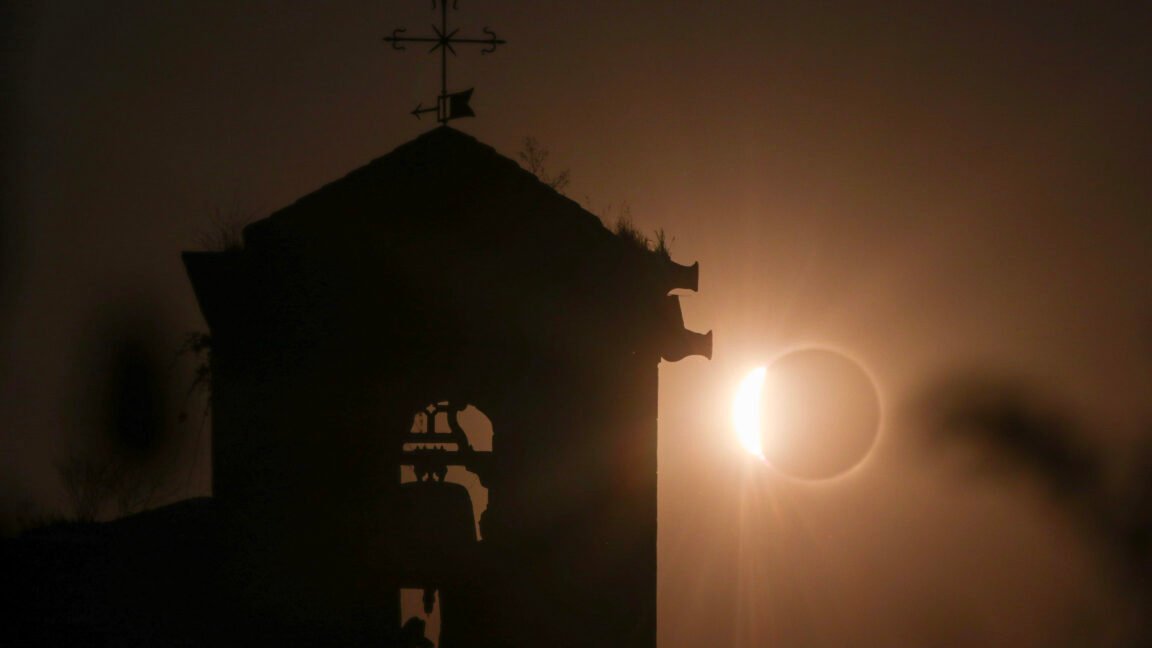
It is also worth scouting for the eclipse ahead of time. A friend and I settled on a rural location in Duratón, Spain, about 60 miles (100 kilometers) north of Madrid. Watching from there would give us a little more than 1.5 minutes of totality with a bucolic landscape anchored by a Romanesque church dating to the 12th or 13th century. We traveled there exactly 24 hours before the eclipse to get an idea of what to expect.
The old Catholic church in Duratón had ample parking and was far enough from sizable towns to escape the largest crowds. But we weren’t alone as eclipse time neared last Wednesday. One hundred or more local residents, tourists, and photographers descended on the church grounds with cameras, telescopes, music, and their favorite libations.
Credit:
Stephen Clark/Ars Technica
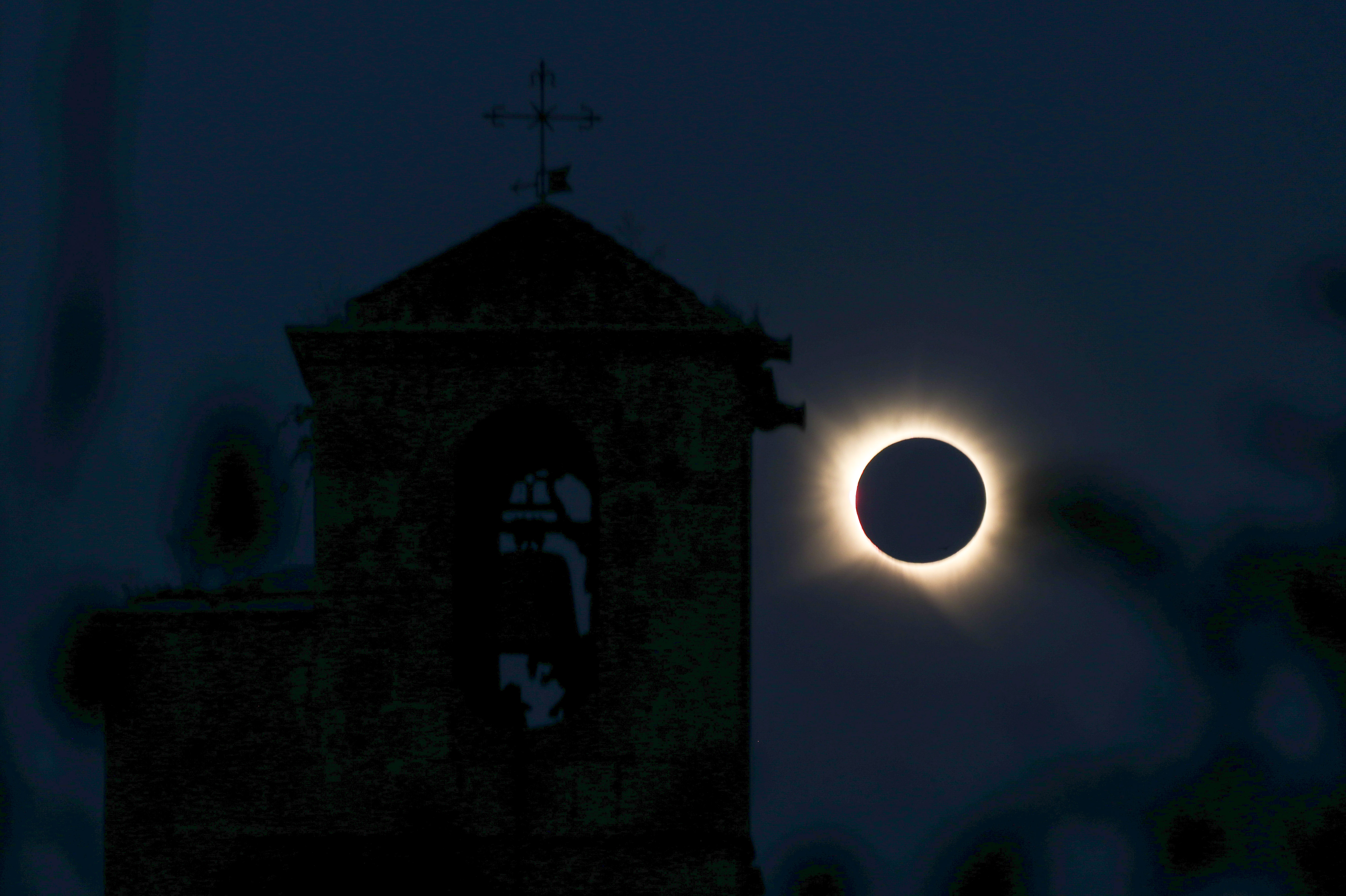
The solar corona over the Church of Our Lady of the Assumption in Duratón, Spain.
Credit:
Stephen Clark/Ars Technica
The setting was, at the same time, ancient and modern, natural and human. The church was built next to a Visigothic cemetery with anthropomorphic rock-cut tombs. Up the hill, about 1,000 feet away, lay the ruins of the Roman city of Confloenta undergoing archaeological study. For a few moments, I thought of how those civilizations in this very spot might have reacted to the splendor—no, terror!—of the Sun suddenly going dark.
By then, it was showtime. Through eclipse glasses, we could see the Moon taking an ever-larger bite from the Sun until, finally, less than an hour before sunset, the lights went out. The church bells rang. The crowds cheered. The Sun’s turbulent outer atmosphere appeared as a ghostly white halo over Duratón’s centuries-old place of worship.
Moments later, Sol’s chariot resumed its fiery march across the sky, just as modern science predicted. No omens, no fear—just another extraordinarily beautiful experience locked into memory. There’s room for more.