dailynewsnblog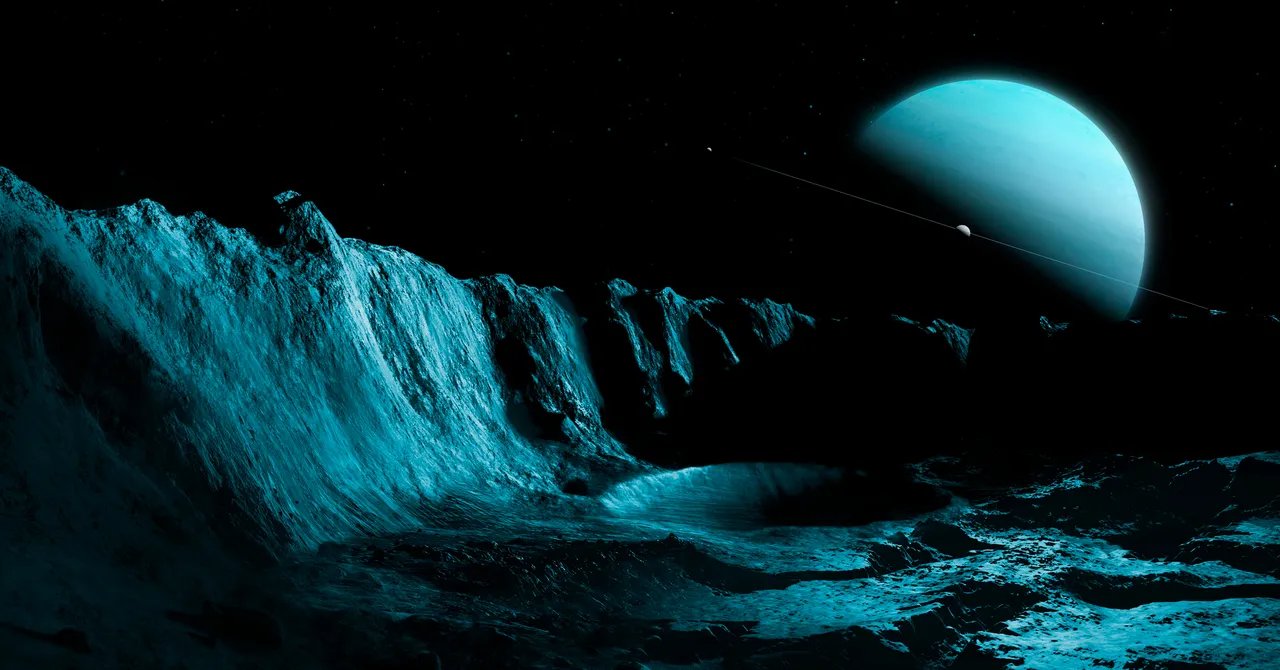
We have an idea of what the solar system’s past was like: It was violent and chaotic. However, we are still studying how violent it was. Current models suggest that at some point after their formation, the giant planets went through a phase of such extreme instability that one or even two bodies the size of Uranus or Neptune were ejected into interstellar space. If that scenario occurred, we may find clues in the most unexpected places in the solar system, such as the moons of Jupiter and, especially, those of Uranus.
A recent article published in Icarus analyzed 122 possible scenarios of such instability to assess how the satellite systems of the “left behind” planets would have reacted. The researchers concluded that it would be extremely difficult to explain the current characteristics of Uranus’ moons without some episode of violent instability. And that type of instability only appears in models where more giant planets existed than we see today.
Most likely, the authors point out, the moons of Uranus were destabilized at least twice in the past: First by the impact that tilted the planet, and then by close encounters between giant planets during the instability. That chaos, fueled by the presence of one or more planets that were later ejected, would have destroyed and rebuilt the system of moons to what we see today.

The Solar System and Chaos
Jupiter, Saturn, Uranus and Neptune did not always have their current positions in the solar system. According to the planetary-instability model, they were born a little closer to the Sun and closer together. After millions of years, they migrated towards their current orbits.
But there are details of this model that do not fit with the observations. For one thing, the current orbits of Jupiter and Saturn are eccentric, while there are specific structures such as the Kuiper belt that seemingly should have prevented Neptune from moving into its current position. In the simulations, the planets did not reach where they are today.
It is therefore possible that the solar system at one point had more planets, and these were the ones that “pushed the others.” Under this hypothesis, the puzzle of the solar system fits better. The problem is, those bodies, if they existed, are gone—they were ejected and left no physical traces or fragments. This leaves the idea of missing planets in the realm of hypotheses, waiting for sufficient evidence to be accumulated to confirm it.
The Unusual Moon
The new Icarus study tested the missing planets hypothesis using the moons of Uranus as direct evidence. It used a total of 122 solar system evolution simulations. In 85 percent of the scenarios, the Uranus moon system collapsed. Only in a handful of scenarios did its moons survive, and, in all of them, the hypothesis of lost and ejected planets fit very well.
The report points to Miranda, the smallest moon in Uranus’ major system. Astronomers consider it to be the most unusual in the solar system. It is patchy, as if sewn together from scraps, too icy for its size, and quite small considering the rest of Uranus’ moons. It is also geologically active.
Astronomers think that Miranda is the debris of a larger body. The study reinforces that idea and proposes that it is the clearest example of traces of planetary instability.