dailynewsnblog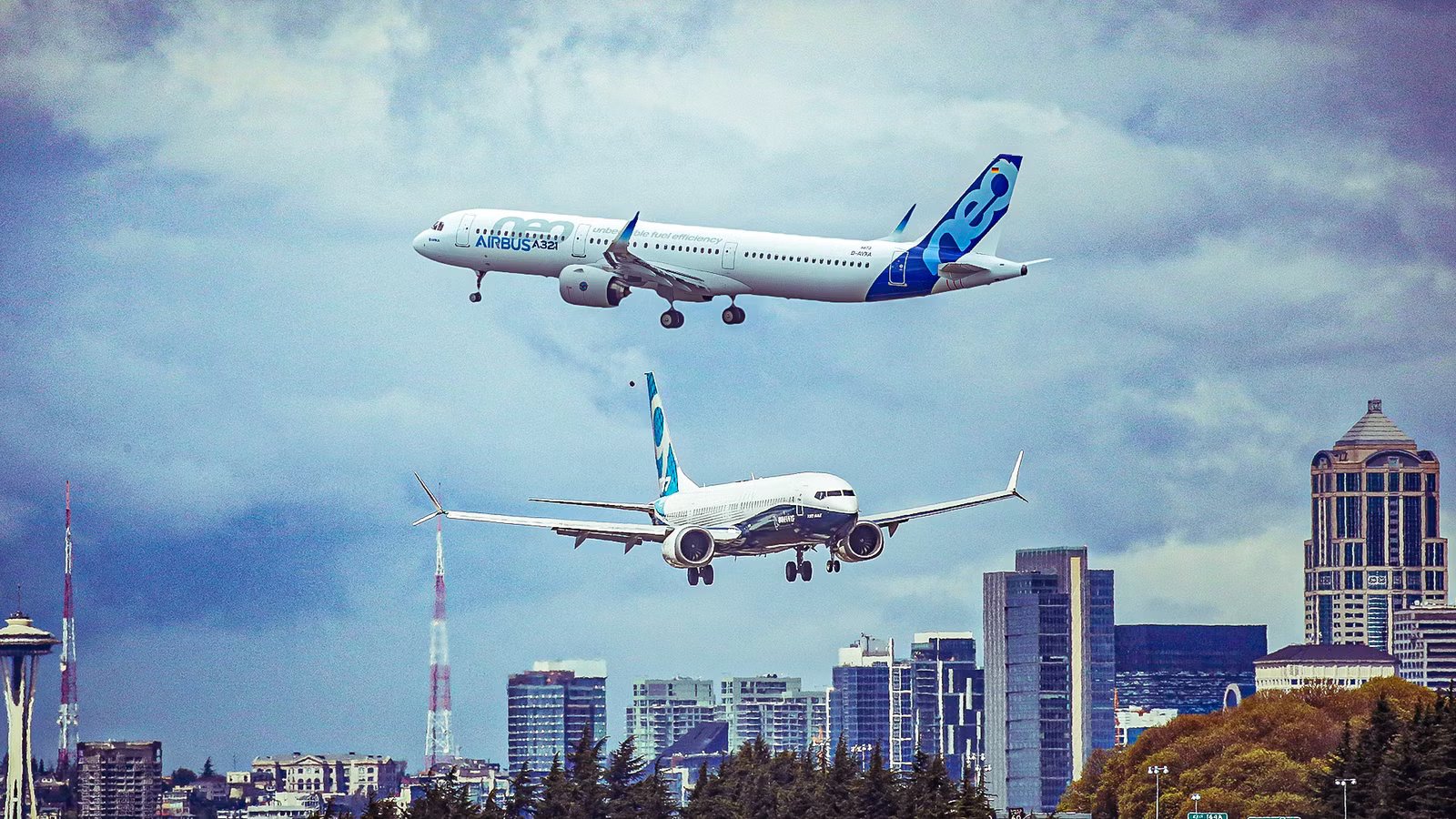
Forget airline CEOs and airframe factories: the true chokepoint in whether the world gets enough new planes is a single-engine program, and one delayed machine in France helps explain why. At the center of this bottleneck sits CFM International, the engine manufacturer jointly owned by GE Aerospace and Safran. Its LEAP engine family has become the default powerplant for the world’s most popular narrowbody aircraft, including the Airbus A320neo and Boeing 737 MAX.
In a global aviation system built on scale, frequency, and efficiency, that dominance has elevated one engine program into a systemic linchpin. The numbers tell the story: CFM is targeting more than 2,000 LEAP engine deliveries in 2026, a record that reflects surging airline demand and unprecedented backlogs at aircraft manufacturers.
However, even as production ramps up, the industry is running into hard physical limits. A 16% drop in Airbus deliveries in Q1 2026, delays to a $175 million forging press, and ongoing component shortages all point to the same conclusion: engine production, not aircraft assembly, is now the primary constraint on global aviation growth.
The Engine That Runs The Narrowbody World

Narrowbody aircraft dominate global aviation, accounting for roughly 70% of all commercial aircraft in service. These jets are optimized for short- and medium-haul routes, making them the backbone of airline networks and the primary driver of passenger volumes worldwide. Their importance has only grown as airlines prioritize frequency, point-to-point connectivity, and rapid turnaround times over long-haul expansion.
In many fast-growing markets, particularly in Asia and low-cost carrier networks, narrowbodies are responsible for the vast majority of capacity growth. Within this segment, the LEAP engine, produced by CFM International, has become the default choice. It powers both the Airbus A320neo family (LEAP-1A) and the Boeing 737 MAX (LEAP-1B), giving CFM a rare dual-platform advantage. This positioning allows it to capture demand regardless of which manufacturer wins an order.
As such, the company is effectively embedded at the center of global aircraft production. This means that fluctuations in LEAP output have direct consequences for both Airbus and Boeing simultaneously, amplifying its strategic importance. The engine’s appeal lies in performance. LEAP delivers approximately up to 15% better fuel efficiency than previous-generation engines, alongside lower emissions and improved operating economics.
Key considerations, such as fuel, can account for 20–30% of airline operating costs. These advantages have translated into market dominance, with LEAP capturing an estimated 60–70% of new narrowbody engine selections. That dominance creates a powerful feedback loop: as more airlines standardize around LEAP-powered fleets, demand for the engine strengthens further, making its production rate not just important, but effectively synonymous with the industry’s ability to grow.
A Record Target Under Pressure

CFM’s ambition to exceed 2,000 engine deliveries in 2026 reflects both confidence and necessity. Airbus and Boeing together hold backlogs exceeding 12,000 narrowbody aircraft, representing years of future production. Airlines are eager for deliveries as travel demand rebounds and older aircraft become increasingly costly to operate.
However, achieving this production rate is extraordinarily complex. Each LEAP engine consists of thousands of precision-engineered components sourced from a global supply chain. Many of these parts require specialized manufacturing processes, long lead times, and strict certification standards, limiting how quickly production can scale.
As a result, even small disruptions can have outsized effects. A delay in one component can halt entire assembly lines, creating cascading bottlenecks. The push toward 2,000 engines is therefore not just a manufacturing challenge: rather, it is a test of the entire aerospace supply chain’s resilience and coordination.
How Much Does The Airbus A320neo Cost In 2026?
This is how much an A320neo costs in 2026.
Airbus Feels The Bottleneck

The impact of engine shortages is already evident in delivery data. Airbus reported 114 aircraft deliveries in Q1 2026, a 16% decline year-over-year, with engine availability identified as the primary constraint. For a manufacturer that typically prioritizes steady monthly output, such a drop is significant, not just statistically, but operationally. It signals that even with strong demand, full order books, and stable assembly capacity, production cannot proceed without a consistent flow of engines.
Aircraft assembly operates on tightly synchronized timelines designed to maximize efficiency and minimize inventory. Engines are among the final components installed, meaning any delay upstream creates a bottleneck at the very end of the process. In practical terms, this leaves ‘gliders,’ fully assembled aircraft without engines, parked at factories awaiting completion. These unfinished jets tie up space, working capital, and logistics capacity, compounding inefficiencies across the production system.
The financial and strategic consequences are substantial. Aircraft manufacturers like Airbus recognize revenue only upon delivery, so even short delays can shift billions of euros between quarters. For airline customers, the uncertainty is equally disruptive. Fleet planning depends on precise delivery schedules, and delays can force carriers to extend leases, defer route launches, or operate older, less efficient aircraft longer than planned, ultimately increasing costs across the aviation ecosystem.
The $175 Million Machine That Isn’t Ready

A critical bottleneck lies in the production of forged engine components, parts that must endure extreme temperatures, rotational forces, and pressure cycles inside modern jet engines. These include turbine disks, shafts, and structural elements that operate in environments exceeding 2,732°F (1,500°C), where even microscopic defects can lead to failure. Manufacturing such components requires not only advanced metallurgy but also immense mechanical force to shape high-performance alloys with absolute precision.
Safran has been developing a $175 million, 33,000-ton (29,937-tonne) hydraulic press capable of producing up to 14,000 precision-forged parts annually. This type of press is among the largest industrial machines in aerospace manufacturing, designed to apply enormous pressure to metal billets, refining their internal grain structure and enhancing strength.
The additional capacity was expected to relieve one of the most persistent choke points in engine production, particularly as LEAP volumes continue to climb. However, the press has been delayed until 2029, creating a multi-year gap in anticipated capacity expansion.
This delay has outsized consequences: without sufficient forging capability, the supply of critical components remains constrained, limiting how quickly engine production can scale. In a system already operating near its limits, the absence of this single piece of infrastructure effectively caps output growth, even as demand for new aircraft continues to accelerate globally.

The Complete Guide To The Boeing 737 MAX Family
Boeing has already built more than 1,700 aircraft from its next-generation narrowbody series.
Billions Have Been Invested, But Constraints Remain

In response to mounting supply chain challenges, GE Aerospace is committing $1 billion in 2026 to expand its manufacturing footprint and strengthen its supplier network. This investment includes upgrades to existing facilities, deployment of advanced production equipment, and initiatives to recruit and train skilled labor. A significant portion is also directed toward supporting key suppliers, many of whom produce highly specialized components.
This ensures that they can scale output while maintaining the strict quality standards required in aerospace manufacturing. A central focus of this investment is improving engine durability. Around $200 million is being allocated to enhance high-pressure turbine components, which operate under the most extreme conditions inside the LEAP engine. By increasing time-on-wing and reducing the frequency of maintenance, these upgrades effectively lower demand for spare engines.
This creates a form of indirect capacity relief, allowing more newly produced engines to go towards aircraft deliveries rather than replacements or overhauls. Despite these efforts, scaling aerospace manufacturing remains a slow and complex process. New facilities can take years to build and certify, while suppliers must undergo rigorous qualifications before contributing to production.
Even with significant capital investment, constraints in specialized processes, such as forging and advanced materials, persist. As a result, while these initiatives will improve output over time, they cannot immediately resolve the deeply embedded bottlenecks limiting engine production today.
Why Engines Define Aviation Growth

The global aviation industry is now constrained not by demand but by supply, and specifically engine supply. Airlines are eager to expand capacity, manufacturers are sitting on record order backlogs, and passenger traffic in many regions has rebounded to, or exceeded, pre-pandemic levels. However, despite this strong momentum, growth is being throttled by a far more fundamental limitation: the number of engines that can physically be produced and delivered each year.
In practical terms, this has shifted the industry’s bottleneck away from final assembly lines and into the deeper layers of the industrial supply chain. Because LEAP engines produced by CFM International power both Airbus and  Boeing narrowbody programs, their production rate effectively sets the upper limit for aircraft deliveries.
If CFM hits its target of around 2,000 engines, that defines how many jets can realistically enter service. If output falls even modestly short, the impact is magnified across both manufacturers simultaneously. This creates a rare single point of constraint in a traditionally diversified industry, where one program’s production cadence dictates global fleet expansion. The implications extend far beyond manufacturing, as airline network planning becomes more conservative when delivery schedules are uncertain.
Meanwhile, leasing companies face tighter aircraft availability and rising lease rates. Environmental goals are also affected, as delays in delivering newer, more fuel-efficient aircraft prolong the use of older, higher-emission models. Until bottlenecks, particularly in areas like forged component capacity and advanced materials, are resolved, the aviation sector will remain bound by a simple industrial truth: it cannot scale faster than its most constrained component, and right now, that component is the engine.