dailynewsnblog
The longest flight operated by US airlines in 2026 is not the one scheduled to take the most time.  United Airlines holds the distance record connecting some US cities with Australia and Singapore, exceeding 15 hours of flight, though the longest flight by distance is not the longest one by time block. We will analyze the routes below.
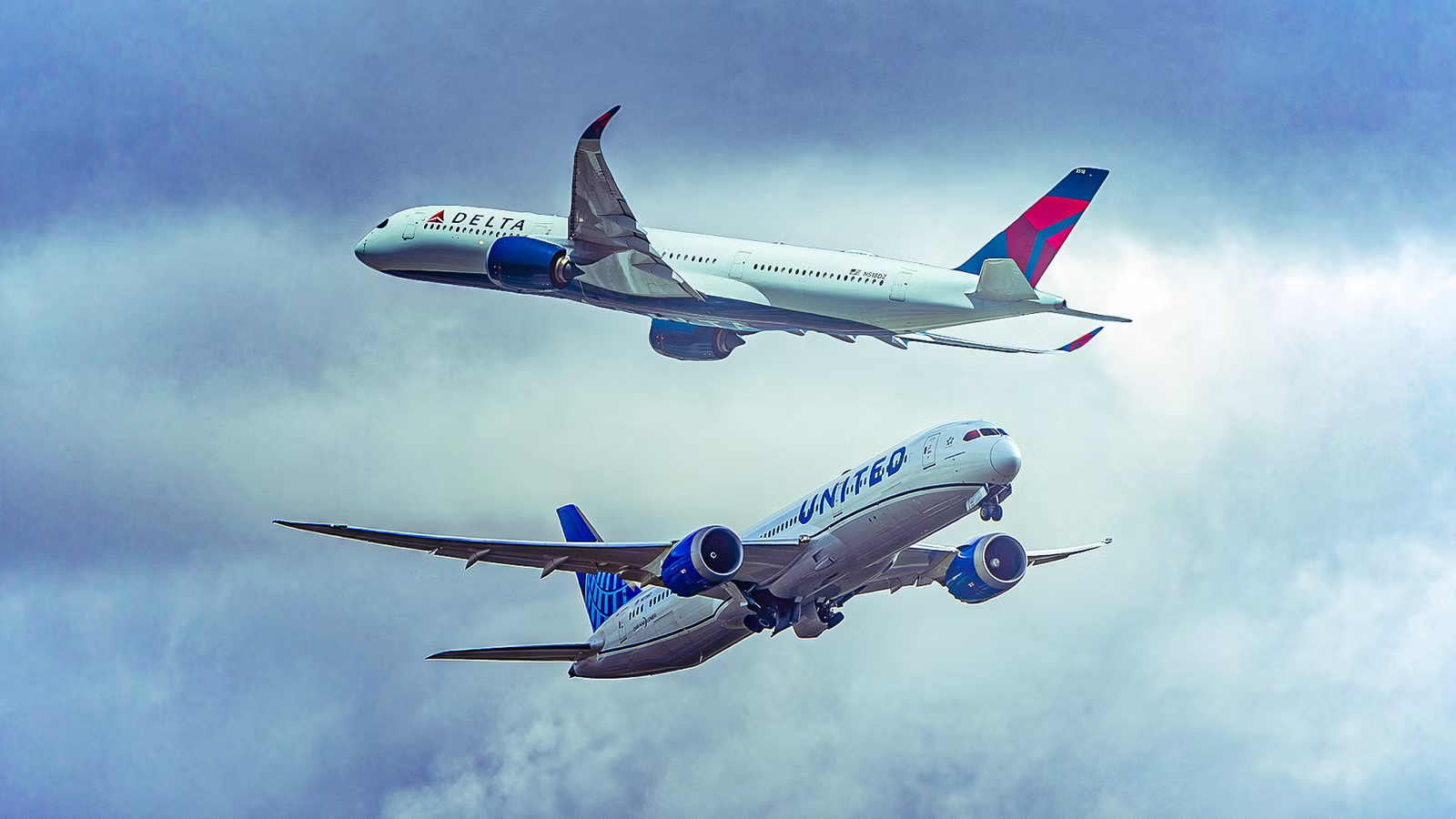
United,  Delta Air Lines, and
 American Airlines operate services that approach 17 hours, using Boeing 787-9s and Airbus A350-900s to connect their hubs with distant markets. What separates their longest routes, how do airlines make flights of this length work commercially, and what would have to change for a US carrier to go beyond today’s distance ceiling?
United’s Houston–Sydney Route Sets The Distance Record

United Airlines operates the longest US-carrier route by distance in 2026:  Houston George Bush Intercontinental Airport(IAH) –
 Sydney Kingsford Smith Airport(SYD), covering 8,596 miles (13,834 km) on a Boeing 787-9. Launched in 2018, the service connects Texas and much of the central and eastern US with Australia without a West Coast connection. Simple Flying’s analysis of Cirium data gives an average stage length of 8,587 miles (13,820 km), while The AU Review cites a great-circle distance of 8,596 miles (13,834 km).
The operation is seasonal and demanding. Simple Flying’s ranking of the world’s longest Boeing 787 flights puts the westbound journey at around 17 hours and the eastbound flight at about 15 hours and 30 minutes, with prevailing winds contributing to the difference. SkySonar’s 2026 schedule analysis lists the route’s return in October 2026 as a daily 787-9 service. Simple Flying’s route analysis counts 154 scheduled flights and 39,578 seats annually in each direction.
That scale makes Houston–Sydney more than a distance record: United must support a very long route with enough demand to justify the aircraft and capacity committed to it. But distance alone does not establish which flight is longest in operational terms. The closest comparison, San Francisco–Singapore, takes longer on the schedule despite covering less ground.
Scheduled Time Gives United A Different Record

United’s  San Francisco International Airport (SFO) – Singapore Changi Airport (SIN) service is scheduled for up to 17 hours and 40 minutes, five minutes longer than Houston–Sydney’s 17 hours and 35 minutes, despite covering 150 fewer miles (241 km). Simple Flying’s analysis of United’s longest nonstop routes illustrates why a ranking by distance can differ from one based on block time.
The difference is not unique to United. Delta’s  Hartsfield-Jackson Atlanta International Airport (ATL) –
 Johannesburg O.R. Tambo International Airport (JNB) service covers 8,433 miles (13,572 km) and is scheduled for up to 17 hours and five minutes, while American’s
 Dallas/Fort Worth International Airport (DFW) – Brisbane Airport (BNE) route covers 8,299 miles (13,355 km) and can take 17 hours and 15 minutes. Simple Flying’s Delta route analysis and its comparison of new ultra-long American, United, and Delta flights place all four services within 297 miles (478 km) by distance and 35 minutes by maximum scheduled block time.
Block time measures the scheduled period from gate departure to gate arrival, not simply time spent airborne. Winds, routing, and schedule padding can change them. Simple Flying’s ranking of flights approaching 19 hours also lists Houston–Sydney at 17 hours and 35 minutes for September 2026 to March 2027. The rankings are close, but the airlines do not use identical aircraft or cabin layouts. Delta’s A350-900 is the only Airbus among the four, raising the question of how each carrier configures its aircraft for these demanding routes.
Aircraft Configuration Shapes Each Airline’s Longest Routes

Delta’s Atlanta–Johannesburg route is its longest, at 8,433 miles (13,572 km), followed by Atlanta– Cape Town International Airport (CPT) at 8,127 miles (13,079 km), according to Simple Flying’s guide to Delta’s longest flights. Delta’s 275-seat A350-900 layout has fewer seats than its standard 306-seat configuration, as described in Simple Flying’s breakdown of Delta’s ten longest routes. A lower-capacity, premium-focused cabin can reduce payload demands, a relevant consideration for flights involving Johannesburg’s high-altitude airport.
American concentrates several long-haul routes through Dallas/Fort Worth. Brisbane, at 8,299 miles (13,355 km), is its longest nonstop flight and its longest-ever route; it launched on October 26, 2024, exceeding the former Dallas/Fort Worth–Hong Kong record by 2.2%, according to Simple Flying’s ranking of American’s ten longest routes. American’s next longest routes from DFW are  Auckland Airport (AKL) at 7,439 miles (11,972 km),
 Shanghai Pudong International Airport (PVG) at 7,351 miles (11,830 km), and Seoul Incheon (ICN) at 6,842 miles (11,011 km). United’s longest services, by contrast, are spread across Houston and San Francisco, with Los Angeles–Sydney covering 7,487 miles (12,049 km).
These choices show how hub strategy and aircraft configuration work together: airlines need both a viable nonstop aircraft and a network that can feed the route. The aircraft also has to carry fuel, passengers, baggage, and cargo over a very long sector. That leads to the commercial question behind the cabin layouts: how can an airline make a flight lasting more than 17 hours pay?
Catch what other flight trackers miss
Emergency squawks, holds, NOTAMs — live signals, no signup.
Open tracker
Catch what other flight trackers miss
Emergency squawks, holds, NOTAMs — live signals, no signup.
Open tracker
Premium Cabins Help Make Ultra-Long-Haul Routes Viable

One way to improve the economics of an ultra long haul flight is to sell fewer seats at a higher average fare rather than maximize passenger capacity. American’s specially configured Boeing 787-9P has 244 seats, including 51 business-class suites, compared with 285 seats and 30 Flagship Business seats in the standard 787-9. Simple Flying’s analysis of American’s longest-ever flight describes the premium-heavy configuration used on Dallas/Fort Worth–Brisbane and Dallas/Fort Worth–Auckland.
Delta makes a similar trade-off with its 275-seat A350-900 layout, compared with 306 seats in the standard version. United also relies heavily on the 787-9 across its longest routes; SkySonar’s 2026 analysis identifies the type on at least one leg of each of its ten longest ultra-long-haul routes. The underlying constraint is payload: the aircraft needs fuel and reserves while carrying passengers and their baggage, plus any cargo the airline can accommodate.
A premium-focused cabin does not guarantee profitability, but it changes the revenue and payload equation. A route must attract enough high-paying demand to justify the aircraft, while its range and payload limits constrain how much it can carry.  Singapore Airlines‘ much longer Singapore–New York service shows what happens when an airline takes this specialization further. Why, then, have US carriers not crossed the 9,000-mile threshold with their current scheduled routes?
The 9,000-Mile Barrier Reflects Fleet And Market Choices

The world’s longest scheduled nonstop flights extend beyond the US carrier leaders. Singapore Airlines’ Singapore–  New York JFK Airport (JFK) route covers approximately 9,537 miles (15,348 km), according to One Mile at a Time’s ranking, around 941 miles (1,514 km) farther than United’s Houston–Sydney. Singapore Airlines operates it with the Airbus A350-900ULR, a specialized ultra-long-range variant built for this kind of mission.
The comparison reflects a combination of aircraft capability, cabin configuration, demand, and commercial strategy. A technically feasible route still needs a viable market, and the aircraft must carry the fuel required for the journey while retaining enough payload for passengers and baggage. The current US ranking is concentrated on the 787-9 and a standard A350-900, even without a dedicated ultra-long-range type like Singapore Airlines’ A350-900ULR.
Qantas Project Sunrise could push the boundary further, with specially configured Airbus A350-1000s intended to connect Sydney and Melbourne directly with London and New York. For US airlines, the question is whether a longer-range aircraft or a new premium-demand opportunity would justify a route beyond the current leaders. The Pacific is already a competitive arena, but fleet plans and announced schedules, rather than theoretical range alone, will determine whether a US carrier attempts the next step.
The Next Longest Flight Record Depends On The Next Fleet Decision

The next change in the ranking is likely to be determined by a concrete fleet or network decision, not by the current distance figures alone. United’s Houston–Sydney service is listed as returning in October 2026 in SkySonar’s schedule analysis, while American’s Brisbane block time varies by schedule period despite the route’s distance remaining fixed. Seasonal schedules can shift the time ranking even when no airline adds a new route.
Delta’s fleet plans could also change the comparison. Simple Flying’s analysis of Delta’s longest routes has discussed the A350-1000 in the context of the carrier’s potential long-haul development, but a new record should not be assumed until a specific aircraft deployment or nonstop market appears in announced plans and schedules.
The decisive test is whether one of the US carriers can identify a market beyond roughly 8,600 miles that supports the necessary premium demand and payload trade-offs. The next winter schedule will show whether United retains its lead; a longer-term fleet commitment will reveal whether any US airline is prepared to challenge the distance ceiling.