dailynewsnblog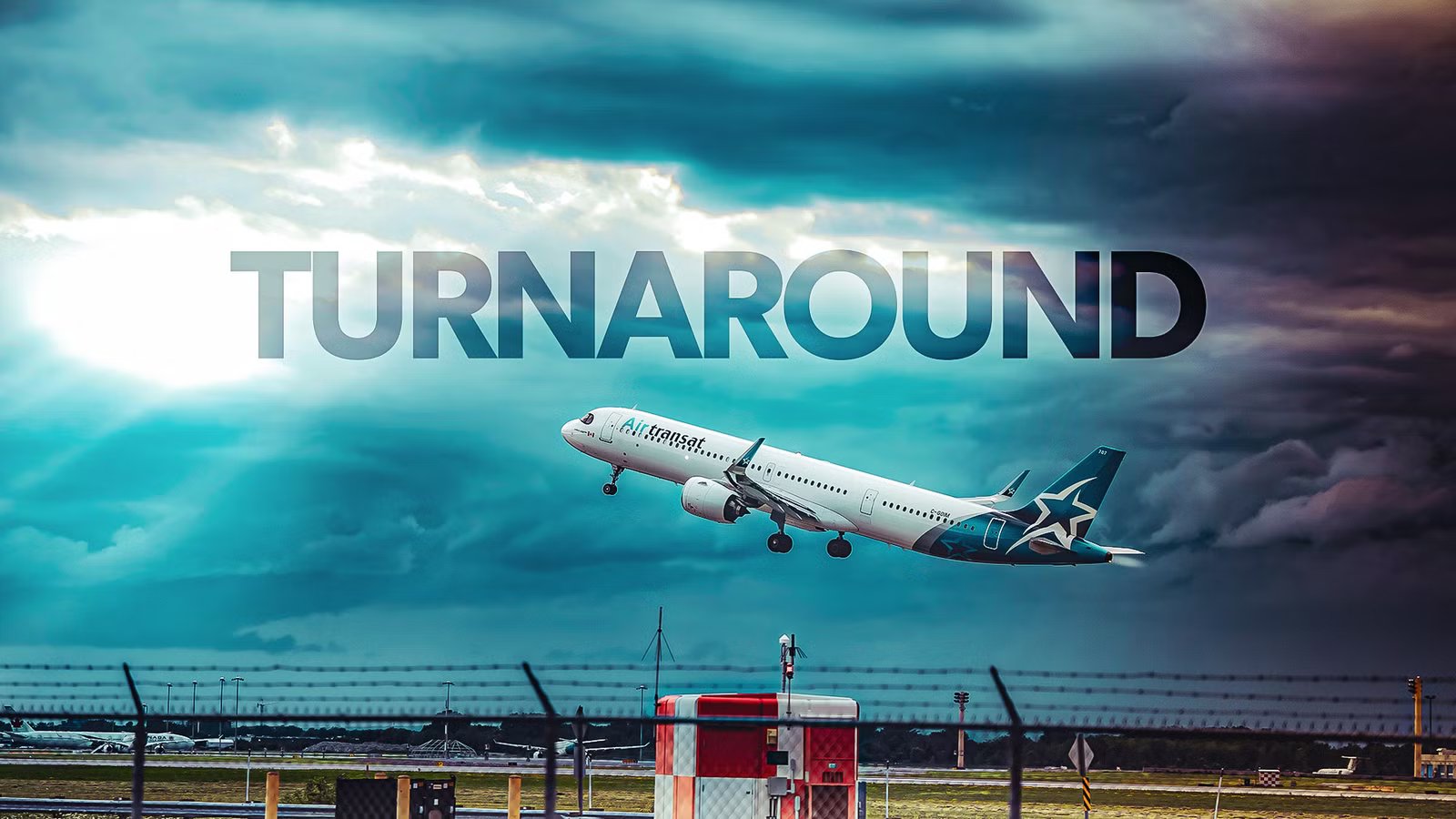
For many Canadians, Air Transat is something of a household name, connecting the country with holiday destinations across Europe, the Caribbean, and Latin America. In 2025, Skytrax named it the “World’s Best Leisure Airline” for the seventh time, while management has increasingly emphasized its transformation from a traditional point-to-point leisure airline into a more network-oriented carrier. This forms part of a broader attempt to reinvent the company following several years of severe financial pressure.
In 2025, parent company Transat A.T. reported its first full-year profit since 2018, recording a seemingly healthy net profit margin of 7.12%. However, this figure does not tell the full story, as the result included a C$345.3 million accounting gain related to the restructuring of government debt. Its operating margin, which provides a clearer indication of the underlying business’s profitability, was a razor-thin 0.29%.
Although Air Transat is not a conventional low-cost long-haul airline, some of the structural similarities are difficult to ignore. Its limited premium offering, dependence on price-sensitive leisure traffic, and extensive network of relatively thin long-haul routes leave it exposed to many of the same challenges that have undermined previous attempts to make the low-cost long-haul model sustainably profitable.
When Did Air Transat’s Financial Struggles Start?

Before 2025, Air Transat’s last year of profitability was in 2018, with rising costs increasingly impacting the bottom line in the following period. By 2019,  Air Canada had reached an agreement to acquire the Montreal-based leisure carrier, a deal that was intended as a strategic consolidation rather than a full-scale rescue plan.
After the outbreak of the global pandemic, Air Transat suspended flying for 112 days, revenues collapsed and the proposed Air Canada transaction was renegotiated, reducing the value by over 70%. The takeover was terminated on April 2, 2021, after it became clear that European Commission approval could not be secured. Later that month, Air Transat received access to C$700 million in emergency funding from the Canadian government.
Following two more suspensions of operations and additional government-backed debt financing to overcome them, 2023 was the first year when things started to truly improve. The Canadian carrier narrowed its operating loss while free cash flow turned positive again, underscoring the viability of the underlying business. In 2024, recovery stalled as Pratt & Whitney GTF engine issues grounded several A321LRs. The replacement capacity was costly, and market conditions were weakening yields as airlines deployed more capacity.
In September 2024, with market recovery proving insufficient to restore structural profitability, Transat launched its Elevation Program to structurally turn around the business and achieve sustainable profits.
How Is Air Transat’s Elevation Program Working Out?

Air Transat launched the Elevation program in September 2024 as part of a wider effort to improve efficiency, reduce costs, strengthen revenue, and support its financial recovery. The airline aimed to generate a C$100 million annual improvement in operating income (adjusted EBITDA) within 18 months through measures including organizational changes, operational improvements, tighter cost control, and new revenue initiatives.
In its quarterly report for the period ending April 30, 2026, Transat confirmed that the program had been completed, stating that “substantially all of the initiatives identified have been implemented, achieving the target of a $100 million impact on adjusted operating income by mid-2026.“ Management later clarified that the full benefit had been captured over the previous 12 months. However, this does not mean that Transat reported a straightforward C$100 million increase in earnings during a single financial year. Instead, it represents the company’s estimate of how much better its results were because of the Elevation measures.
While the turnaround program has arguably strengthened Air Transat and laid the foundations for a more profitable business, management’s statements alone do not conclusively prove that Elevation’s targets have been achieved on a sustainable basis. External pressures also continued to weigh heavily on the company’s financial performance during the second quarter of its fiscal year.
Air Transat Q2 Results Comparison | |||
|---|---|---|---|
Metric | Q2 2025 | Q2 2026 | YoY change |
Revenue | C$1.031 billion | C$1.028 billion | -0.3% |
Adjusted EBITDA | C$98 million | C$21 million loss | -121.4% |
Net result | C$23 million loss | C$79 million loss | 243.5% |
Net profit margin | -2.2% | -7.7% | -5.5 points |
Jean-François Pruneau, Transat’s Chief Financial Officer, commented: “Second-quarter adjusted EBITDA declined significantly year-over-year, driven primarily by the surge in aviation fuel costs and the prolonged suspension of flights to Cuba. Profitability was further affected by lower financial compensation from Pratt & Whitney related to the ongoing engine issue, as well as higher salaries and benefits resulting from the new collective agreement with our pilots.”
How Is The Joint Venture Between Air Transat And Porter Airlines Working Out?

Strengthening its commercial joint venture with Porter Airlines has also been an important part of Transat’s wider turnaround strategy. Although the partnership between the two Canadian carriers was announced in 2023, before the Elevation program was introduced, it remains a key pillar of Transat’s efforts to expand its network, improve connectivity, and support revenue growth.
The partnership allows Air Transat to benefit from Porter’s domestic network, which serves as a feeder for its long-haul routes. In an interview with AeroTime in October 2025, Chief Operations Officer, Marc-Philippe Lumpé, explained, “It is probably the most natural tie-up that you can think of, because Porter does things that we don’t do, and we do stuff that Porter doesn’t,” continuing to explain “there’s literally no overlap, but we can help each other. They can feed into Toronto and Montreal for us, and we take those passengers on long-range routes”.
More recently, Chief Revenue Officer, Sebastián Ponce, explained to ch-aviation that the partnership is also helping to mitigate seasonality by generating additional feed. “To give you an example, in the month of May we are increasing our capacity by 15%, while in the peak we are just increasing by 1%. So the connecting flows are strong and improving.“
How Will Air Transat Replace Its Aging A330 Fleet?

One of the key strategic questions for Air Transat in the coming years is how the airline will replace its aging fleet of Airbus A330 aircraft. Currently, the carrier operates 13 A330-200s and two larger -300s, with an average age exceeding 20 years. While these older planes are not as efficient as newer widebody aircraft, they do come with a strategic benefit for Air Transat.
Since Air Transat’s network is highly seasonal, the low ownership costs of the old dry-leased aircraft allow the leisure carrier to offset low utilization during selected periods. Nevertheless, rising maintenance costs due to more frequent heavy maintenance checks and higher fuel burn will, at some point, outweigh the low ownership costs. That’s why the company plans to transition away from these older airframes between 2029 and 2032.
Chief Revenue Officer Ponce commented on its aircraft in interview with ch-aviation during the IATA Annual General Meeting in Rio de Janeiro earlier this year.
“At a point in time, we will need to replace our A330s. So even though we are very happy about them because they’re low-cost old aircraft that fit very well into our seasonality, at a certain point around 2029–2032, we will be in need of replacing them. So we’re working on that, how to replace them.”
It will be interesting to see how Air Transat decides to replace its A330 fleet, as the higher ownership costs of the newer jets also mean the aircraft will need to be deployed more during the low-demand season to offset them, creating the need to find new profitable growth markets. However, the new aircraft will allow the carrier to more effectively compete head-on with competitors that do operate newer, more efficient aircraft.
Deliveries of four Airbus A321XLR aircraft are also expected to begin in 2027 and continue into 2028. According to Ponce, the narrowbody aircraft will allow the airline to strengthen its presence in thinner transatlantic markets that cannot support widebody operations. “We believe it’s a great aircraft that will improve around 15% range of the LR. So that will add some new destinations, particularly in Europe, where we can go for thinner markets farther away.” Moreover, the aircraft is expected to improve economics on existing long-haul routes where the A321LR faces payload restrictions, resulting in empty seats.
Will Air Transat Succeed In The Coming Years?

Air Transat now appears better positioned than it was a few years ago. The Elevation program has reduced costs, improved commercial discipline, and created a stronger operating foundation, while the partnership with Porter Airlines is expanding connecting traffic and helping the carrier reduce seasonality across its network.
However, the airline has not yet demonstrated that these improvements can consistently deliver strong profits. Fuel prices, engine-related disruption, higher labor costs, and continued exposure to volatile leisure markets remain significant risks. The eventual replacement of its low-cost A330 fleet will also require Air Transat to balance the efficiency benefits of newer aircraft against considerably higher ownership costs, making this decision central to its long-term success.
The wider premiumization of the airline industry could create another challenge. If the trend continues, Air Transat may eventually need to introduce a true business class product, following leisure-focused competitors such as Germany’s Condor.
The coming years will therefore be decisive. If Transat can translate its partnerships, fleet renewal, and operational improvements into sustainable margins, it could emerge as a stronger and more competitive airline. However, until those gains are reflected in several profitable years without major accounting benefits, its turnaround should still be viewed as promising rather than complete.