dailynewsnblog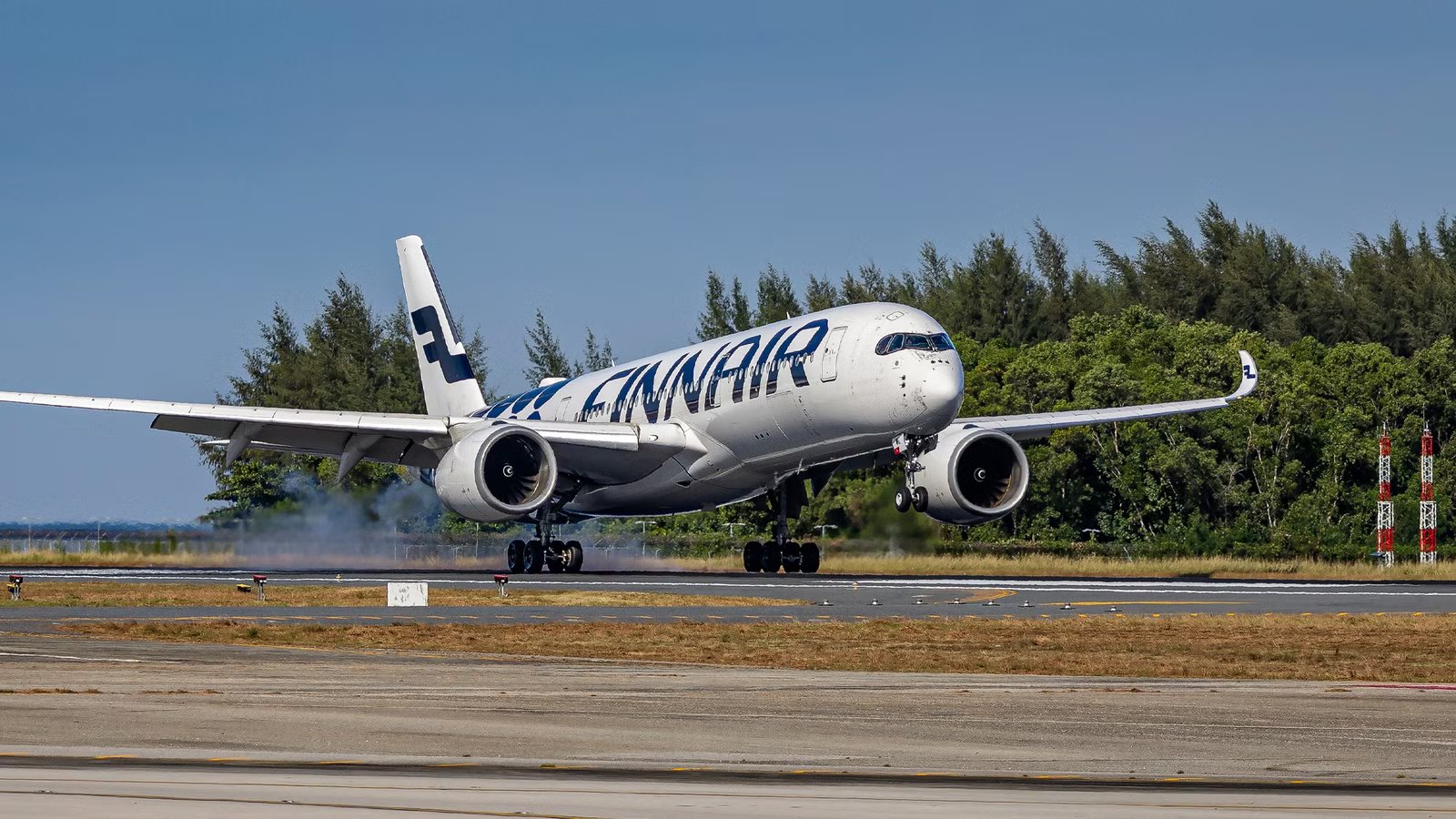
Traveling in business class within Europe is notoriously underwhelming, defined by the ubiquitous Euro-business model where an identical economy row blocks the middle seat to afford a modicum of extra shoulder room. However, an elite network loophole allows aviation-savvy travelers to experience full international luxury on flights lasting under three hours. For the Summer 2026 season, this operational shortcut is more active than ever, offering passengers a unique playbook to sample widebody flagship aircraft equipped with authentic lie-flat suites for the price of a standard regional ticket.
This high-comfort anomaly does not exist because airlines are feeling generous; rather, it is driven by the strict mathematical constraints of hub-and-spoke airline scheduling and underlying commercial demands. When heavy widebody platforms arrive from long-haul intercontinental journeys, they frequently face extended idle periods before their next long-distance missions. Rather than letting multi-million-dollar assets sit empty on airport tarmac, network planners route these massive aircraft on quick European rotations, opening up a high-value loophole that frequent flyers can regularly exploit.
The True Justification For Using These Aircraft Types

Using a widebody jet on a regional European sector on the surface seems very uneconomical. That judgment is correct, meaning substantial operational justification is needed for this to happen. Twin-aisle aircraft are intrinsically optimized for high-altitude, long-distance cruising, meaning that the frequent cycles of pressurized takeoffs and landings on a short-haul route induce rapid mechanical wear and tear. Despite these high operational costs, prominent legacy carriers routinely deploy their largest long-haul fleets to close-range European destinations to balance their complex network grids.
The most dominant economic driver behind these short flights is strong under-floor belly cargo demand between major industrial and logistics hubs. During the peak Summer 2026 schedule, airlines like  Iberia utilize their flagship Airbus A350-900 platforms between
  Madrid(MAD) and
  London Heathrow(LHR) specifically to move high-priority freight that would easily overwhelm the cargo holds of standard narrowbody planes. The robust, under-the-wing commercial revenue offsets the steep fuel burn of operating a massive long-haul aircraft on a short flight, allowing the airline to sell premium passenger seats as a highly profitable secondary product.
Beyond just freight, these short-haul widebody rotations are essential for maintaining strict crew training currencies and keeping maintenance schedules running smoothly. Flying a long-haul aircraft on two-hour hops allows airlines to cycle their flight crews through required takeoffs and landings without deploying empty positioning aircraft.  British Airways did exactly this using its Airbus A380 aircraft to
  Frankfurt (FRA) during 2021 for crew training and familiarization purposes. Additionally, these quick regional runs safely bring long-haul aircraft back to a primary hub facility for scheduled technical checks, ensuring the fleet remains in perfect shape for its next ultra-long-haul journey across the Atlantic or into the East Asian market.
Competing Closer To Home

Main-hub positioning accounts for a large portion of short-haul widebody operations, but an entirely separate regulatory mechanism known as fifth-freedom traffic rights opens up another premium layer of travel. These legal frameworks allow an international airline to land in a European city, disembark passengers, and then board fresh travelers before continuing to a second European destination. For frequent flyers, these unique segments offer a rare opportunity to sample elite international airline service without crossing an ocean.
International mega-carriers frequently use these tag-flights to maximize aircraft utilization and gain a foothold in restricted European aviation markets. Travelers can routinely book world-class business class cabins on brief hops between major continental gateways, enjoying premium long-haul amenities on regional routes. These distinct schedules create a fascinating competitive dynamic, giving local European legacy carriers the chance to compete directly against international premium products on their own home turf.
Finding a seat on these specialized routes is of immense value for frequent flyers looking to maximize their airline miles or cash layouts. These brief tag flights operate on regional pricing scales, so passengers can experience top-tier long-haul business class seats for a fraction of the cost of a typical intercontinental premium ticket. It creates a highly rewarding loophole for mileage redemptions, enabling travelers to obtain high-end seating, priority airport lounge access, and increased baggage allowances on a standard regional itinerary.
Catch what other flight trackers miss
Emergency squawks, holds, NOTAMs — live signals, no signup.
Open tracker
Catch what other flight trackers miss
Emergency squawks, holds, NOTAMs — live signals, no signup.
Open tracker
Giving Passengers A Unique Experience

The value gap between a standard regional business class seat and a true long-haul widebody cabin becomes immediately obvious upon stepping onto the aircraft. A standard narrowbody jet restricts premium passengers to a standard economy seat with an empty middle cushion, whereas a twin-aisle aircraft offers a completely reimagined spatial experience. Passengers that are lucky enough to get on one of these widebody-operated flights move from cramped, single-aisle cabins to sprawling widebody layouts that feature specialized privacy shells and direct aisle access for every seat.
A prominent example of this premium hard product offering during the Summer 2026 season is Finnair’s regular widebody deployment between London Heathrow and Helsinki(HEL). Operating daily flights with its flagship A350-900, the airline gives regional passengers full access to its innovative Collins Aerospace AirLounge business class cabin. Arranged in an unconfined 1-2-1 layout, this unique seat features a fixed-shell design that completely abandons traditional mechanical recline; instead, passengers lounge or create a spacious flat surface by lifting an integrated floor flap, using custom cushions to sit at almost any angle.
The physical seat remains a stellar upgrade, but travelers must anticipate specific service adjustments when sampling a long-haul hard product on a short-haul flight. Airlines do not provide full international amenities, meaning the thick mattress pads, plush duvets, and extensive amenity kits typical of transcontinental journeys are absent on two-hour hops. Furthermore, the dining experience remains tailored to regional schedules, swapping multi-course, long-haul dining for a streamlined, single-tray hot meal service.
How To Find These Special Flights

Finding these elite aircraft on short flights takes a bit of looking around and an understanding of where to actually look for them. Airlines do not actively market these operational quirks, so finding a seat relies on seasonal schedule adjustments and using booking aggregators. The easiest way is to identify routes that serve as positioning links or heavy cargo pipelines between key logistical centers.
When searching for flights on comparison engines, the listed aircraft type is always the most important thing to look for, rather than the fare. During the Summer 2026 scheduling season, SWISS is deploying its brand-new A350-900, complete with the ‘SWISS Senses’ cabin, on brief intra-European routes. The advanced layout is available on the 283-mile (455 km) hop from Zurich to Prague on flight LX1484, or on routes to Düsseldorf. It serves as an excellent contrast to fifth-freedom routes, such as  Singapore Airlines flight SQ378, which runs between Milan and Barcelona covering 449 miles (723 km). However, travelers have only one summer left to enjoy this legendary service, as Singapore Airlines will terminate the Milan-Barcelona leg in October 2026.
Booking these flights using miles is surprisingly simple because airlines price these routes based on regional zone definitions rather than the size of the aircraft. A business class seat on a twin-aisle A350 or 777 costs the exact same number of miles as a standard narrowbody on the same route. Within alliances like  Star Alliance or
  oneworld, you can redeem a modest number of miles, often under 15,000 miles each way, to experience a world-class long-haul seat, bypassing the steep premiums usually associated with intercontinental premium tickets.
The Dreaded Plane Swap

Do not just assume that these widebody-operated short-haul flights are immune from equipment swaps. The common operational headache is the primary anxiety of travel hackers looking to exploit these short-haul premium loopholes, and can completely void the entire point of booking these flights. Airlines deploy twin-aisle jets on short flights to manage cargo capacity or crew training, so these flights are even more highly vulnerable to sudden fleet adjustments.
The hard truth is that airlines are under no legal obligation to provide a specific aircraft model, and regional widebodies are always the first to be reassigned. When a widebody jet experiences a technical issue at a major hub, carriers will immediately pull a similar widebody from its short-haul run to protect the high-yield long-haul route. The short European flight is subsequently downgraded to a standard narrowbody jet, leaving premium passengers with standard Euro-business seating instead of a lie-flat suite.
To protect your itinerary from these frustrating substitutions, it is highly useful to track the scheduled aircraft using online flight-radar platforms in the days leading up to your departure. Additionally, booking flights with high cargo dependency offers an excellent layer of protection. For instance, the daily British Airways Boeing 777-200ER service between London Heathrow and Madrid is remarkably stable because the carrier relies on the massive twin-aisle under-floor hold to transport up to 30,000 lb (13,607 kg) of commercial freight on each leg.
Narrowbodies Can Be Just As Good?

The long-term viability of flying massive widebody aircraft on short routes is increasingly threatened by tightening environmental regulations and carbon-reduction mandates. Operating a twin-aisle jet on a brief flight under 600 miles (965 km) is structurally inefficient, resulting in disproportionately high fuel burn and elevated emissions during the takeoff and landing phases. As European aviation authorities tighten emissions caps, carriers face mounting public and financial pressure to justify the use of heavy passenger jets for regional operations.
In response to these environmental challenges, several forward-thinking carriers are deploying highly efficient, premium-configured narrowbody aircraft to bridge the luxury gap. For example,  Aer Lingus uses its transatlantic Airbus A321LR fleet on select high-yield routes between Dublin and mainland Europe, providing travelers with 16 fully lie-flat business class seats in a quiet cabin. This clever deployment gives passengers access to an authentic long-haul hard product on flights under two hours while consuming up to 50% less fuel than a traditional widebody aircraft.
As global aviation edges closer to strict carbon-neutral targets, the era of relying on massive widebody repositioning flights to access premium seats may gradually draw to a close. However, the commercial success of deploying high-end narrowbodies demonstrates that regional lie-flat options are here to stay. Rather than relying on schedule anomalies and cargo positioning flukes, the next decade of short-haul travel will likely see airlines intentionally designing dedicated, sustainable premium narrowbody networks to meet high-yield passenger demand.