dailynewsnblog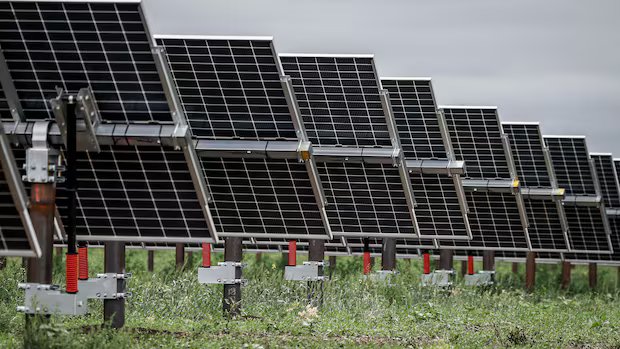
Renewable energy met all new demand for electricity in 2025, according to a new review of global power generation, halting the growth of fossil fuel-powered generation and highlighting the promise of clean sources like wind and solar.
The authoritative Global Electricity Review released annually by Ember, an international energy research organization, says clean sources — especially solar — are growing fast enough and are cheap enough that they are stopping new fossil fuel-powered electricity generation. Electricity from solar and wind increased while there was no change to the amount of electricity produced from burning fossil fuels.
“We’re really talking about a large-scale change in how the energy system works. And solar is among the most scalable technologies that can deliver fast change,” said Nicolas Fulghum, senior data analyst at Ember.
But the story is not as rosy for Canada, despite its long history in non-emitting sources of energy like nuclear and hydropower. Solar and wind, now the cheapest forms of energy, account for just under nine per cent of electricity generation in Canada, well below the G7 average of 19 per cent.
The federal government has released its Clean Electricity Regulations that would come into affect in 2035 and would gradually require all electricity generation to be from non-emitting sources by 2050. And there have been recent moves in Canada to greenlight new renewable energy projects, especially in Ontario, Quebec and B.C. But a federal strategy to actually expand renewable generation has yet to materialize.
“Canada really has not really started its energy transition in the power sector to the same degree that a lot of peers have done,” Fulghum said about the low share of wind and solar in Canada’s grid.
The U.S. is far ahead of Canada on wind and solar, which account for 19 per cent of its electricity generation.
But Canada’s electricity mix is overall much cleaner, because of its dominance in hydropower. Hydro accounts for half of Canada’s power generation, and fossil fuels only 23 per cent. In the U.S., 57 per cent of electrical power comes from fossil fuels.
Hydro, and to a smaller extent nuclear, have given Canada one of the cleanest electricity grids in the world, but it’s not something the country can rely on indefinitely. Hydro generation declined slightly in Canada and several other countries in 2025 because droughts affected water flows, according to the report, highlighting the need to building more solar and wind projects.

Canadian solar projects
In his “Forward Guidance” video message posted on YouTube on Sunday, Prime Minister Mark Carney said he plans to double the size of Canada’s clean energy capacity. That’s borne out by analyses looking at the future of electricity production in the country.
According to the Canadian Renewable Energy Association, an industry group, solar, wind and energy storage capacity will double in Canada by 2035, based on the projects recently approved by provincial utilities. The Canadian Climate Institute also projects similar increases.
Quebec, B.C. and Ontario have all recently conducted large procurements of renewable energy that will grow their solar and wind capacity exponentially in the next few years.
Neoen, a French multinational company that builds renewable energy infrastructure, just won a contract to build two solar plants in Ontario in association with First Nations. One of them, a plant being built with Garden River First Nation near Sault Ste. Marie, will be the largest solar project ever developed in Ontario.
“Electricity demand is set to increase by 65 per cent in 2050 [in Ontario],” said Benoît Pinot de Villechenon, Neoen’s Ontario province director.
“We see a lot of growth and we see a real need for that growth. It’s not a bubble and there is a real need for more electricity in Ontario.”
The Neoen projects were part of a large procurement of renewable electricity generation by Ontario’s electric grid operator, and accompanies the province’s push to develop more nuclear as well.

Energy Minister Tim Hodgson announced the government is investing $28.9 million in federal funding for 12 Canadian clean energy projects focused on carbon capture, renewable energy and developing the electricity grid.
De Villechenon said that knowing that the province will continue procurement in the future, driven by projections of energy demand growth, gives a boost to renewable energy companies looking to invest in more projects.
Alberta has been the leader when it comes to renewable projects, and currently has the country’s largest solar farms. But the provincial government put a recent temporary freeze on new solar, leading to several projects being cancelled.
Global solar adoption growing quickly
Solar adoption is leaping ahead globally, driven by lower costs and better technology. Solar power globally increased 30 per cent in 2025 from a year ago. Solar and wind together are growing so quickly that they are expected to overtake nuclear power worldwide in 2025, according to the Ember report.
Battery storage, the key to including more renewables in the electricity grid so that power is available when there is no sunlight or wind, is also growing quickly. In 2025, battery costs fell 45 per cent, continuing a long term trend and speeding up the installation of battery storage in grids across the world.
The speed at which solar and wind are moving means that Canada can catch up, and quickly.

China’s combination of industrial might and AI advancements has driven down the cost of renewable energy to make it cheaper than coal. For The National, CBC’s Chris Brown takes a closer look at how they did it and what it could mean for Canada as it looks to expand grid capacity.
“Build-out times are much, much shorter. So a project can go from initial planning finalizing construction in just a few years, whereas typical fossil fuel infrastructure can take 10 to 15 years,” Fulghum said.
The speed and relative ease of developing solar projects means countries like Canada, even if they are lagging behind now, can adopt solar at large scales very quickly, he said.