dailynewsnblog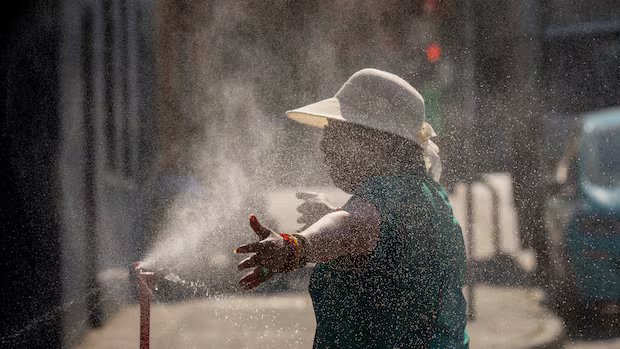

Listen to this article
Estimated 4 minutes
The audio version of this article is generated by AI-based technology. Mispronunciations can occur. We are working with our partners to continually review and improve the results.
It’s about to get very hot across a large swath of Canada.
The first long stretch of heat is expected across southern Alberta, Saskatchewan and Manitoba this week, with temperatures potentially climbing above 32 C over several days.
Environment and Climate Change Canada is calling for highs above 30 C in Regina and Saskatoon from Tuesday to Saturday, and potentially into Sunday.
In Manitoba, the heat will mainly descend on the southern part of the province beginning Thursday, with temperatures reaching 30 C or higher in Brandon and Winnipeg. But it will also stretch north into The Pas and Flin Flon.
In Alberta, Medicine Hat is seeing temperatures of 30 C or higher this week, with increasing humidity and a risk of thunderstorms.
It’s a significant heat event, said David Phillips, Environment and Climate Change Canada’s senior climatologist.
“In Winnipeg, for example, when you’re talking about 36 degrees come … Wednesday, I mean, that’s 15 degrees warmer than what it should be,” he said.
And he noted that the heat is coming after somewhat chilly temperatures.
“In many areas, the eastern Prairies still have ice on the lakes and in the rivers,” Phillips said. “I mean, somebody joked that the fishing time on the May long weekend was more ice fishing than just regular fishing. So it really has been a slow, slow coming.”

If you feel like you haven’t been able to enjoy a patio yet this spring, you’re not alone. Some Winnipeg restaurants say the crisp spring temperatures are affecting their business.
“It really does show you that this coolness that we’ve had — this back and forth, this whiplash kind of weather, where, my gosh, it’s been cold, and then it’s been a heat, and then back into the cold, where you’ve got frost following heat waves,” Phillips said. “I mean, it’s just been all mixed up, and certainly the situation looks like it’s going to change.”
The Weather Network is also warning of high humidex values.
Cool spring across the country
Phillips noted that the Prairies have had a colder-than-normal spring, as has much of the country.
In Winnipeg, for example, temperatures were 2.5 C cooler than normal in March, 3 C cooler in April and 2.2 C cooler in May.
“So this is going to be almost going from winterish kind of conditions to really the dog days of summer kind of conditions at the end of May, and that’s going to be very abrupt,” he said.
Though the end of a long, cool spring may be welcome for some people, some good came out of it — mainly a reduced wildfire risk.
Phillips noted that, at this time last year, more than 315,000 hectares of forest had burned due to wildfires. As of this writing, 16,808 hectares have burned.
However, with the transition to warmer weather and potential thunderstorms, the fire risk will increase.

Phillips said a change in the circulation pattern is behind not only the colder winter and spring, but also the shift to hotter temperatures.
“What we’re seeing with climate change is that it’s changing the circulation pattern. And the thing that must frustrate a lot of people who are deniers or skeptics, they say, ‘Yeah, well, why are we having this cold winter?'” he said. “Well, the point is that sometimes global warming can create a colder winter, because you’re getting more of this Arctic circulation coming south.”
The Weather Network is reminding people to stay hydrated, avoid direct sunlight and use air conditioning when possible. It also recommends checking on vulnerable friends and neighbours, as well as older people.



![Air Canada’s Massive Expansion: 7 New Long-Haul Routes Launching In June [Full List]](https://dailynewsnblog.com/wp-content/uploads/2026/05/air-canada-boeing-787-mock-up.jpg)