dailynewsnblog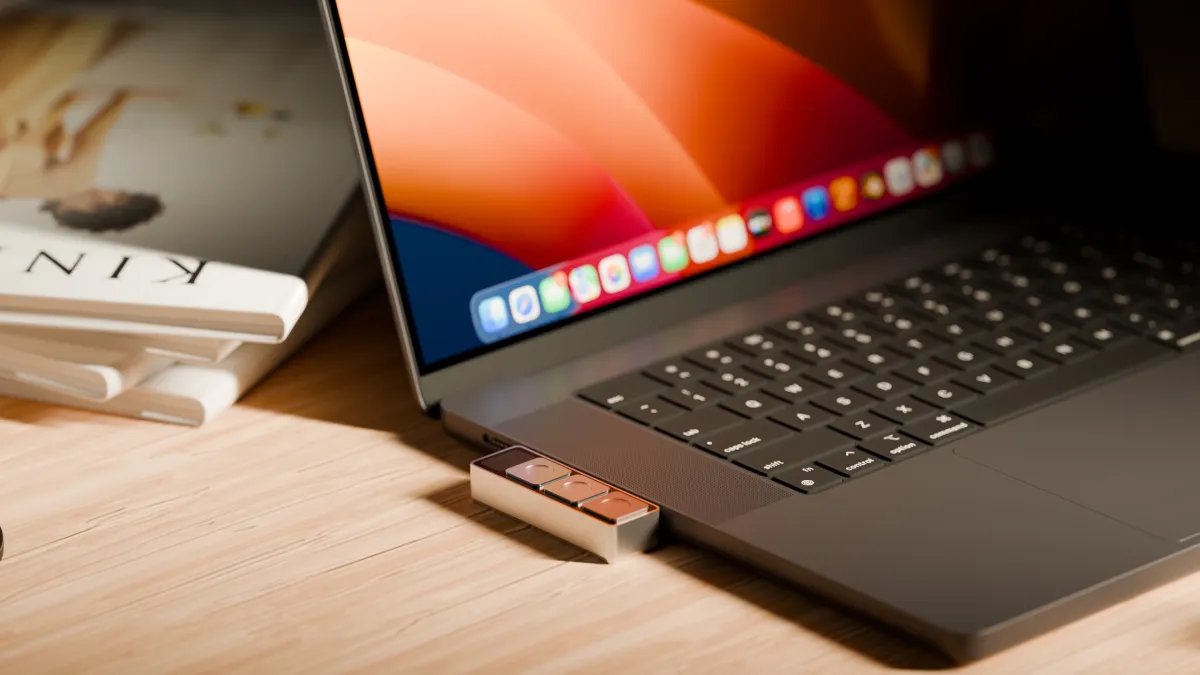
My biggest pet peeve with meeting apps is that each one has a different shortcut for muting your mic or turning off your webcam. It’s hard to remember which keys do what when you’re mid-meeting and trying to make a point or ask a question. I always wanted a physical, universal button for mute and camera control — something I could hit without thinking. Project Mirage’s Dune, a tiny, three-key aluminum keypad — about the size of a stick of gum — that plugs into your MacBook’s USB-C port, does just that.
The $119 gadget has three buttons, and it changes context based on what app you are looking at. For instance, in meeting apps and sites, it could be toggle mic, toggle video, and bring window to the front. For Excel or Sheets, it could be copy, paste, and undo. For Chrome, it could be refresh, jump to URL bar, and paste. You get the gist. Developers can also use it with apps like VS Code or GitHub to merge, approve, or close a pull request.
The startup builds each unit to match your specific Mac model, so it sits flush against the laptop with no gap underneath. If your ports are already in use, you can connect it through a dongle instead. Dune has no battery and needs no separate charger — it draws power straight from the MacBook.
Currently, the startup supports M2 Air or later and M1 Pro or later models of MacBook running macOS 15 Sequoia or a later version.
The device looks and feels nice, but I felt the keys had more resistance. Right now, it is easy to push a key by mistake. A few times, I mistakenly unmuted myself or killed my camera because my hand brushed the device while reaching for a water bottle or coffee mug. It shouldn’t be this easy to press a key.
Dune ships with a companion app for configuring shortcuts, either per-app or system-wide. Within a given app, you can assign a Dune key to a keyboard shortcut, a command, or a link that opens an app or URL.

Through the app, Dune also syncs with your calendar and surfaces your next meeting a few minutes before it starts, so you can join, dismiss, or send an “I’m running late” message with one tap.
If you want deeper customization, you can write and run your own Python script. If you don’t code, Dune has an easy integration with Claude Desktop: You describe the shortcut you want in plain language, and Claude writes it and assigns it to a key for that app — no manual setup required.
I built a shortcut that, whenever I’m on a startup’s website, pulls up a quick brief on the company: its competitors, investors, and questions I might ask if I booked a meeting with them. For anyone whose job involves sizing up companies quickly — investors, founders, operators — it’s a task tailor-made for Dune. I also built one that converts images to JPEG so I can upload them quickly to WordPress or social platforms. Both were easy to build and needed no manual configuration, though getting a shortcut fully working still takes some back-and-forth with Claude, including debugging once you actually run it.
The app also has a marketplace, from where you can explore skills made by other Dune owners. If the marketplace takes off, it could become core to Dune’s growth and retention strategy — hardware as a thin front end for a Claude-powered skills ecosystem, where each new skill gives owners one more reason to stick around.
However, at the moment, there are only limited skills. Plus, there is no way to test out a skill without assigning it to the hardware button — ideally, the app would let you preview a skill before committing it to hardware. The startup also needs to proactively add more of its own suggested skills for different apps to its users.
Project Mirage’s device retails for $149 after its introductory price expires, and it’s a solid pick for anyone productivity-minded. MuteMe covers just mute/unmute, and Stream Deck offers business-focused macros, but Dune is easier to customize on both hardware and software.
When you purchase through links in our articles, we may earn a small commission. This doesn’t affect our editorial independence.