dailynewsnblog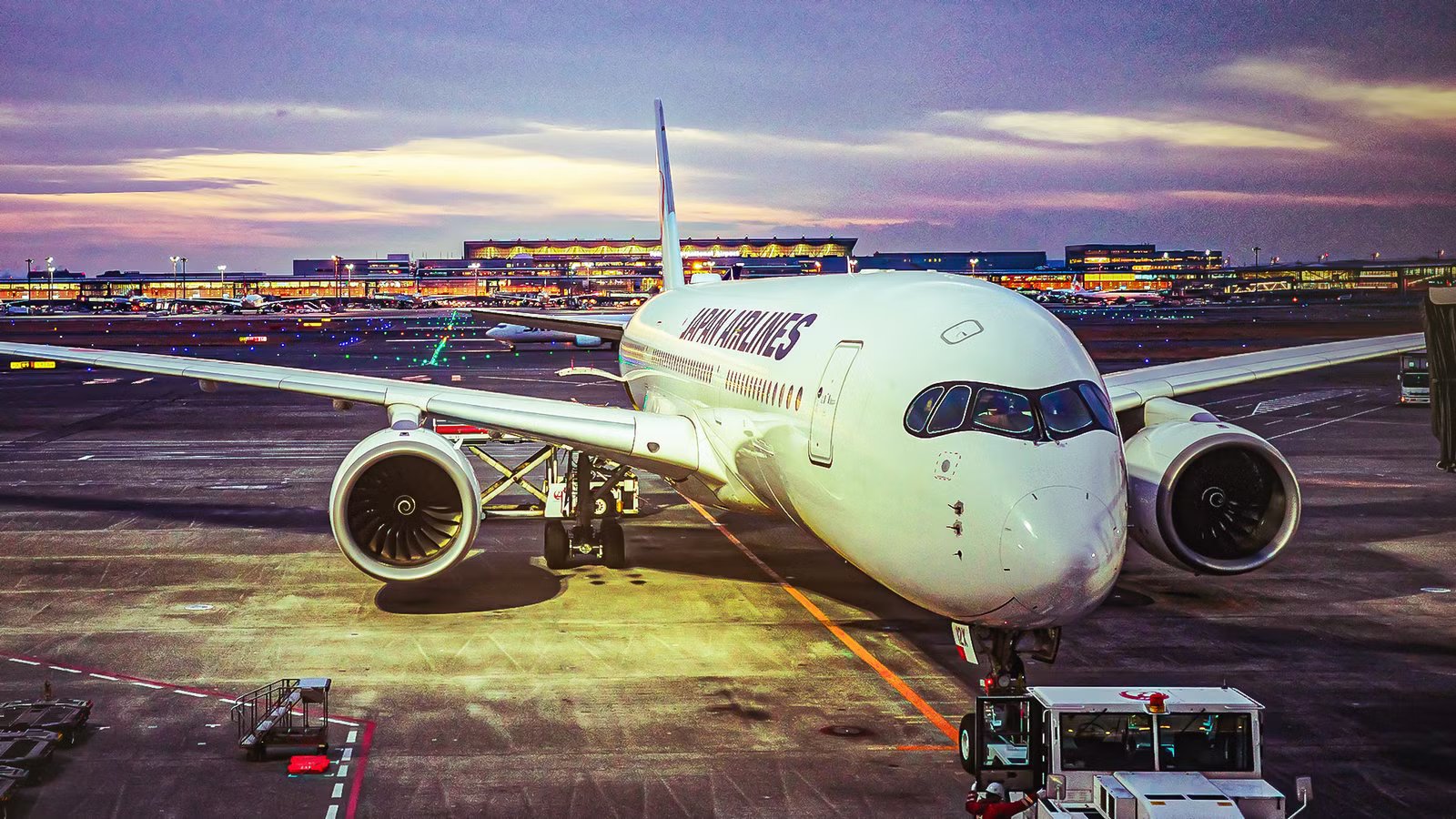
The Airbus A350-900 has earned a reputation as one of the world’s most versatile long-haul aircraft. Designed to combine excellent fuel efficiency with passenger comfort, the twinjet is often associated with ultra-long-haul services linking continents. A closer look at global schedules reveals that many airlines are deploying their aircraft in very different ways. Some of its busiest routes last a little more than an hour, while others stretch across oceans, highlighting the flexibility that has made the A350-900 a favorite among network planners.
Using Cirium schedule data for January through December 2026, Simple Flying examined the world’s busiest Airbus A350-900 routes by scheduled frequencies. Only routes with more than 1,300 flights during the year made the list, resulting in seven city pairs operated by just three airlines: Japan Airlines,  Singapore Airlines, and Vietnam Airlines. The rankings illustrate how airlines use the A350 not only on prestigious intercontinental routes but also on dense and short domestic sectors where passenger demand is high enough to justify one of the industry’s most capable widebody aircraft.
7
Singapore – Hong Kong
2,605 scheduled flights

With 2,605 scheduled flights in both directions during 2026 (1,302 from Singapore Changi Airport(SIN) to  Hong Kong International Airport (HKG) and 1,303 in the opposite direction), Singapore Airlines’ Airbus A350-900 remains a familiar sight between two of Asia’s most important financial and aviation hubs. According to Cirium schedules, the route comfortably surpasses the 1,300-flight threshold despite intense competition from multiple airlines operating everything from small Airbus A320s to Boeing 777s and even Airbus A380s.
The approximately 1,590-mile (2,560 km) journey occupies an interesting place within Singapore Airlines’ network. At just under four hours, it is far shorter than the airline’s flagship services to Europe, North America, or Australia, but demand is consistently strong here thanks to a mix of premium corporate traffic, leisure travelers, and connecting passengers. Both Singapore Changi Airport and Hong Kong International Airport rank among Asia’s leading transfer hubs, meaning that a significant share of travelers continue onward rather than begin or end their journeys there.
Deploying the Airbus A350-900 offers Singapore Airlines several advantages. Compared with older widebodies, the aircraft burns significantly less fuel while providing a quieter cabin, higher humidity, and larger windows. The airline also benefits from offering a consistent premium experience, with Business, Premium Economy, and Economy cabins that closely mirror those found on much longer international flights. For passengers connecting from Europe or Australia, remaining on a similar aircraft type throughout the journey creates a seamless travel experience that has become one of Singapore Airlines’ trademarks.
6
Hanoi – Ho Chi Minh City
2,685 flights

The only domestic route on this list outside Japan is Vietnam Airlines’ flagship service between Noi Bai International Airport (Hanoi) (HAN) and Tan Son Nhat International Airport (Ho Chi Minh City) (Saigon SGN). During 2026, Cirium schedules show 2,685 Airbus A350-900 flights, comprising 1,345 departures from Hanoi and 1,340 in the opposite direction. The route links Vietnam’s political capital in the north with its commercial and financial center in the south, making it indispensable for business travelers, government officials, tourists, and visiting families.
At roughly 720 miles (1,160 km), the journey takes slightly less than two hours, placing it firmly within the category of high-density domestic trunk routes. Passenger demand has expanded dramatically over the past decade as Vietnam’s economy has grown, disposable incomes have risen, and domestic tourism has flourished. While several airlines compete aggressively in the market, Vietnam Airlines differentiates itself by operating some of the most comfortable widebody aircraft on numerous daily departures, offering additional premium seating and cargo capacity that narrowbody fleets cannot easily match.
The Airbus A350-900 has become a cornerstone of Vietnam Airlines’ modernization strategy. Although the aircraft is perhaps better known for the carrier’s services to Europe and Australia, deploying it domestically enables exceptionally high daily utilization while familiarizing passengers with the airline’s flagship product. The approach also allows aircraft to generate revenue between long-haul rotations instead of remaining idle on the ground. For Vietnam Airlines, the route is a showcase for the carrier’s premium brand and one of Southeast Asia’s busiest widebody operations.
5
Singapore – Brisbane
2,900 flights

Unlike the shorter regional sectors elsewhere on this list, Singapore Airlines’ route between Singapore and Brisbane Airport (BNE) demonstrates the Airbus A350-900’s long-haul strengths. Cirium data shows 2,900 scheduled flights during 2026, with 1,450 departures in each direction. Covering approximately 3,800 miles (6,100 km), the flight typically takes between seven and eight hours, making it one of the longest services featured among the world’s busiest A350-900 routes.
Australia has long been one of Singapore Airlines’ most strategically important international markets. Brisbane serves not only Queensland’s growing population but also attracts substantial inbound tourism and business travel. More importantly, the route serves as a major hub within Singapore Airlines’ extensive global network. Travelers from Brisbane can connect through Singapore to dozens of destinations across Europe, India, Southeast Asia, and Africa, while inbound passengers enjoy convenient onward access throughout Australia.

For Singapore Airlines, the Airbus A350-900 is ideally suited to this mission. The aircraft’s economics allow the airline to maintain multiple daily frequencies while keeping operating costs under control, and its range easily covers the journey without payload restrictions. Passenger comfort is another key advantage. Larger cabin windows, lower cabin altitude, improved air quality, and quieter engines contribute to a noticeably more pleasant experience on flights lasting nearly eight hours. Those qualities have helped make the A350 one of the airline’s flagship aircraft for medium- and long-haul services, reinforcing Singapore Airlines’ reputation as one of the world’s leading premium carriers.
4
Singapore – Jakarta
4,355 flights

If there is one route that perfectly illustrates how the Airbus A350-900 can thrive on relatively short sectors, it is Singapore Airlines’ service between Singapore and  Jakarta Soekarno-Hatta International (CGK). According to Cirium schedules for January through December 2026, the airline will operate 4,355 A350-900 flights on the route, including 2,178 departures from Singapore and 2,177 from Jakarta. Although the flight lasts just slightly over an hour, demand is so strong that one of Airbus’ most advanced widebody aircraft has become a regular fixture on the city pair.
The Singapore–Jakarta market has long ranked among Southeast Asia’s busiest international air corridors. The two cities are separated by only around 550 miles (885 km), but they generate enormous passenger volumes thanks to deep economic ties between Singapore and Indonesia. Singapore remains one of Indonesia’s largest sources of foreign investment, while Jakarta is home to countless regional headquarters, multinational corporations, and financial institutions. Business travelers account for a significant share of passengers, alongside leisure travelers, government officials, and visitors to friends and relatives.
Singapore Airlines also benefits from the route’s strategic role within its global network. Many passengers are not simply traveling between Singapore and Jakarta but are connecting onward to Europe, North America, Australia, or elsewhere in Asia through Changi Airport. The Airbus A350-900 provides the airline with ample premium seating, generous cargo capacity, and consistent onboard products while maintaining excellent fuel efficiency. Rather than reserving its newest aircraft exclusively for long-haul operations, Singapore Airlines has demonstrated that deploying the A350 on high-demand regional sectors can maximize aircraft utilization without compromising the premium experience for which the carrier is renowned.
Catch what other flight trackers miss
Emergency squawks, holds, NOTAMs — live signals, no signup.
Open tracker
Catch what other flight trackers miss
Emergency squawks, holds, NOTAMs — live signals, no signup.
Open tracker
3
Tokyo Haneda – Okinawa
6,358 flights

Japan Airlines schedules 6,358 Airbus A350-900 flights between  Tokyo Haneda Airport (HND) and Okinawa‘s Naha Airport (OKA) during 2026, comprising 3,179 departures in each direction. While that total comfortably places the route among the world’s busiest A350 operations, it also highlights the remarkable demand for travel between mainland Japan and Okinawa. Covering approximately 965 miles (1,550 km), the journey typically takes around two and a half hours, making it considerably longer than Japan’s busiest domestic sectors while still allowing multiple daily aircraft rotations.
Unlike Tokyo’s business-heavy domestic routes, Haneda–Okinawa serves a broader mix of passengers. Okinawa Prefecture is Japan’s premier subtropical holiday destination, attracting millions of domestic tourists each year with its beaches, diving, warm climate, and unique Ryukyuan culture. At the same time, the islands are home to a substantial resident population, major US military installations, and an expanding local economy, ensuring healthy demand throughout the year rather than only during holiday periods. This combination creates one of the country’s strongest domestic aviation markets.

The Airbus A350-900 has become the flagship of Japan Airlines’ domestic fleet since entering service in 2019. Rather than limiting the aircraft to international services, JAL chose to replace aging Boeing 777-200s on high-capacity domestic routes, taking advantage of the A350’s lower operating costs and improved passenger comfort. Even on relatively short flights, travelers benefit from quieter cabins, larger overhead bins, advanced cabin pressurization, and upgraded entertainment systems. The Okinawa route showcases how airlines can use aircraft to enhance the customer experience while improving operational efficiency in one of their busiest domestic markets.
2
Tokyo Haneda – Fukuoka
8,442 flights

Second place belongs to another Japan Airlines domestic trunk route. According to Cirium, the carrier has scheduled 8,442 Airbus A350-900 flights between Tokyo Haneda and Fukuoka Airport(FUK) during 2026, with 4,221 departures in each direction. The 550-mile (885 km) sector links Japan’s largest metropolitan area with the economic heart of Kyushu, one of the country’s most important islands. Despite the availability of Japan’s famous Shinkansen network, aviation continues to dominate this market because flying is significantly faster than traveling by rail between Tokyo and Fukuoka.
Fukuoka occupies a unique position within Japan’s economy. The city serves as the commercial gateway to Kyushu and a bridge between Japan and the rest of East Asia. It has developed into a major technology and startup hub in recent years, attracting investment from both domestic and international companies. Combined with strong tourism demand and substantial government travel, these factors help sustain one of Japan’s highest-volume domestic air markets. Frequent departures throughout the day make the route especially attractive for business travelers, many of whom complete round trips within a single day.
Japan Airlines’ decision to assign the Airbus A350-900 to the route reflects the enormous demand concentration. The aircraft provides significantly more seats than the narrowbody types that dominate many domestic markets while delivering substantial improvements in fuel efficiency over the Boeing 777s it replaced. The modern cabin also reinforces JAL’s premium positioning, offering passengers a noticeably quieter and more comfortable journey. For an airline operating thousands of domestic flights annually, those incremental improvements translate into meaningful operational and customer-service benefits.
1
Tokyo Haneda – Sapporo
9,268 flights

Topping the list by a comfortable margin is Japan Airlines’ flagship domestic route between Tokyo Haneda and New Chitose Airport (CTS), which serves the Sapporo metropolitan area on Japan’s northern island of Hokkaido. According to Cirium schedule data for January through December 2026, the airline will operate 9,268 Airbus A350-900 flights on the route, split evenly between 4,634 departures in each direction. No other A350-900 route worldwide comes close to matching that level of scheduled frequency.
The approximately 510-mile (820 km) sector takes about 90 minutes and is among Japan’s most strategically important domestic air links. Hokkaido is a year-round tourism powerhouse. Winter brings millions of visitors seeking world-class skiing and snowboarding, while the warmer months attract travelers looking for national parks, hiking, flower fields, seafood, and cooler summer temperatures than Japan’s main island. At the same time, Sapporo is Hokkaido’s largest city and economic center, generating significant business and government travel. The combination creates consistently strong demand throughout the year, with seasonal peaks that can rival some international markets.
Top 7 busiest Airbus A350-900 routes in 2026
Rank | Route | Airline | Scheduled flights (2026) |
1 | Tokyo Haneda – Sapporo (HND–CTS) | Japan Airlines | 9,268 |
2 | Tokyo Haneda – Fukuoka (HND–FUK) | Japan Airlines | 8,442 |
3 | Tokyo Haneda – Okinawa (HND–OKA) | Japan Airlines | 6,358 |
4 | Singapore – Jakarta (SIN–CGK) | Singapore Airlines | 4,355 |
5 | Singapore – Brisbane (SIN–BNE) | Singapore Airlines | 2,900 |
6 | Hanoi – Ho Chi Minh City (HAN–SGN) | Vietnam Airlines | 2,685 |
7 | Singapore – Hong Kong (SIN–HKG) | Singapore Airlines | 2,605 |
Cirium
Japan Airlines has made the Airbus A350-900 the backbone of its busiest domestic services, and Haneda–Sapporo perfectly demonstrates why. The aircraft offers substantially lower fuel burn than the Boeing 777-200s it replaced, while delivering a quieter, more modern cabin for passengers. Although the flight lasts less than two hours, the airline benefits from the aircraft’s large seating capacity, enabling it to transport thousands of passengers each day between Tokyo and Hokkaido. The route also underlines an important point about today’s aviation industry: the world’s busiest widebody operations are not always intercontinental flights. In Japan, dense domestic demand is more than sufficient to justify deploying one of Airbus’ most advanced long-haul aircraft on short sectors throughout the day.