dailynewsnblog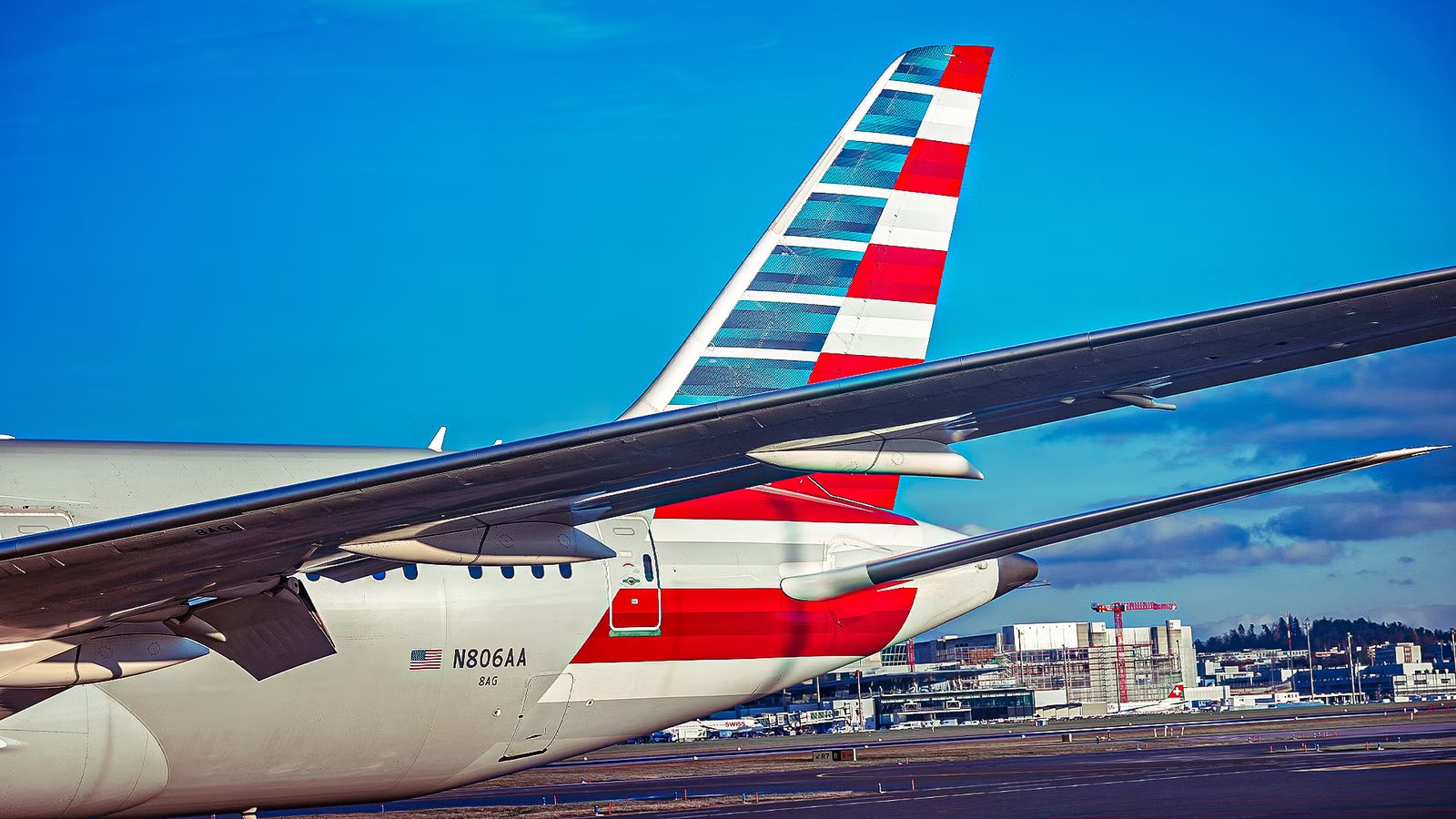
In June 2026,  American Airlines CEO Robert Isom confirmed that his airline has issued formal Requests for Proposals (RFPs) to Boeing and Airbus for a new widebody order. This was unexpected, as American Airlines has increasingly been focused on its domestic network while keeping the long-haul routes to a minimum. What’s more, the order is reported to serve as a replacement for the carrier’s Boeing 777-200ER fleet, which was previously believed to be slated for full cabin refurbishments. Meanwhile, the contest hardly appears to be competitive.
American Airlines is a major customer for both Boeing and Airbus, but only on the narrowbody side. With the widebody fleet, the airline has consolidated to just the Boeing 777 and 787, while removing its 767 and Airbus A330 fleet during the pandemic. Multiple factors go into large-scale orders, but the challenge for Airbus is that American already has an ideal 777 replacement in its fleet with the Boeing 787, and it’ll be an uphill battle for Airbus to win this order, a challenge that it might not want to tackle.
Replacement And Expansion

American Airlines currently has 137 widebodies in its fleet, split between 67 777s and 70 787s. It also has another 19 787-9s on order, which are purely for expansion. As a point of comparison,  Delta Air Lines operates 179 widebodies and has 84 firm orders for new widebodies, while
  United Airlines flies 237 widebodies and has another 134 incoming. American is strong in Latin America, but the long-haul network is otherwise quite modest, and it’s generally accepted that American is suffering for it.
At the same time, American operates 47 777-200ERs that were largely delivered between 1999 and 2003, with two more units having arrived in 2006. In other words, there are only two ‘young‘ 777-200ERs in the carrier’s fleet, with the rest of them set to reach 30 years of age by the 2030s. In addition, they also feature oddball Rolls-Royce Trent 800 engines with no commonality to anything else in the carrier’s fleet, and they’re the airline’s least efficient widebody aircraft.
Previously, American had planned to refurbish all 47 of these planes with its new Flagship Suites and a more premium layout, but given that an RFP is now out for their replacement, these plans seem uncertain. What’s more likely to occur is that some of the 777-200ERs will be refurbished, and the new widebodies will replace the oldest examples, while also providing some growth. Future deliveries or a possible option order will replace the remaining 777-200ERs in the late 2030s. With this, it’s time to evaluate the players.
Boeing Versus Airbus For American Airlines

Undoubtedly, Boeing’s primary offering will be the 787. American has already ordered a total of 89 examples, split between 37 787-8s and 52 787-9s. Notably, American does not operate the 787-10, which is generally positioned as Boeing’s replacement for the 777-200ER in terms of size. While American could also look at the 777X, the smaller 777-8 is uneconomical, while the 777-9 is simply massive. It only has a chance if American is looking to replace its young 777-300ER fleet early or grow its fleet of large flagship widebodies. There is no indication of either.
On the Airbus side, the manufacturer sells the A330neo and the A350, with the A330-900 and A350-900 being the primary variants in consideration. The A330-800 is too small to serve as a replacement for the 777, and the A350-1000 is largely the same size as the 777-300ER. On paper, the A350-900 appears to be the most obvious candidate, as it carries slightly more passengers than the 777-200ER while flying significantly further, a quality that the 787-10 cannot match.
Reportedly, however, American is taking a good look at the A330-900. The aircraft is only slightly smaller than the 777-200ER, while possessing excellent range. The real benefit of the A330-900, however, is that it’s generally less expensive to acquire than either the A350 or 787, and availability is better than either model. If American is looking to grow its long-haul network in the near future, the A330-900 is the best aircraft to accomplish that from a timeline perspective, and it can serve as an effective 777 replacement. However, the problem lies with its current fleet.
The Presence Of The Boeing 787

The Boeing 787-9 is virtually the same size as the A330-900 (in other words, just slightly smaller than the 777-200ER). The 787-9 has a longer range and is significantly more fuel efficient on ultra-long-haul routes, but the two types are extremely competitive on shorter missions. This appears to be a plus for the A330-900, as American primarily uses the 777-200ER for relatively short flights, but the problem for Airbus is that American already flies the 787.
American is a large enough airline that it can support large fleets of multiple types, but the current management team has been focused on fleet simplicity. It currently only operates four aircraft types, and it previously removed the A330 during the pandemic. The A330-900 is a cheaper plane that’s available sooner, but American would also need to spend money to retrain pilots, retrain maintenance staff, and reestablish a parts pool, all for a plane that’s less capable and burns more fuel on the 12-hour flights than the 787-9s that American already flies.
The A350-900 is an excellent aircraft that burns only slightly more fuel than the 787 while being far more capable. However, American barely uses the 777-200ER on ultra-long-haul routes. The primary use of this fleet is trunk routes to Europe and South America, routes where the A350-900 begins to look expensive compared to the 787-9. The 787-9 is cheaper to acquire and is already operating in American’s fleet, whereas the A350-900 would be more expensive and would come with significant integration costs.
Catch what other flight trackers miss
Emergency squawks, holds, NOTAMs — live signals, no signup.
Open tracker
Catch what other flight trackers miss
Emergency squawks, holds, NOTAMs — live signals, no signup.
Open tracker
The Benefits Of Sticking With The Dreamliner

The 787 is a familiar aircraft type to American, which already operates in large numbers. The A350-900 is larger than the 787-9 and can therefore offer the same or slightly more seats than the 777-200ER, but this assumes that American even wants to maintain its current capacity levels on certain routes. The size difference between the 787-9 and 777-200ER isn’t dramatic, while American could easily make more money by flying the smaller Dreamliner due to its low operating costs.
Meanwhile, on the routes where American wants to maintain or increase capacity,  Boeing has the 787-10. Apart from the fuselage length, it’s identical to the 787-9, and the aircraft has nearly the same operating costs as its smaller sibling. While it has less range than either the 777 or A350, American seldom pushes the 777 to its limits, and the 787-10 can operate nearly any route that the airline flies the 777-200ER on. On routes like DFW to Tokyo, the 787-9 may suffice.
Aircraft | Range | Maximum Takeoff Weight |
|---|---|---|
Boeing 777-200ER | 7,065 NM (13,080 km) | 297.5 tons |
Airbus A330-900 | 7,350 NM (13,600 km) | 253 tons |
Airbus A350-900 | 8,500 NM (15,750 km) | 283 tons |
Boeing 787-9 | 7,875 NM (14,585 km) | 259.2 tons |
Boeing 787-10 | 6,760 NM (12,519 km) | 260.4 tons |
The A330-900 and A350-900 each have strong advantages, but the equation becomes difficult when considering how American actually uses its 777-200ER fleet, its current trajectory, and the large established fleet of Dreamliners. Of course, pricing is a major factor in any order, and an attractive offer from Airbus could easily result in American flying A330neos or A350s. However, perhaps the biggest issue with this order is that Airbus likely doesn’t want to offer American such an attractive deal.
Airbus’ Current Market Position

The A350 is one of the great modern success stories. Orders have been piling up in recent years, as the plane proves itself to be simultaneously cost-effective and capable, able to efficiently operate short transatlantic crossings or the world’s longest flights, and Airbus knows this. Demand is as high as ever, which means that Airbus can charge more money, and the A350 has a growing backlog while Airbus can’t build the planes fast enough.
The A330neo is a slow seller, but Airbus has been receiving increasingly more orders, and the backlog is growing. Airbus also isn’t looking to dramatically boost A330neo production in the future. Fundamentally, the A330neo exists as a way to capitalize on the high demand for mid-size widebodies with low development costs and keep existing A330 customers. It’s a cost-effective solution for its customers given the high degree of commonality with prior A330 models, and Airbus appears content to let A330neo orders trickle in slowly, but steadily.
Aircraft Family | Variants | Sales | |
|---|---|---|---|
Airbus A330neo | A330-800 | 12 | 474 |
A330-900 | 462 | ||
Airbus A350 | A350-900 | 1,121 | 1,595 |
A350-1000 | 367 | ||
A350F | 107 | ||
Boeing 787 | 787-8 | 424 | 2,434 |
787-9 | 1,465 | ||
787-10 | 545 |
Meanwhile, Rolls-Royce (the exclusive engine supplier for both programs) has been focused on ensuring that each sale is profitable for the company. This has led some airlines to criticize it for high pricing, but the strategy is proving successful because the planes are in high demand, meaning that the engines are in high demand, and it already has a large backlog that will take years to clear. In short, neither party is in a position where they need to win the American Airlines order.
The Outlook On The American Airlines Order

It’s certainly possible that American Airlines will go with Airbus; fleet diversification allows the carrier to optimize route economics to a greater extent and protects the airline from issues with an aircraft type. In this case, however, neither the A330-900 nor the A350-900 is a clear favorite based on attributes, which means that pricing will be the biggest factor. While selling the A330-900 or A350-900 also gives Airbus an inroad to sell more high-margin widebodies to American in the future, the manufacturer is ultimately more concerned with direct profits rather than market share.
Boeing, meanwhile, is incentivized to price more aggressively on this order to keep Airbus from snatching future business with American Airlines. In addition, the Boeing 787 itself is the front-runner based on attributes, while the 787-10 would prove highly effective. Only time will tell which party American will choose, but in this race, Boeing is the incumbent that is likely aiming to keep Airbus out of the door, while the European manufacturer is the outsider with products that don’t fit as cleanly and a smaller appetite to offer low prices.