dailynewsnblog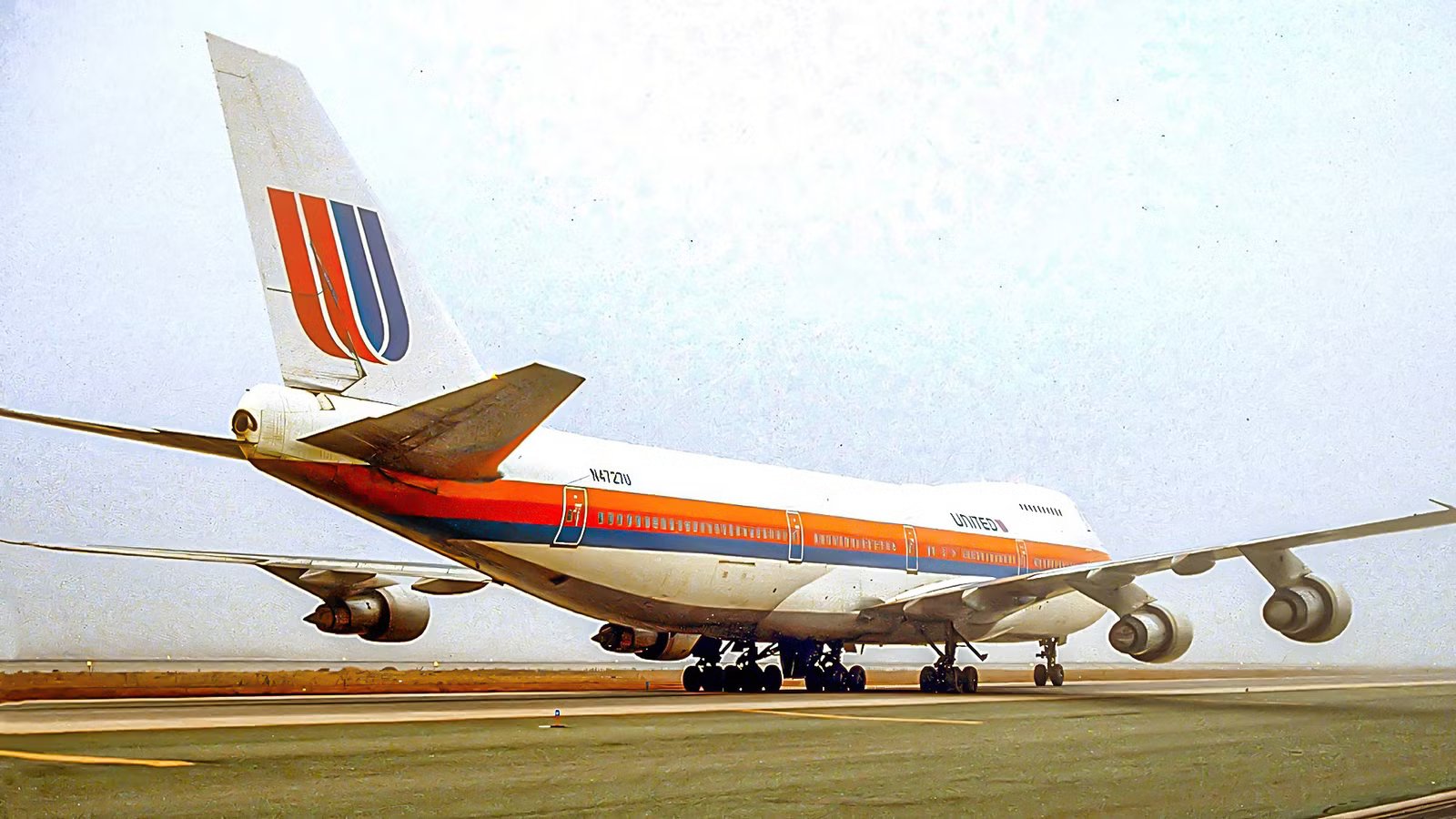
This Is The Origin Of The Boeing 747

Before the Boeing 747 became one of the most iconic passenger aircraft ever built, many of its most recognizable design features were shaped by a very different requirement. In the early 1960s, the United States Air Force began looking at concepts for a very large strategic transport aircraft. This eventually led to the CX-Heavy Logistics System, or CX-HLS, requirement, which called for an aircraft capable of carrying extremely heavy and oversized military cargo over long distances.
Boeing was one of several manufacturers to submit a proposal, alongside Douglas, Lockheed, General Dynamics, and Martin Marietta. Ultimately, Lockheed won the competition with the design that would become the C-5 Galaxy. Boeing lost the military contract, but the work it had done on its CX-HLS proposal did not disappear. Instead, some of the basic design thinking behind Boeing’s military transport concept would carry over directly into the 747.
The most obvious example of this is the 747’s famous hump. Today, the raised upper deck is closely associated with passenger luxury, premium cabins, lounges, and the aircraft’s instantly recognizable silhouette. However, its original purpose was far more practical. Boeing wanted to keep the nose of the aircraft available for cargo loading, which meant the cockpit could not be placed in the conventional position at the front of the main deck. By moving the flight deck above the main deck, Boeing created space for a front cargo door, which allowed freight to be loaded directly through the nose of the aircraft.
In the 1960s, many in the industry believed that supersonic aircraft would eventually take over long-haul passenger travel, and the 747 was therefore not necessarily expected to remain at the center of passenger aviation for decades. By retaining the aircraft’s design features for cargo operations, Boeing ensured that even if demand for passenger 747s declined, the aircraft could remain highly valuable as a freighter. That cargo-focused design would prove to be one of the most important reasons for the 747’s long-term success, and even now, most airlines have phased out the “Queen of the Skies” in favor of more efficient twinjets; the aircraft remains highly relevant for its original purpose in the cargo market.
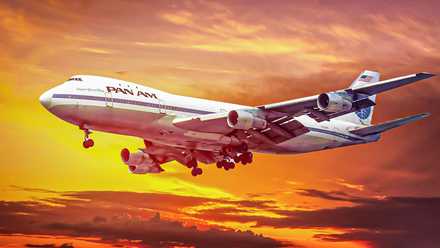
How A US Military Contract Helped Bring About The Boeing 747’s Famous Hump
The distinguishable design was ultimately rejected by the Air Force but led to the major success of a revolutionary airliner
This Is How The First 747 Was Developed

While the original design for a military aircraft laid out the basic building block for the 747, the engineer who turned the concept into a realistic commercial aircraft also played a crucial role. The aircraft’s chief engineer, Joe Sutter, who would later become known as the “father of the 747”, had already worked on several important Boeing aircraft before the 747, including the 707, 727, and 737. This provided Sutter with the experience needed for what would become one of the most ambitious commercial aircraft programs in history. While Boeing had lost the military contract to Lockheed, commercial airlines needed larger aircraft as international passenger volumes started to grow quickly.
Partly at the urging of Pan Am, Boeing was pushed into developing a very large passenger aircraft in the mid-1960s. Sutter first led a small study group to determine whether an aircraft of this size was even feasible, before the project quickly became one of Boeing’s most important bets. The company was funding the program itself, meaning the future of Boeing was, in many ways, tied to whether Sutter and his team could make the 747 work. Sutter’s team looked at several versions of the aircraft, with proposed capacities of 250, 300, and 350 seats. Pan Am and other interested airlines opted for the largest version, which would be around two and a half times the size of the Boeing 707 and require four of the largest aircraft engines ever built.
One of Sutter’s most important decisions was to move away from a full double-deck layout and develop a widebody aircraft with twin aisles instead. This created the basic widebody concept that would reshape long-haul aviation in the following decades. Sutter also designed the aircraft so that it could carry standardized freight containers side by side on the main deck, allowing the 747 to succeed not only as a passenger aircraft but also as a freighter. The aircraft was so large that many remained skeptical about whether a plane this size could even fly, and Boeing also had to build an entirely new production facility, which would later become the largest building in the world. However, only 28 months after Sutter first sketched the aircraft, the first 747 was rolled out in Everett in September 1968.
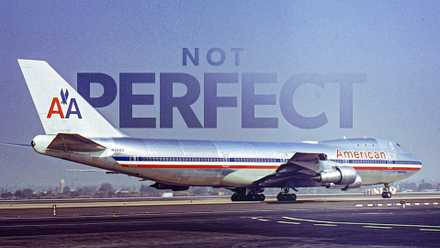
The Real Reason Why The Queen Of The Skies Wasn’t A Perfect Fit For American Airlines
Why American Airlines turned its back on the double-decker jumbo jet.
This Is Why Cargo Airlines Still Love The 747

Although most passenger airlines have already phased out their Boeing 747 fleets, the type is still very popular with cargo airlines. In addition to the nose door, which allows airlines to transport exceptionally large cargo, increasing competitiveness and high-yield revenue, the Boeing 747 also offers some other beloved features. Over the past few decades, multiple 747 variants have also been available as freighter aircraft. Today, the most popular 747 freighter variants are the 747-400 and -8. As of writing, the -400F and -8F are the most operated 747 variants, with 218 and 107 aircraft in operation, respectively.
One of the features cargo airlines love about the aircraft is its exceptional capacity: 120 tonnes for the -400F and up to 140 tonnes for -8F. This capacity is divided over the main deck, lower deck (belly), and upper deck. In addition, cargo airlines generally prefer older aircraft to offset lower utilization rates, since acquisition costs are lower. In the case of a cargo airline operating a factory-new aircraft, it tends to be deployed on services guaranteeing high utilization, such as transpacific flights.
|
The 5 Largest Boeing 747 Operators In May 2026 |
|||||
|---|---|---|---|---|---|
|
Airline |
Total |
Boeing 747-400F |
Boeing 747-8F |
Average Age |
|
|
1. Atlas Air |
65 |
48 |
17 |
22.2 years |
|
|
2. UPS Airlines |
43 |
13 |
30 |
12.2 years |
|
|
3. Cargolux |
26 |
12 |
14 |
17.2 years |
|
|
4. Kalitta Air |
22 |
22 |
27.7 years |
||
|
5. Cathay Pacific |
20 |
6 |
14 |
14.6 years |
|
|
Source: planespotters.net |
|||||
The last 747 ever produced was a freighter, delivered to American cargo airline Atlas Air, which still operates a 747 fleet consisting of 65 aircraft, making it the largest 747 operator worldwide. Since Boeing discontinued the production of the Boeing 747, the only option for cargo airlines to acquire a ‘new’ 747 freighter is to purchase a passenger version of the aircraft, which is about to be retired, and convert it to a freighter. Other large operators of the 747 freighter family include  UPS Airlines, Cargolux, Kalitta Air, and Cathay Pacific. All of these airlines still operate 20 or more 747 freighter aircraft as of writing.

Why The Workhorse Of The World’s Cargo Airlines Is No Longer In Production
The final Boeing 747 was delivered in January 2023.
An Overview Of The 747’s Iconic Nose Door

Today, the Boeing 747 freighter variants are among the most versatile cargo aircraft in the world. An important contributing factor is the aircraft’s unique “Nose Loading” capability, made possible by its partial upper deck, which houses the flight deck. This nose door allows oversized, long cargo to be loaded directly onto the aircraft, which would not fit on other freighter aircraft. The nose door is available on all factory-new Boeing 747 freighter aircraft, including older subtypes such as the 747-100 and 747-200. Most 747 aircraft are converted from passenger.
During the turnaround and loading process, the ground handling team must assess where and how cargo fits best on the aircraft. This includes checking height limits, overall length, and whether it can pass through the aircraft’s side door. If this is not the case, the nose door will be used. The nose-loading capability allows operators to swing and reposition pallets, ensuring long overhangs are aligned correctly and loaded safely inside the aircraft. To operate the nose door system, there is a dedicated control panel with various indicators to provide information on the 16 latches used to secure the door during flight. Each of these latches is locked by a pin mechanism that goes through the latch to secure it. The door opening is fully mechanical and driven by a small electronic motor at the front of the aircraft.