dailynewsnblog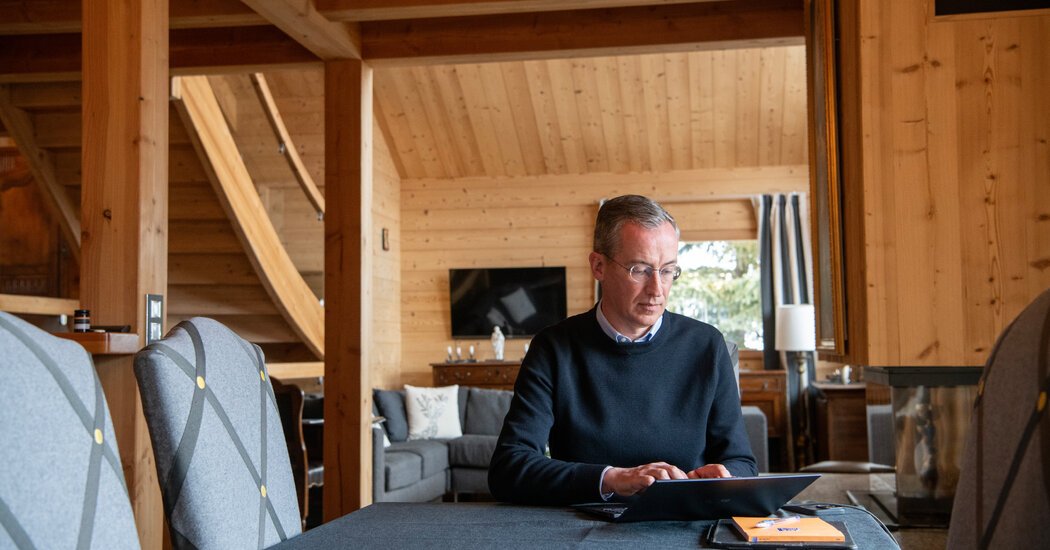
As France elects thousands of mayors this Sunday, one of the most influential players is not on the ballot.
His name is Pierre-Édouard Stérin. He is a billionaire entrepreneur who left France 14 years ago to pay less tax, but has since spent millions, he said in an interview, to “ensure France doesn’t disappear.”
Inspired, he said, by George Soros’s support for liberal causes, Mr. Stérin has steered money to right-wing think tanks, political training programs, social media influencers and nonprofit groups to shape the country according to his beliefs — anti-immigrant, free-market, less Islamic and more Catholic.
One program funded by Mr. Stérin has, by his count, trained at least 4,000 right-wing candidates in the municipal elections. With the far-right National Rally party projected to potentially win the presidency next year, Mr. Stérin is striving to accelerate France’s rightward shift.
“I dream of a France that is once again economically powerful and a France that rediscovers a sense of values, that embraces its Christian roots,” Mr. Stérin, 52, said.
The France of Mr. Stérin’s dreams would be more capitalistic, socially conservative and Trumpian — and to his critics, racist. It would tolerate little immigration, particularly from Muslim countries that France colonized. Undocumented immigrants who commit crimes or do not work would be deported. Muslim dress would be banned in public, and halal food no longer served in schools.
“I am even further to the right than the far right on immigration,” said Mr. Stérin, who also considers the National Rally’s economic program too “statist.”
Mr. Stérin wants to ban abortion, access to which was enshrined two years ago in the French Constitution; to swell Catholic church attendance; and to encourage more French couples to procreate. Since he funds Christian projects, he said, he hopes he might eventually be canonized as a saint. He disputes the idea that his views on migration clash with those of Pope Leo XIV.
Finally, he would slash the country’s taxes; dismantle the welfare system; privatize education and health care delivery; and end public funding for culture. “I am a fervent supporter of competition,” he said.
The ultimate goal, Mr. Stérin said, is to bring to power a right-wing government that fundamentally changes how the country looks and works.
Fanélie Carrey-Conte, who oversees France’s oldest migrant rights group, La Cimade, called Mr. Stérin’s vision dangerous, racist, Islamophobic and a “knife blow” to the French Republic’s founding principle of equality.
“For him, it seems the question of human rights, let alone the rule of law, are a nonissue,” Ms. Carrey-Conte said. “With a vision like that, there is no longer any possibility of building a society together.”
In response, Mr. Stérin said he believed in “true equality” for all. He described accusations of Islamophobia as “political weapons” to stifle debate. And he called it “ridiculous” to characterize his views on immigration as “racist,” partly, he said, because they represented mainstream opinion.
Mr. Stérin’s project has struck a nerve in a country where philanthropy remains far less prevalent than in the United States; elections have largely been shielded from private financial influence; and the welfare state is considered sacrosanct.
“Why does he scare people?” asked François Hollande, a left-wing politician and former president of France. “Perhaps because he is meddling in sectors where the far right has generally not been very present — sports, culture, nonprofits, training, schools.”
“And he is engaged in an approach,” Mr. Hollande said, “that is openly anti-state.”
How Mr. Stérin rose to influence
Mr. Stérin was born in 1974 in the small city of Évreux, 50 miles outside Paris. The middle child of an accountant and a financial adviser, he struggled in class, failing two years of high school. He believes he grew up with undiagnosed autism, partly because of his difficulty reading social cues.
His entrepreneurial skills were born, he said, from his enduring enthusiasm for video games. Visiting Ireland at 12, he discovered computer hardware was cheaper there. He started an import business, selling first to schoolmates and then through newspaper advertisements. He used his profits to buy stocks, and later set up a video-game distribution company.
Mr. Stérin’s tolerance for risk is one of several ways in which he seems cut more from American than French cloth.
In his late 20s, the dot-com bubble burst, tanking his company and forcing him to move back with his parents for four years. During that time, he said, he spun out 20 failed start-ups.
It was the 21st that made him rich — Smartbox, a company that offers experiences as gifts. Within six years, he had earned enough to launch a private equity firm, Otium Capital, according to François Durvye, its chief executive.
Last year, Mr. Stérin had assets worth roughly $1.85 billion, according to Challenges magazine, a French equivalent to Forbes. Mr. Durvye noted that Mr. Stérin made it all himself.
“In North America, it’s pretty common. In France, it’s not,” said Mr. Durvye, who also advises the National Rally.
In 2012, Mr. Stérin moved his family to Belgium to avoid paying a “supertax” on the wealthy that Mr. Hollande, then campaigning for president, had promised to introduce. Mr. Stérin remained based there, even after judges struck down the tax less than two weeks after it became law.
Around a decade ago, realizing that he would soon become a billionaire, Mr. Stérin looked for another life-framing objective. He settled on sainthood.
He committed to Catholicism, he said, because it offered him a moral framework to separate right from wrong. “It’s not a faith of the heart,” he said, but a “rational” and “mathematical” way of guiding his life. He said he prays daily, but only for six minutes.
Seeking canonization, he vowed to worship more, he said, and give away 99 percent of his wealth “to serve Christ.” He also decided to stop funding his five children, aged 5 to 19, after they finished their studies.
“Giving them money isn’t giving them freedom — it is burdening them with constraints,” Mr. Stérin said. He himself still flies on budget airlines, his staff said, and eats sandwiches at his desk.
In his first philanthropic venture, Mr. Stérin helped to host events where charities pitched programs to would-be donors. Starting in 2017, the project raised roughly $34 million for hundreds of causes, including training guide dogs and housing single young mothers, according to its website.
In 2021, Mr. Stérin founded the Common Good Fund, funneling his own money toward beneficiaries including a Catholic boys’ boarding school — the first of 50 that the fund hopes to open — and exhibitions on French historical figures like Joan of Arc.
The fund’s total expenditure is unclear. Some of the fund’s payments — roughly $35 million — have been made public, in accordance with French law, because they were either donations to charities or related expenses.
The fund’s general manager, Edward Whalley, said it had also dispensed roughly an additional $116 million to private enterprises, rather than charities. The fund has not published a full breakdown of those payments, citing the need to protect recipients from backlash from Mr. Stérin’s critics.
Why Mr. Stérin pivoted to politics
Mr. Stérin’s more explicitly political interventions were an outgrowth of this initial philanthropic work, he said.
He realized his funding would be more effective in a more favorable political and legislative environment. In 2023, that led him to start Périclès, an organization that funds and promotes political projects that many associate with the far right.
It supports think tanks opposed to immigration and to “woke” ideology; right-wing media; social media influencers; and groups opposed to Islamism.
Mr. Stérin does not mind seeing the occasional Islamic head scarf, he said, but he became convinced that more Muslim customs should be banned in public after seeing many hijabs while driving through poorer suburbs of Paris. (French state employees and schoolchildren are already banned from wearing conspicuous symbols of any religion.)
“If we don’t do that, France in 50 years would be the first Islamic republic of Europe, or the second after Belgium,” he said. “I don’t want my country to become an Islamic republic.”
A major recipient of Périclès’s money is a training school, Politicae, for aspiring right-wing municipal politicians (Politicae ignored requests to identify them).
As his profile grew, Mr. Stérin was targeted by protests, along with projects he funded. One recipient of some Périclès money, a restaurant staffed by refugees and homeless people, had its city permit suspended until it found alternative funding.
A lack of transparency and Mr. Stérin’s links to far-right figures have stoked the distrust. The company’s general manager, Arnaud Rérolle, said it had funded more than 70 projects; only 22 were listed on its website.
Asked for its 2025 expenditure, Mr. Rérolle responded, “Many million euros.”
“Like any private company, we are entitled to a form of discretion,” he said.
Alarmed by that opacity, French lawmakers started an investigative commission last month to probe the group and similar private endeavors. They want Mr. Stérin to testify, said Colombe Brossel, a Socialist senator driving the investigation.
Some believe Mr. Stérin’s impact is minimal. Mr. Hollande, the former president, said that Vincent Bolloré, who owns news outlets associated with the far right, is more influential.
Others say Périclès could accelerate big shifts.
Mr. Stérin’s funding for so many municipal candidates potentially gives him outsize influence over the selection of French senators, said Alice Barbe, a founder of a program that trains left-wing candidates. In the French electoral system, local politicians help choose national senators.
“If the far right enters the Senate, for him, that’s the breakthrough,” she said.
Yet Mr. Stérin said he has no intention of returning to France any time soon, even if the far right takes power.
“I will return to France when I feel that it is a good place to live,” he said, adding, “In the meantime, I dream more of moving to the United States.”
Ana Castelain contributed reporting from Paris.