dailynewsnblog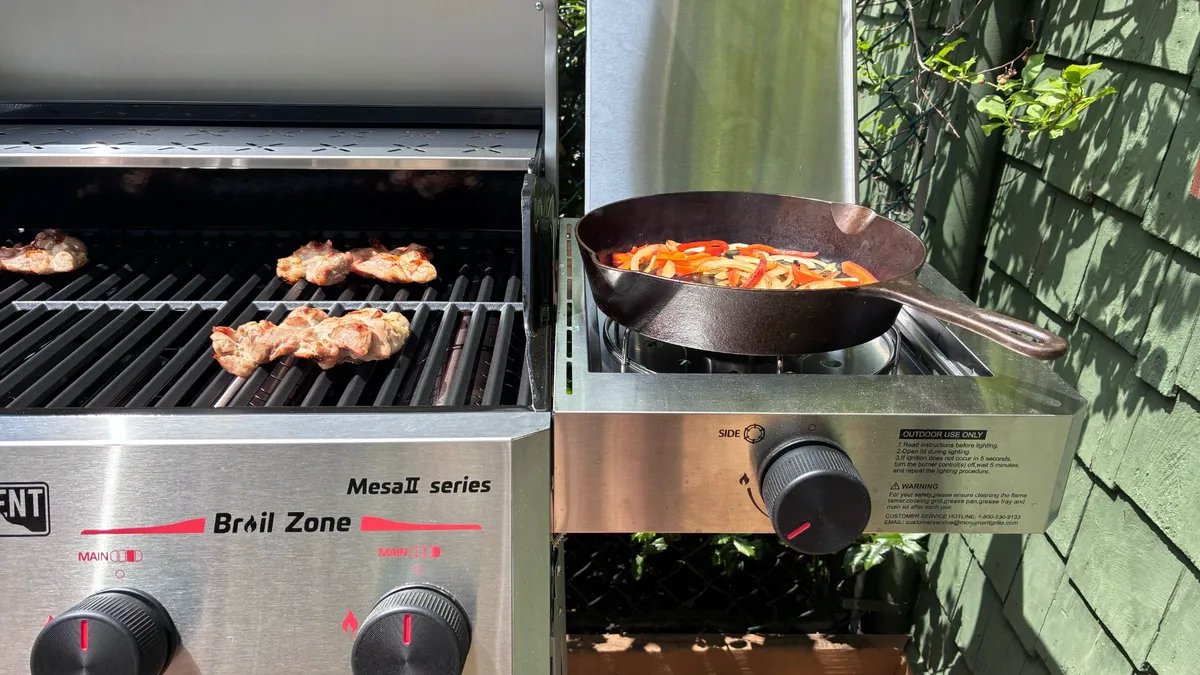
Firing up the grill often means foregoing typical cooking implements like pots and pans, but ask yourself: Is that just out of habit? Or some unspoken grilling code of honor that mandates the grill grates be the only outdoor cooking surface?
It would seem the whole point of cooking on the grill is to achieve that direct, flame-kissed outcome, complete with grill marks, whether you’re grilling steaks, pizzas, cheeses, fruits or anything else you deem fit to cook outside. Surely anything that would require a pot or pan could be better achieved inside on the range, anyway, right?
Well…the fact of the matter is, your cast-iron skillet belongs to the outdoor cooking canon just as much as your grill does. Maybe you’ve used a cast-iron skillet over an open flame while camping, but there’s no reason not to let it do its thing right on the grill.
Many grillable items actually fare better on a flattop or cast-iron skillet than on an open flame, and there’s no rule against using your grill as the heat source for high-heat equipment like a cast-iron skillet. Many chefs recommend a skillet over a grill for certain kinds of steaks anyway, so here are the reasons, tips and tricks for taking your cast-iron skillet outside with you this summer and letting it do some of the grilling work.
Reasons for putting your cast-iron skillet on the grill
The humble cast-iron skillet opens up a world of possibilities when cooking outdoors.
First, remember — “grilling” technically refers to direct, high heat. Grates are optional — so, too is the outdoors. So if you somehow feel like you’re not honoring the spirit of “grilling” with a cast-iron skillet, put that thought aside. At least semantically, you absolutely are.
As for the why of bringing the cast-iron skillet out to play with the grill, “the biggest benefit is being able to effectively cook an entire meal in one place,” says Brad Baytch, YouTube’s Butcher Wizard and author of Primal Cuts: A Butcher’s Guide to Selecting, Preparing, and Perfecting Beef. “So many times when you’re grilling, you are splitting your time. If I have to run inside to tend to the side dishes, my steaks run the risk of overcooking on the grill,” he says. “If you can find a system where you can cook everything on the grill, it just makes getting dinner done easier.”
Also consider that bringing the cast iron skillet outside actually allows it to live up to its greatest, high-heat potential. “Another benefit of using cast iron outdoors is ventilation,” says Breanna Stark, cookbook author and founder of Married to BBQ. “When you heat oil above its smoke point, you will end up smoking up your house quickly, or even setting off the indoor fire alarm,” she says. “Cooking outdoors with cast iron allows for infinite ventilation that will prevent the smoke or the smell from filling your house,” while allowing the cast iron to most effectively do what it was born to do, she says.
Foods that benefit from cast-iron cooking, even when a grill is available
Beef and hot cast-iron surfaces get along like a house on fire.
Some steaks absolutely want those grate marks, or the ambient smoke that woodfire grilling can provide, but “the main benefit when cooking steak in a cast-iron pan is that the steak can cook in its own fat,” says Baytch, which can provide more appealing flavor than that of even the most perfectly grate-grilled steaks. “The caramelization on a well-seared steak is more even and not as bitter as a charred-on-the-grill steak,” he says, and putting the cast iron skillet on the grill allows you to cook items side-by-side that do really benefit from grilling in the classic sense.
In addition to steaks and other meats, “there are some foods that you don’t want to place directly on the grill grates like certain fruits, cheeses and other soft foods that may not stay together as they heat up,” Stark says. “Additionally, cast iron is a great way to prevent an over-abundance of grease when you are cooking things wrapped in bacon, like jalapeno poppers, that can help prevent flare-ups on the grill.”
Also consider how many times you’ve lost certain items to the pit because of poor grate management. “Vegetables like asparagus, carrots and broccoli can vary in size and run the risk of falling through the grill grates,” Stark says. “The cast-iron pan will help keep everything on the grill and not down in the grease trap.”
Once the cast-iron skillet is outside, consider other items that may not have been part of your grilling repertoire before. Baytch recommends a cast-iron skillet for “smaller vegetables like Brussels sprouts or diced potatoes,” but why shouldn’t your grilled burger get its companion fries while you’re grilling outside? Yes, you could bring out the air fryer, but in the true spirit of grilling, cast iron allows you to cook them in the same line of fire, so to speak.
Best practices for using a cast-iron skillet on the grill
Adequately preheating your cast-iron skillet is priority No. 1.
If you’re ready to take your cast iron with you outside, Baytch and Stark recommend a few best practices to get the most out of it.
“The most important thing to remember when you are using a cast iron skillet on a grill is to give the skillet adequate time to preheat,” Stark says. “While cast iron is great for retaining heat once it’s hot, it can take some time to reach a proper cooking temperature because of the thickness of the metal,” she says. “A good rule of thumb is to place the cast iron on the grates of the grill while the grill is preheating and let it sit for a minimum of 15 minutes prior to adding any food or oil.”
You’ll also want to manage the cast-iron skillet with a dual- or multi-zone mindset. “After you’ve preheated it, you can shift the skillet to a less hot part of the grill, and it will stay hot,” freeing up the hottest space for other items, Baytch says.
Finally, practice additional safety when bringing the cast iron outside, since its handle is also exposed to heat on a grill, unlike on the stovetop. “The handle of the pan will get extremely hot,” says Stark, “so you want to have a pair of heat-resistant gloves, a dry towel or an oven mitt close by to prevent burning your hands when you remove it from the grill.”