dailynewsnblog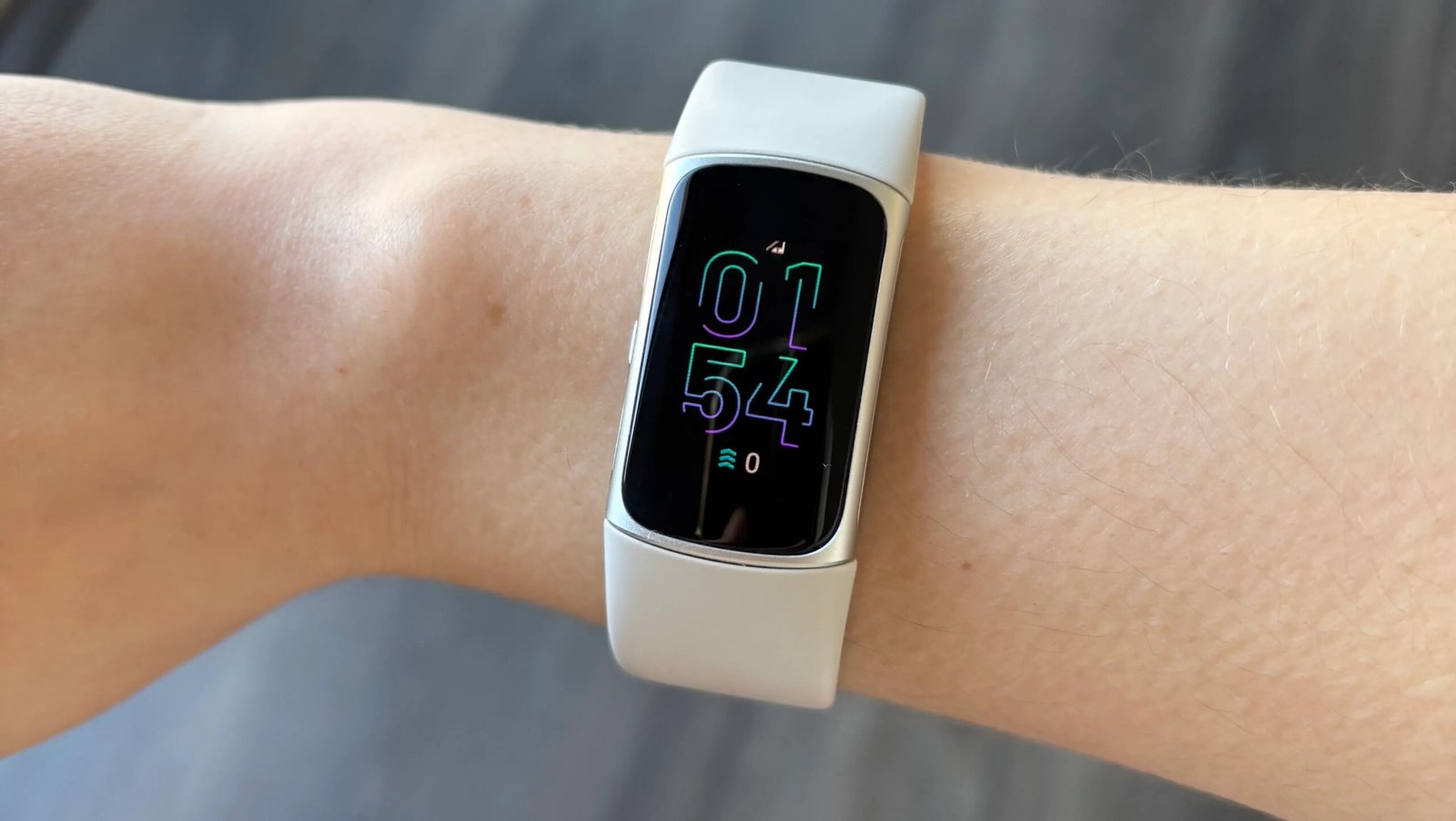
A fitness tracker is a great way to monitor your heart rate, steps and other fitness data if you have specific goals in mind or are just curious about your vital signs. Most of these devices can also track stress, sleep and other lifestyle factors, providing insights and suggestions for how you can live your healthiest life. To find the best fitness trackers, CNET’s wellness and wearables experts have spent years testing various models, specifically focusing on price, comfort and special features.
Our Picks

Bottom Line
Why we like it: The Fitbit Charge 6 tells you everything you need to know about your activity, whether you’re exercising or resting: heart rat…
Pros & Cons
-
SmartTrack automatically records your workouts -
Built-in GPS is great for runners -
Has sleep and stress scores -
Water resistant up to 50m -
Supports 40+ exercises -
Supports YouTube Music, Google Maps and Google Wallet
-
SmartTrack doesn’t always stop your workout for you -
YouTube Music Premium subscription is required and it doesn’t support offline music -
Fitbit Premium required for certain features

Bottom Line
Why we like it: The Apple Watch Series 12 has bumped the Series 11 off this list because it is just as accurate at sensing heart rate as its p…
Pros & Cons
-
Same $399 starting price, with no subscription required for health insights -
Longer battery life: About 30 hours in my testing (four more hours than Series 11) -
New health sensors enable more frequent heart rate and HRV readings -
S11 processor makes WatchOS 27 features such as Siri AI feel faster and smoother -
Dynamic Readiness score adapts as your body recovers throughout the day
-
Audio Intelligence features are still MIA, with privacy questions looming -
Battery life still requires frequent charging and trails longer-lasting competitors -
Sound Recognition produced frequent false alerts in my testing -
Familiar design gives Series 11 owners little reason to upgrade based on looks alone -
Readiness score requires seven nights of sleep and consistent, round-the-clock wear

Bottom Line
Why we like it: The Apple Watch SE 3 is Apple’s most affordable new smartwatch, proving that a lower price doesn’t have to mean sacrificing qu…
Pros & Cons
-
Always-on display -
Ultrafast charging: 8 hours of use in just 15 minutes -
Same S10 processor as pricier Series 11 and Ultra 3 -
Almost half the price of the flagship Apple Watch -
5G connectivity on the cellular model
-
No blood oxygen tracking or hypertension notifications -
No ECG (electrocardiogram) feature -
Smaller, dimmer display -
Battery life still limited to one full day (and night) of use

Bottom Line
Why we like it: The Pixel Watch 4 hits a sweet spot between universally appealing design, seamless Android integration, potentially life-savin…
Pros & Cons
-
Emergency satellite connectivity -
Dual-band GPS -
Hands-free Gemini voice assistant -
Ultra-fast charging (50% in < 15 min)
-
Health coach not yet available -
Battery lasts just over 24 hours -
Watch bands are hard to maneuver

Bottom Line
Why we like it: The Whoop 5.0 is a performance- and recovery-centric wearable that helps you build endurance over time and understand the role…
Pros & Cons
-
Long battery life with on-wrist charging -
Comfortable, minimalist design that won’t disturb while working out or sleeping -
Personalized coaching through an AI chatbot -
Great sleep, strain and recovery tracking with actionable insights
-
Subscription is required for ongoing data insights -
No display, GPS or smartwatch features

Bottom Line
Why we like it: The Garmin Forerunner 970 is considered one of the best smartwatches for those who enjoy endurance sports, such as running and…
Pros & Cons
-
Tracks all your recovery and active data -
Lets you create your own routes -
Built-in LED flashlight for safety -
Long battery life
-
Expensive -
Can be hard to navigate if you aren’t tech-savvy -
Lags with certain features

Bottom Line
Why we like it: The Suunto Run watch gives you the perks of an advanced running watch without the hefty price tag. It offers 12 days of batter…
Pros & Cons
-
Good value for a run watch -
As close to accurate as you can get for a sports watch -
Lets you record various workout types -
Lightweight
-
Not everyone may be looking for a watch with multiple features -
The charger is not the best design

Bottom Line
Why we like it: The Oura Ring 5 is the newest version of the wearable, and it’s thinner with enhanced updates. It tracks over 50 health metric…
Pros & Cons
-
Thinner band -
Multiple colors and finishes -
Provides readiness, sleep and stress scores -
Automatically detects activity -
Tracks more than 50 health metrics
-
Requires a subscription -
No built-in GPS
What’s the best fitness tracker overall?
The best fitness tracker overall is the Fitbit Charge 6 , which functions primarily as a fitness tracker but offers a few bonus features, too. Its SmartTrack function tracks your activity, supporting more than 40 types of exercise and keeping tabs on metrics such as steps, heart rate, calories burned and VO2 max.
Best fitness tracker overall
Fitbit Charge 6
-
SmartTrack automatically records your workouts -
Built-in GPS is great for runners -
Has sleep and stress scores -
Water resistant up to 50m -
Supports 40+ exercises -
Supports YouTube Music, Google Maps and Google Wallet
-
SmartTrack doesn’t always stop your workout for you -
YouTube Music Premium subscription is required and it doesn’t support offline music -
Fitbit Premium required for certain features
Why we like it: The Fitbit Charge 6 tells you everything you need to know about your activity, whether you’re exercising or resting: heart rate, steps, distance, calories burned, time spent in target heart zones, VO2 max, sleep score, blood oxygen, skin temperature, stress management score and more.
It supports more than 40 exercise modes, including strength training, yoga, cycling and running. Thanks to its SmartTrack feature, it should automatically recognize your exercise and record it in the Fitbit app.
Exercise aside, you also have access to Google Maps, Google Wallet, notifications for calls, texts and smartphone apps, Find My Phone, blood glucose tracking in the app, a smart wake alarm, menstrual health tracking and do not disturb and sleep modes.
Who it’s best for: The Fitbit Charge 6 is ideal for anyone who wants a fitness tracker that primarily functions as just that, allowing you to view your stats right on your wrist, as well as with the free Fitbit app. With its SmartTrack feature, you also don’t have to worry about manually recording your workouts.
If you’re a runner, the Charge 6’s built-in GPS allows you to see pace and distance, so no need to check your phone. You can use YouTube Music to listen to your favorite tunes on the go, but a YouTube Music Premium subscription is required for this feature. Offline music isn’t supported. Check your phone after, and you can see a workout intensity map showing where you put in the most effort on your route.
On Charge 6-compatible workout machines, you can connect your Fitbit to see your heart rate on the equipment as you exercise. And if you decide to hop in the pool after, you’re covered down to 50 meters.
With Fitbit Premium, you get access to a full library of workouts, detailed sleep and stress score breakdowns, a full library of mindfulness sessions and a curated list of recipes, but it does cost $10 per month or $80 per year.
Who shouldn’t buy it: If you want your fitness tracker to have more Apple or Android apps, like those on your smartphone — for sending messages, making calls and responding to emails, for instance — you’re better off getting a brand-specific smartwatch that has your favorite apps right on it. Serious runners might also want a watch specifically designed for running.
– Anna Gragert, senior wellness editor
The Apple Watch Series 12. / Dillon Lopez/CNET
Best fitness tracker for heart rate
Apple Watch Series 12
-
Same $399 starting price, with no subscription required for health insights -
Longer battery life: About 30 hours in my testing (four more hours than Series 11) -
New health sensors enable more frequent heart rate and HRV readings -
S11 processor makes WatchOS 27 features such as Siri AI feel faster and smoother -
Dynamic Readiness score adapts as your body recovers throughout the day
-
Audio Intelligence features are still MIA, with privacy questions looming -
Battery life still requires frequent charging and trails longer-lasting competitors -
Sound Recognition produced frequent false alerts in my testing -
Familiar design gives Series 11 owners little reason to upgrade based on looks alone -
Readiness score requires seven nights of sleep and consistent, round-the-clock wear
Why we like it: The Apple Watch Series 12 has bumped the Series 11 off this list because it is just as accurate at sensing heart rate as its predecessor and can now take more frequent readings of both heart rate and heart rate variability. Both metrics are key for unlocking a new readiness score that looks at how well the body recovers from stress. Plus, it comes with about four more hours of battery life, new health features such as the readiness score and an S11 processor that makes navigation on the watch faster and interactions with Siri AI on the wrist quicker. And that’s all for the same $399 starting price as the Series 11, with no extra subscription required.
In its own 2026 study comparing the Series 12 with wearables including the Oura Ring 5, Garmin Forerunner 970, Google Pixel Watch 4 and Whoop 5, Apple found that the Series 12 came out on top as the most accurate heart rate-tracking wearable.
Who it’s best for: Apple fans craving deep integration with the ecosystem and more ways to customize their watch will find the Series 12 a strong fit. It’s ideal for anyone upgrading from an older model who wants a sleeker design, better battery life and every health feature possible, without the bulk or $799-plus cost of the Ultra 4.
Who shouldn’t buy it: If you have a Series 9 or later, the Series 12 isn’t a must-have — especially since many of the new health features will be available on older models, aside from the readiness score, which will only be available on the Series 12 and Ultra 4. While the Series 12 has hypertension notifications, an ECG app and a Blood Oxygen app, the SE 3 offers all other core health features for at least $150 less. So if you’re looking to save, the SE 3 might be a better option.
– Vanessa Hand Orellana, lead writer
Vanessa Hand Orellana/CNET
Best smartwatch for fitness features
Apple Watch SE 3
-
Always-on display -
Ultrafast charging: 8 hours of use in just 15 minutes -
Same S10 processor as pricier Series 11 and Ultra 3 -
Almost half the price of the flagship Apple Watch -
5G connectivity on the cellular model
-
No blood oxygen tracking or hypertension notifications -
No ECG (electrocardiogram) feature -
Smaller, dimmer display -
Battery life still limited to one full day (and night) of use
Why we like it: The Apple Watch SE 3 is Apple’s most affordable new smartwatch, proving that a lower price doesn’t have to mean sacrificing quality or core features. The always-on display, faster charging and expanded health features put it on par with its higher-end siblings, making it easy to forget this is the entry-level model.
While it skips a few advanced health metrics, such as ECG and hypertension alerts, most people won’t miss them in day-to-day use. It also has a shorter battery life than the rest, but it holds up to a full day of real-world use, including a 40-minute outdoor workout (GPS-enabled) and sleep tracking.
You’re getting the same processor and nearly all the features found in the higher-end Series 12 (almost twice the price) and the Ultra 3 (three times the price), making it a solid value. The Apple Watch SE 3 has Apple’s latest updates, including 5G connectivity, ultrafast charging and new wellness tools such as Sleep Score and Workout Buddy, along with features from older models like temperature tracking and sleep apnea notifications.
Who it’s best for: The SE 3 is the Apple Watch we’d recommend for most people. It’s the most affordable way to access Apple’s newest features without feeling like you’re missing out. It’s ideal for first-time Apple Watch owners or those upgrading from older models (Series 7 or earlier). It’s also a great first smartwatch for kids, allowing parents to stay connected without introducing a smartphone.
If you’re at higher health risk and want ECG or blood pressure monitoring, the Series 12 might be worth the extra cost. Those prioritizing longer battery life or a larger display should look at the Ultra 3.
Who shouldn’t buy it: iPhone owners who want a tracker that lasts multiple days without charging may be better off with a dedicated fitness tracker or sports watch. With the always-on display enabled, the SE 3 runs through a full day (and night) of tracking, while disabling it can stretch battery life to around two days.
– Vanessa Hand Orellana, lead writer
Best Android smartwatch for fitness tracking
Pixel Watch 4
-
Emergency satellite connectivity -
Dual-band GPS -
Hands-free Gemini voice assistant -
Ultra-fast charging (50% in < 15 min)
-
Health coach not yet available -
Battery lasts just over 24 hours -
Watch bands are hard to maneuver
Why we like it: The Pixel Watch 4 hits a sweet spot between universally appealing design, seamless Android integration, potentially life-saving safety features and robust health tracking through Fitbit.
Google’s fourth-generation Pixel Watch builds on its already excellent predecessor with longer battery life, a brighter, larger display and two powerful new assistants: Gemini for everyday tasks and queries, and the upcoming Fitbit AI health coach, which promises to turn your health data into actionable guidance.
While that health coach is still on the way, nearly everything else delivers on Google’s promises, cementing the Pixel Watch 4 as one of the best Android smartwatches available.
At $350, the Pixel Watch 4 includes luxuries once reserved for pricier sport watches, like dual-band GPS for precise location tracking, satellite connectivity for off-grid emergencies and an easy-to-repair build. The real standout, though, is Gemini, a hands-free AI assistant that’s genuinely helpful and won’t leave you screaming at your wrist.
Battery life now lasts up to 30 hours (41mm) or 40 hours (45mm), with ultrafast charging that takes you from 0 to 50% in just 15 minutes, and a full charge in less than an hour.
Who it’s best for: The Pixel Watch 4 is perfect for Android users who want a sleek, capable smartwatch that balances cutting-edge features with robust health and fitness tracking — and it won’t leave them guessing about what all that data means.
Anyone with a Pixel Watch 3 or another recent Fitbit or Wear OS model can safely hold off on this update cycle, because Gemini and the Fitbit AI health coach (coming later this year) will arrive on older devices alongside the redesigned Fitbit app.
Who shouldn’t buy it: If you’re prioritizing battery life, you’re better off going for a dedicated Fitbit tracker. While the Pixel Watch 4 offers improvements in battery life, it won’t last more than two days on a single charge, compared to the multi-day battery life of other devices. It does compensate with its lightning-fast charging speed, though.
– Vanessa Hand Orellana, lead writer
Nasha Addarich Martínez/CNET
Best fitness tracker for performance
Whoop 5.0
-
Long battery life with on-wrist charging -
Comfortable, minimalist design that won’t disturb while working out or sleeping -
Personalized coaching through an AI chatbot -
Great sleep, strain and recovery tracking with actionable insights
-
Subscription is required for ongoing data insights -
No display, GPS or smartwatch features
Why we like it: The Whoop 5.0 is a performance- and recovery-centric wearable that helps you build endurance over time and understand the role recovery plays in your overall well-being. It offers one of the best battery lives among fitness trackers on the market, lasting up to 14 days on a single charge. Additionally, it has on-wrist charging — allowing you to wear it at all times without interruption.
This fitness tracker has no screen, meaning you get all of your insights through the app (compatible with iOS and Android). The app delivers detailed insights into sleep, HRV, strain and even physiological age, which can inform you on how to train smarter and prioritize recovery.
Who it’s best for: Whoop 5.0 is ideal for folks who are serious about performance, long-term health insights and recovery. Considering it’s performance-based, this tracker is best for competitive athletes, fitness enthusiasts and data-driven people who want to understand not just what they’re doing but how their bodies respond over time.
Who shouldn’t buy it: If you want a more traditional smartwatch experience with features like text notifications or GPS, Whoop isn’t for you. This tracker has no display and doesn’t provide any real-time insights; rather, it gives you your insights after the workout is done. It also includes a subscription model, requiring ongoing data access fees.
– Nasha Addarich Martínez, managing editor
Giselle Castro-Sloboda/CNET
Best fitness tracker for serious athletes
Garmin Forerunner 970
-
Tracks all your recovery and active data -
Lets you create your own routes -
Built-in LED flashlight for safety -
Long battery life
-
Expensive -
Can be hard to navigate if you aren’t tech-savvy -
Lags with certain features
Why we like it: The Garmin Forerunner 970 is considered one of the best smartwatches for those who enjoy endurance sports, such as running and cycling. It’s designed for triathletes and those who take their sport seriously. One of my favorite features on this watch is the built-in LED flashlight, which is particularly helpful when running at night or early in the morning when there isn’t enough daylight. This watch has an impressive 15-day battery life, to the point where I didn’t need to recharge it for about three weeks.
This watch offers numerous capabilities, including coaching, mapping that allows you to create routes, physiological metrics such as sleep tracking and VO2Max and a readiness indicator to assess your physical preparedness for the day, among other functions. Because this watch can be used by triathletes, it can also be used underwater up to 50 meters if you’re taking up swimming and would like to track your laps.
Who it’s best for: This watch is ideal for athletes who want to collect as much data on their performance and recovery as possible. If you are prepping for your first marathon, triathlon or something similar, you’re going to love having all these functions on one smartwatch. The Forerunner 970 offers a lot more data than I needed as a recreational runner, but it can be helpful for those dedicated to their sport.
Who shouldn’t buy it: If you’re a beginner runner or cyclist, this watch may be overwhelming. In that case, I’d go with a smartwatch that’s easier to navigate, such as the Apple Watch SE 3. It also has a slight lag when navigating some of the features on the watch (like GPS), and there’s a learning curve to figuring out what functions the buttons have and even saving a workout. If you prefer something simpler or more intuitive, this will easily become a nuisance. Its $750 price may also deter you if you don’t intend to use all the different features that come with the watch.
– Giselle Castro-Sloboda, fitness and nutrition writer
Giselle Castro-Sloboda/CNET
Best budget fitness tracker for runners
Suunto Run Watch
-
Good value for a run watch -
As close to accurate as you can get for a sports watch -
Lets you record various workout types -
Lightweight
-
Not everyone may be looking for a watch with multiple features -
The charger is not the best design
Why we like it: The Suunto Run watch gives you the perks of an advanced running watch without the hefty price tag. It offers 12 days of battery life, allowing you to track physiological data, including sleep, recovery and your training load. This sports watch is lightweight, weighing only 1.2 ounces. The watch interface is easy to read and consists only of a touchscreen, digital crown dial and two buttons for easy navigation. It connects to the Suunto app, which tracks your recorded activities and other data.
You can connect your Suunto watch to various third-party apps, including Strava, Apple Health and Map My Run. Besides running, the Suunto lets you select from various activities to record your workout. You’ll get more out of the watch if you use it for an endurance sport like running, as it was designed with that sport in mind. However, you can also use it for 34 activities, such as swimming, cycling, strength training and yoga.
I’ve been running indoors instead of outdoors lately, and one of my issues with smartwatches is that the pacing and timing often don’t sync with the treadmill. However, Suunto is the first watch I’ve tried that seems to match the treadmill pace and time almost accurately.
Who it’s best for: This watch is ideal for beginners or intermediate runners. Similar to Garmin, it takes a learning curve to figure out the different functions but this one has fewer complicated features and widgets compared to a more advanced watch. The price doesn’t hurt either, at only $200, compared to some other smartwatches that are $300 or more.
Who shouldn’t buy it: If you aren’t training for any type of race or don’t care to know all the extra data that comes with the watch, I’d recommend going for a simpler wearable like the Fitbit Charge. This also isn’t the ideal watch for someone who isn’t looking for a smartwatch with multiple functions and features. If you like running recreationally, you can also get good use out of an Apple Watch SE 3, which is also in a similar price range.
If you care about the charging mechanism, you may find this one to be a bit of a nuisance. The Suunto Run charger is in the form of a pod with magnetic connectors, which means you have to align the watch correctly each time; otherwise, it won’t charge. I also found it to be flimsy and could benefit from a similar design to the Apple Watch.
– Giselle Castro-Sloboda, fitness and nutrition writer
Gold Oura Ring 5 / Vanessa Hand Orellana/CNET
Best smart ring for fitness tracking
Oura Ring 5
-
Thinner band -
Multiple colors and finishes -
Provides readiness, sleep and stress scores -
Automatically detects activity -
Tracks more than 50 health metrics
-
Requires a subscription -
No built-in GPS
Why we like it: The Oura Ring 5 is the newest version of the wearable, and it’s thinner with enhanced updates. It tracks over 50 health metrics and provides insights into sleep, activity, heart health, stress, metabolic health and women’s health. Its 12 sensors provide more accurate readings compared to previous generations, according to Oura. The Oura Ring can measure blood oxygen levels, heart rate, heart rate variability, respiration rate and movement.
Oura’s app interface shares your readiness score, sleep score, cardiovascular age and more. Oura’s symptom radar, which detects if you’re getting sick, has expanded to health radar, which gives you a broader picture of your health and detects trends. This information can be helpful to share with your doctor if you need to discuss certain details about your health.
The Oura Ring 5 has an eight-day battery life and is scratch-resistant — something active ring users will appreciate, since they don’t have to worry about it getting scuffed easily. It now also has automatic detection, which means it can sense when you’re working out. However, Vanessa Hand Orellana, CNET wearables writer, says the detector missed at least one workout she did while testing the ring.
Who it’s best for: The Oura Ring is ideal for anyone who wants a wearable but prefers something more subtle. The thinner design on the latest Oura Ring resembles that of a thin wedding band and can be worn for various occasions — not just workouts. If you care about understanding your sleep habits and overall health data, this is a reliable wearable you’ll enjoy.
Who shouldn’t buy it: If you like to reference your stats on a screen while working out, a smartwatch or wristband fitness tracker with a screen would be a better option. The Oura Ring also doesn’t have a built-in GPS, so if you’re a runner and want to track distance, one of our running-specific picks would be better suited to your needs.
Best fitness trackers compared
| Fitness tracker | Ring or watch | Compatibility | Storage | Wi-Fi or Bluetooth | GPS? | Screen size | Battery life | Water resistance | Subscription cost | Special features |
| Fitbit Charge 6 | Watch | iOS and Android | 32GB | Bluetooth | Yes | 1.04 Inches | 7 days | 50m | $10/month or $80/year | Optical heart rate monitor, oxygen saturation monitoring, device temperature sensor, electrical sensors compatible with ECG app, ambient light sensor, YouTube Music, sleep score, stress score, irregular heart rhythm notifications, menstrual health tracking |
| Apple Watch Series 12 | Watch | iOS | 64GB | Wi-Fi, Bluetooth | Yes | 42 or 46mm | Up to 24 hours of normal use | 50m | Free | Readiness score, hypertension notifications, sleep apnea notifications, sleep tracking, heart health notifications, temperature tracking, ECG, irregular heart rhythm notifications, workout tracking, heart rate, cycle tracking |
| Whoop 5.0 | Wristband | iOS and Android | N/A | Bluetooth | No | N/A | 14 days | 10m | $149-$359/year | Healthspan (aging pace), personalized analytics, AI coach |
| Garmin Forerunner 970 | Watch | iOS and Android | 32GB | Bluetooth, ANT+, Wi-Fi | Yes | 35.3 mm | 26 hours | 50m | $4.99+/month | Sleep coach, skin temperature, stress tracking, heart rate, built-in mapping, LED flashlight, 26 hours of battery life, training readiness, GPS |
| Suunto Run Watch | Watch | iOS and Android | 4GB | Wi-Fi, Bluetooth | Yes | 1.32 inches | 12 days (without training) | 50m | Free | Activity tracking, Sleep tracking, stress and recovery tracking, GPS, weather, Multisport mode |
| Apple Watch SE 3 | Watch | iOS | 64GB | Wi-Fi, Bluetooth | Yes | 40 or 44mm | 18 hours of normal use | 50m | Free | Optical heart sensor, temperature sensor, compass, always-on altimeter, accelerometer, ambient light sensor, sleep score, noise app, heart rate, cycle tracking |
| Pixel Watch 4 | Watch | Android | 32 GB | Wi-Fi, Bluetooth | Yes | 41 or 45mm | Up to 40 hours with always-on display | 50m | Free | Loss of pulse detection, sleep tracking, ECG, irregular heart rhythm notifications, workout tracking, heart rate, cycle tracking, daily readiness score, cardio load |
| Oura Ring 5 | Ring | iOS and Android | N/A | Bluetooth | No | N/A | 8 days | 100m | $6/month or $70/year | Blood oxygen levels, heart rate and heart rate variability, respiration rate, temperature, accelerometer tracks movement, sleep score, stress score, women’s health cycle insights, cardiovascular age |
How we test fitness trackers
As CNET wellness and wearables experts, we’ve spent months testing different fitness trackers, paying attention to price, accuracy, special features, battery life, compatibility, water resistance and comfort. To see how they fare under different conditions, we’ve also used these trackers during various workouts, including Pilates, running, hiking, walking and weightlifting.
The fitness trackers on this list are the ones that have stood out to us during our testing, specifically for fitness, and are the ones we would personally continue to use for our workouts.
CNET’s lab testing for heart rate
During CNET’s lab testing to find the smartwatch with the most accurate heart rate monitor, Vanessa Hand Orellana, CNET’s wearables writer, ran over 30 miles of tests. With the Polar H10 chest strap heart-rate monitor as the control, she compared the Apple Watch Series 11, Garmin Venu 4, Google Pixel Watch 4, Samsung Galaxy Watch 8 and Amazfit Bip 6.
For each device, Orellana performed three 1-mile runs on a flat track, for a total of 3 miles. For each run, she ran two laps at about 70% heart rate intensity and two at 80% or higher. Once the raw data for each model was exported, it was compared against that from the Polar H10. Based on these comparisons, the Apple Watch Series 11 was found to be the most accurate heart rate monitor with an error rate of less than 1%.
Based on her testing since the Series 12’s release, Orellana found that the Series 12 is just as accurate as its predecessor, but with better battery life, more features (like the readiness score) and faster Siri AI.
Factors to consider for fitness trackers
Format: Would you prefer wearing a ring or a wrist-based device? If you want something understated that you can wear all the time and don’t mind not having a screen to glance at, then a ring would be ideal. If having a watch on your wrist is comfortable, then a smartwatch or wrist-based tracker may be the right choice.
Compatibility: If you’re an Apple user, ensure your fitness tracker is compatible with iOS. The same goes if you’re an Android user.
Storage capacity: For those who don’t want their fitness tracker to depend on their phone, look for a device with its own storage.
Special features: Before purchasing a fitness tracker, consider the health metrics that are important to you for your favorite workouts. If you’d like your tracker to do more than monitor your fitness, you’ll be better off with a smartwatch like the Pixel Watch 4 or Apple Watch SE 3.
Wi-Fi or Bluetooth: If you’re the type of person who likes to leave their phone behind when working out but still needs internet access, ensure your fitness tracker has Wi-Fi.
GPS? For those who run, hike or walk and want to track metrics like distance and pace without their phone, choose a fitness tracker with built-in GPS.
Screen size: Once you decide you want a fitness tracker with a screen, make sure it fits your personal preferences. A smaller screen may be better if you prefer it to be less obvious that you’re wearing a fitness tracker on your wrist.
Battery life: How often do you want to be charging your fitness tracker? If frequently charging your devices is a pet peeve, ensure your chosen fitness tracker has a long battery life, especially for your preferred workouts.
Water resistance: Individuals who work out by swimming or enjoy taking a dip in the pool after exercising will want a water-resistant fitness tracker. Confirm your device is rated for the depth you plan to swim at.
Subscription cost: It’s common for fitness trackers to require a subscription, particularly if you want access to all available features or need additional features for your workout or fitness goals. To guarantee that a fitness tracker is in your budget, check not only the price of the device, but also how much your subscription of choice will run you over the course of a year.
Best fitness trackers FAQs
What fitness trackers are best?
The best fitness tracker depends on your needs. If you’re looking for a fitness tracker that is generally great for most exercises, consider the Fitbit Charge 6. For a fitness tracker specifically designed for runners, the Suunto Run Watch would be a better fit.
Is Fitbit or Garmin better?
Fitbit is our pick for the best fitness tracker overall, while Garmin (specifically, the Forerunner 970) is best for serious athletes, like those who are into running or cycling. The price is also something to consider, as the Forerunner 970 is $750, while the Fitbit Charge 6 is under $150.
Is Fitbit or Apple Watch better?
We recommend the Apple Watch specifically for people who want fitness tracking with all the extra iOS features.
Fitbit, on the other hand, is great for fitness tracking in general, and can be used for iOS and Android.

See full bio