dailynewsnblog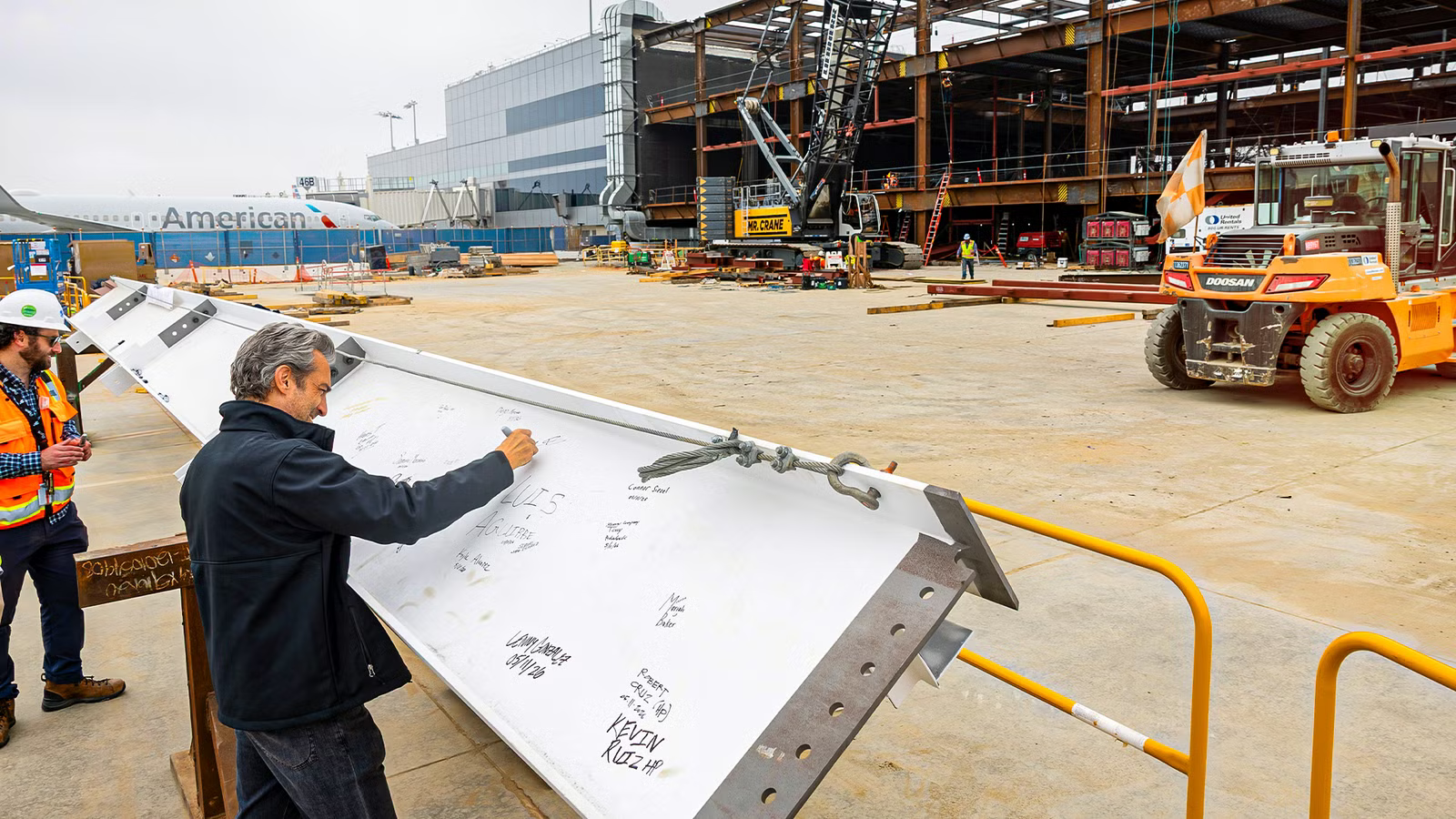
With the July 2028 Los Angeles Olympic and Paralympic Games fast approaching, airport operators across Southern California are locked in a non-negotiable race to complete massive infrastructure overhauls. Major global sporting events generate unprecedented spikes in passenger movement, placing heavy operational stress on gate availability, baggage handling networks, and security screening checkpoints. To absorb this impending surge without creating gridlock on the apron or inside passenger concourses, regional air hubs are accelerating capital expansion programs designed to maximize terminal throughput before the opening ceremony.
Leading the transformation is  Los Angeles International Airport (LAX), where primary construction efforts across its central complex are explicitly tied to the LA28 event timeline. A $203 million refresh of the flagship Tom Bradley International Terminal is modernizing 200,000 sq feet (18,580 sq meters) of passenger processing space, and neighboring Terminal 4 has reached structural topping out to overhaul domestic departures. The work is not limited to LAX, as secondary gateways like Long Beach Airport (LGB) have broken ground on a $37 million concourse enhancement, all with a view to helping regional airfields absorb passenger demand across the entire Los Angeles basin when international travel surges.
Ready For Incredible Demand

As the main West Coast hub for long-haul intercontinental flights, the Tom Bradley International Terminal is the gateway for foreign flag carriers entering Los Angeles. To prepare the complex for massive global passenger surges, airport operator Los Angeles World Airports launched a major modernization program targeting key bottlenecks across both departures and arrivals. Led by Clark Construction under a multi-billion-dollar infrastructure framework, construction began in early 2026 across 200,000 sq feet (18,580 sq meters) of interior terminal space, with a strict completion timeline in sync with the opening of the 2028 Olympic and Paralympic Games.
The overhaul targets core passenger processing infrastructure to accelerate throughput during peak international arrival and departure banks. The project scope includes modernizing more than 200 check-in ticket counters, integrating new self-service bag drop kiosks, and installing upgraded baggage handling systems designed to process heavy volumes of international luggage. Additionally, construction crews are laying replacement terrazzo flooring, installing updated entrance canopies, and mounting modern digital signage throughout the main hall, replacing aging finishes with high-durability surfaces engineered for heavy foot traffic.
Refreshing focuses on passenger comfort and indoor spatial flow as the main characteristics that will aid the Olympic demand. Crews are replacing 60,000 sq feet (5,574 sq meters) of overhead skylights to maximize natural daylighting across the terminal core, while interior spaces receive design motifs reflecting Southern California coastal culture and cinematic heritage. By combining automated bag drop technology with reconfigured queuing zones, LAX aims to reduce curbside-to-gate transit times, allowing the terminal to process thousands of international visitors per hour without creating terminal gridlock.
Seamless Connection Between International And Domestic

With international traffic entering through Tom Bradley, domestic feeder traffic depends heavily on surrounding legacy terminals. At the heart of LAX’s domestic operations sits Terminal 4, the primary hub facility for  American Airlines. In 2026, Los Angeles World Airports marked a major construction milestone with the placement of the final steel beam for the multi-million-dollar Terminal 4 modernization program. With this, the project moved into its final interior fit-out phase, keeping the complex on schedule for completion ahead of the July 2028 Olympic opening.
Catch what other flight trackers miss
Emergency squawks, holds, NOTAMs — live signals, no signup.
Open tracker
Catch what other flight trackers miss
Emergency squawks, holds, NOTAMs — live signals, no signup.
Open tracker
The multi-phase overhaul replaces aging infrastructure with a modernized, unified terminal design engineered for high-density passenger flow. Central to the facility is a centralized security screening checkpoint equipped with advanced automated screening lanes, designed to accelerate TSA throughput during peak departure banks. The reconfigured departures level expands concourse floor space, introducing wider circulation corridors, modernized gate podiums, and upgraded baggage handling facilities capable of moving higher luggage volumes between domestic flights and intercontinental routes.
What will be particularly important during the upcoming Olympics will be Terminal 4’s position as a key link within the central terminal area. A post-security passenger connector joins Terminal 4 directly to the Tom Bradley International Terminal and Terminal 5, allowing travelers to walk between domestic and international gates without re-clearing security screening. The upgraded facility massively improves aircraft turnaround efficiency for tenant carriers while building the domestic gate capacity necessary to handle Olympic travel surges.
Making Aircraft Move More Efficiently Than Ever Before

To complement specific terminal renovations, the overarching Airfield & Terminal Modernization Project managed by Los Angeles World Airports targets all sources of trouble for airside operations across the entire 3,500-acre (1,416-hectare) airport footprint. The comprehensive infrastructure program combines taxiway reconfigurations, airfield efficiency enhancements, and roadway upgrades designed to streamline both airside traffic and landside access.
Airside safety and movement efficiency are what form the basis of the enhancements. Construction crews are reconfiguring high-speed taxiway exits and expanding dual-taxiway corridors, creating additional clearance margins for large widebody aircraft like the Airbus A350 and Boeing 777. The removal of hold-short delays along active runways allows air traffic controllers to process arrivals and departures at higher rates, keeping apron congestion from spilling onto active taxiways during peak international flight arrival banks.
Campus mobility initiatives extend far beyond aircraft pavement, focusing heavily on passenger transit across the central terminal complex. The modernization strategy incorporates elevated pedestrian bridges, consolidated ground transportation islands, and streamlined access roadways that connect individual concourses directly to regional transit networks, as reported by Runway Girl. Now linking physical terminal expansions with continuous landside and airside mobility upgrades, LAX is establishing an integrated infrastructure model built to keep thousands of daily travelers moving efficiently through the airport ahead of LA28 and into the future beyond that.
Growth Over In Long Beach

LAX is the airport that takes the bulk of heavy international and transcontinental arrivals, though there are still secondary gateways across the Los Angeles basin that play a critical role in managing regional traffic. In April 2026, Long Beach Airport commenced a $37 million concourse enhancement project specifically designed to prepare the facility for the arrival of spectators and sports delegations in 2028. Positioned just 20 miles (32 km) south of downtown Los Angeles, the airfield is an essential pressure relief valve, distributing point-to-point domestic passengers across Southern California.
The infrastructure overhaul focuses on expanding and modernizing the airport’s historic open-air concourse area without compromising its distinctive boutique passenger experience. The project scope includes adding expansive shade structures, installing modern gate podiums, expanding passenger hold rooms, and upgrading restrooms and concession spaces. Construction teams are scheduled to complete the improvements by summer 2027, giving airfield operators one full year of operational testing before peak Olympic passenger volumes arrive.
Operating under strict noise curbs and a slot-controlled framework, Long Beach Airport really depends on seamless ground circulation to keep airline turnarounds efficient. Upgrading concourse facilities allows tenant carriers like  Southwest Airlines to process passengers quickly during high-density travel windows. The hope is that strengthening gate infrastructure at regional airfields can give Southern California aviation authorities a domestic point-to-point demand that remains balanced across multiple airports, preventing severe congestion when global travel concentrates on the region.
Airports Cannot Just Close Down For Maintenance

Upgrading terminal complexes at one of the busiest hubs in North America, of course, means proceeding along with multi-million-dollar structural projects directly inside live operational environments. After all, Los Angeles is still busy even without the Olympics. With LAX managing hundreds of thousands of aircraft movements across its 3,500-acre (1,416-hectare) footprint each year, construction management teams cannot just shut down active terminal buildings. As detailed in project delivery analysis by Urban Engineers, contractors have to work through extensive terminal reconfigurations in carefully timed phases, working around active departure banks, baggage conveyor networks, and continuous passenger foot traffic.
To keep passenger flow uninterrupted, project teams deploy temporary partition walls, dust containment barriers, and overnight construction windows. As detailed by Gensler, heavy structural work, such as placing steel beams for headhouse expansions or installing replacement skylights, is often restricted to brief nighttime hours when flight activity slows. In high-traffic zones like Terminal 4 and the Tom Bradley International Terminal, contractors build temporary bypass corridors to route passengers safely around active construction sites, allowing gate crews to process flights while teams demolish interior walls just yards away.
Airside logistics demand equal precision to prevent construction activities from impacting active flight operations. Operating heavy cranes, concrete trucks, and material haulers adjacent to active taxilanes needs continuous coordination between airport operations, air traffic controllers, and construction managers. Rigorous Foreign Object Debris (FOD) sweeps are enforced along apron boundaries to keep stray construction hardware from entering jet engines.
An On-Time Arrival

The non-negotiable arrival of the 2028 Olympic and Paralympic Games has truly transformed Southern California’s airport master plans into active, high-priority construction sites. Keeping capital improvement programs to a fixed calendar date leaves airport operators, construction managers, and tenant airlines with little margin for error, and that is somewhat of a good thing. Time and time again, we see extensive delays in airport expansion programs, and so having a key deadline to work to leaves the airport with a lot more hope for being completed on time.
While the impending surge of global spectators is most definitely the primary catalyst, the true value of these infrastructure projects extends far beyond July 2028. Modernized baggage processing systems, automated self-service check-in zones, expanded security checkpoints, and seamless inter-terminal walkways provide long-term structural relief for a regional airport system operating near peak capacity. The decision to get these terminal expansions underway today is therefore of significant importance; Southern California aviation authorities are securing the gate availability and passenger throughput needed to support West Coast commercial flight operations for decades to come.