dailynewsnblog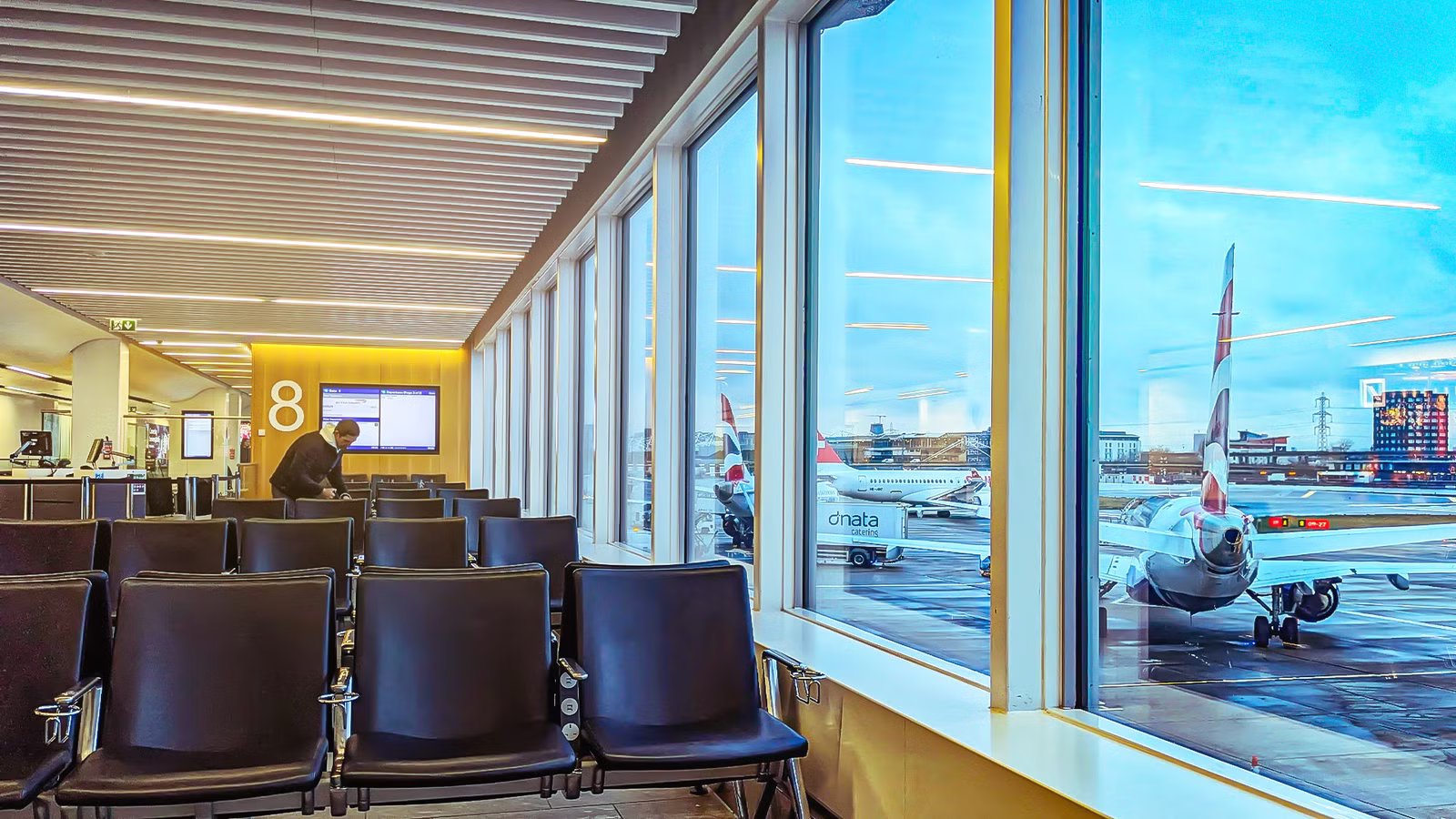
London’s executive airport has announced the arrival of its lounge, created in partnership with Swissport’s Aspire Pre-Flight Hospitality brand in 2027. Coinciding with the airport’s 40th anniversary, it will be the airport’s first-ever premium passenger lounge. Most airport lounges are linked to flying business class or having a certain status in a specific airline’s loyalty program. London City Airport’s (LCY) Aspire Lounge, however, is different.
Passengers will access it through walk-in purchases, online bookings, and annual membership. The decision comes as a surprise because the primary selling point for LCY is 20-minute door-to-gate transfers, so there is no obvious need for lounges, unlike at airports where passengers often have to wait for hours. LCY previously considered opening lounges in 2020, as reported by Head for Points, but it was assumed the idea would fall by the wayside when terminal expansion plans were scrapped.
What Will The Lounge Be Like?

LCY’s media center explains that “the bespoke lounge will have a modern luxury design aesthetic, with guests easily accessing the space via a five-star hotel-like lobby within the departures lounge.” The location will allow passengers to head into the lounge immediately after making it through security. Inside, passengers will have a view across the tarmac.
The lounge will meet all industry standards for these exclusive airport spaces, including a hotel-level lobby, a cocktail bar, dedicated workspaces, and barista-style coffee. The workspaces will also have private booths for anybody who needs to take sensitive work calls. Andy Cliffe, the Chief Executive Officer of London City Airport, said that:
“We’re delighted to be partnering with Aspire Pre-Flight Hospitality on this project, who have a proven track record of designing and operating luxury lounges in airports around the world.”
Meanwhile, Karen Cox, Swissport International’s UK and Ireland CEO, said that “London City has an exciting growth trajectory, a talented team, and we can’t wait to offer departing passengers and future guests a new pre-flight experience.” The decision to open a lounge hasn’t come from nowhere. Rather, the lounge fits into a broader upgrade from the main departure lounge area. The main phase of this project was completed in 2024.
Who Does LCY Think Will Use The Lounge?

LCY previously would not have considered there to be a market for a premium lounge for its passengers, primarily due to the speed at which you can go from arrival at the airport, to passing through check-in and security, and boarding your aircraft. Swissport’s UK and Ireland CEO, Karen Cox, states the need is simply because of “the new demands of the discerning traveller.”
Likewise, Andy Cliffe, LCY’s CEO, points towards a “clear demand from passengers” and the need to “elevate our unrivalled customer offer and reputation as London’s most loved airport.” The table below shows LCY’s figures for the number of passengers who pass through the airport each year.
Passengers | Year |
|---|---|
3,726,240 | 2025 |
3,569,871 | 2024 |
3,412,122 | 2023 |
2,990,201 | 2022 |
713,969 | 2021 |
905,326 | 2020 |
5,100,025 | 2019 |
The increasing number of passengers could suggest a shift in the types of passengers flying from LCY and a resultant change in their needs. It is also interesting that LCY’s passenger numbers have yet to recover to their pre-pandemic height of over five million passengers: Head for Points’ Rob Burgess goes deeper, writing that “I suspect the target market may be selling corporate memberships to the Canary Wharf business community.” Given the size of LCY, it’s unlikely that the airport will look for ways to offer lounge access to airlines’ elite status passengers.
Behind The Aspire Brand

LCY’s new lounge is being developed in partnership with Swissport’s Aspire brand. Each lounge is unique, but each offers a chance to escape the stressful environment that makes air travel so challenging, while providing access to excellent food and drinks, comfortable seating, and the Wi-Fi speed you need to get some work done. Sleep pods are also common and essential for passengers flying unsociable hours or who have been traveling for a long time.
This brand has over 100 executive lounges located across the world. The table below shows some of the locations you can find them in each region, although it is not exhaustive. You can head to the Aspire Lounges website for a complete list.
Region | Lounge locations |
|---|---|
United Kingdom | Aberdeen, Birmingham, Edinburgh, Glasgow |
Europe | Copenhagen, Amsterdam, Helsinki, Geneva |
Australia | Sydney, Melbourne, Perth |
Middle East and Asia | Tel Aviv, Tokyo Narita |
Africa | Johannesburg, Kilimanjaro, Casablanca |
North America | Calgary, Ottawa, San Diego, Ontario |
Each airport has different pricing structures, and the best deals can be found online. You can also book online to be entered into a competition for a chance to win “a year’s worth of premium pre-flight experiences.” You will have a delay cover when you book directly, meaning that you may stay in the lounge for as long as you need if your flight doesn’t take off when expected. There are also discounts available for guests aged 65 and over.
Catch what other flight trackers miss
Emergency squawks, holds, NOTAMs — live signals, no signup.
Open tracker
Catch what other flight trackers miss
Emergency squawks, holds, NOTAMs — live signals, no signup.
Open tracker
London City Airport Overview

Few airports with the reputation, scale, and longevity of LCY have existed for as long without having at least one executive lounge. Taking a look at its history indicates why this is the case. The airport first emerged in the 1980s in the Docklands area of London, at a point in history when this location was undergoing an urban regeneration project. Part of these efforts involved the construction of a new airport, which most local residents supported.
Planning permission eventually came in May 1985, and construction began three months later. Commercial services finally began in October 1987, with Queen Elizabeth II having opened the facility. LCY is known for its steep approach and short runway. Things were even more challenging in those early days. The turboprops using the airport had access to a runway that was just 3,500 feet (1,080 m) long.
It was extended to 4940 feet (1,508 m) during a 1992 airport upgrade. The development was essential to increasing services and demand at the airport, reaching a pre-pandemic high of over five million passengers a year. The primary driver of the airport is business aviation, particularly because of its proximity to the City of London and Canary Wharf, which are among the world’s most significant financial centers.
This audience would suggest that business lounges would appeal as essential spaces where busy London executives could get some work done. However, the small and efficient nature of this airport meant that the demand for lounges had only recently developed. Another recent change has been an increase in the airport’s leisure market. BA CityFlyer has introduced seasonal services to popular holiday destinations in Greece, Spain, and Portugal.
LCY’s Operations Have Strict Limitations

Further growth of LCY and the need for other executive lounge facilities are strictly restricted by the airport’s insurmountable limitations. This is due to limits on the types of aircraft permitted at the airport and noise restrictions. Only 111,000 aircraft movements are allowed each year, a figure often further reduced by the cap on cumulative noise exposure. Aircraft must also meet ‘Chapter 4’ noise standards and have to execute steep approaches so that aircraft are flying at low altitude over London for less time. Meanwhile, ground-running aircraft cannot exceed 60 dB LAeqT at any time, according to Boeing. This figure is measured at homes adjoining the airport.
Airlines must also draw from a limited pool of pilots when flying to LCY. Due to the short runway and steep approach, additional training is required. Speaking with The Express, British Airways Senior Training Captain Mike Pickard said that “London City Airport has special requirements to allow a pilot to operate into and out of. Once pilots have completed their conversion training, they are required to then have further simulator training for the steep approach, short take-off, and landing.” Furthermore, not all airlines have access to the small selection of aircraft cleared to fly from LCY. The planes include Airbus’ A318 and A220, as well as the Embraer ERJ series, Fokker 50 and 70, Dornier 228, 318, and 328JE. In the airport’s early days, even the De Havilland Canada DHC-7 was used.