dailynewsnblog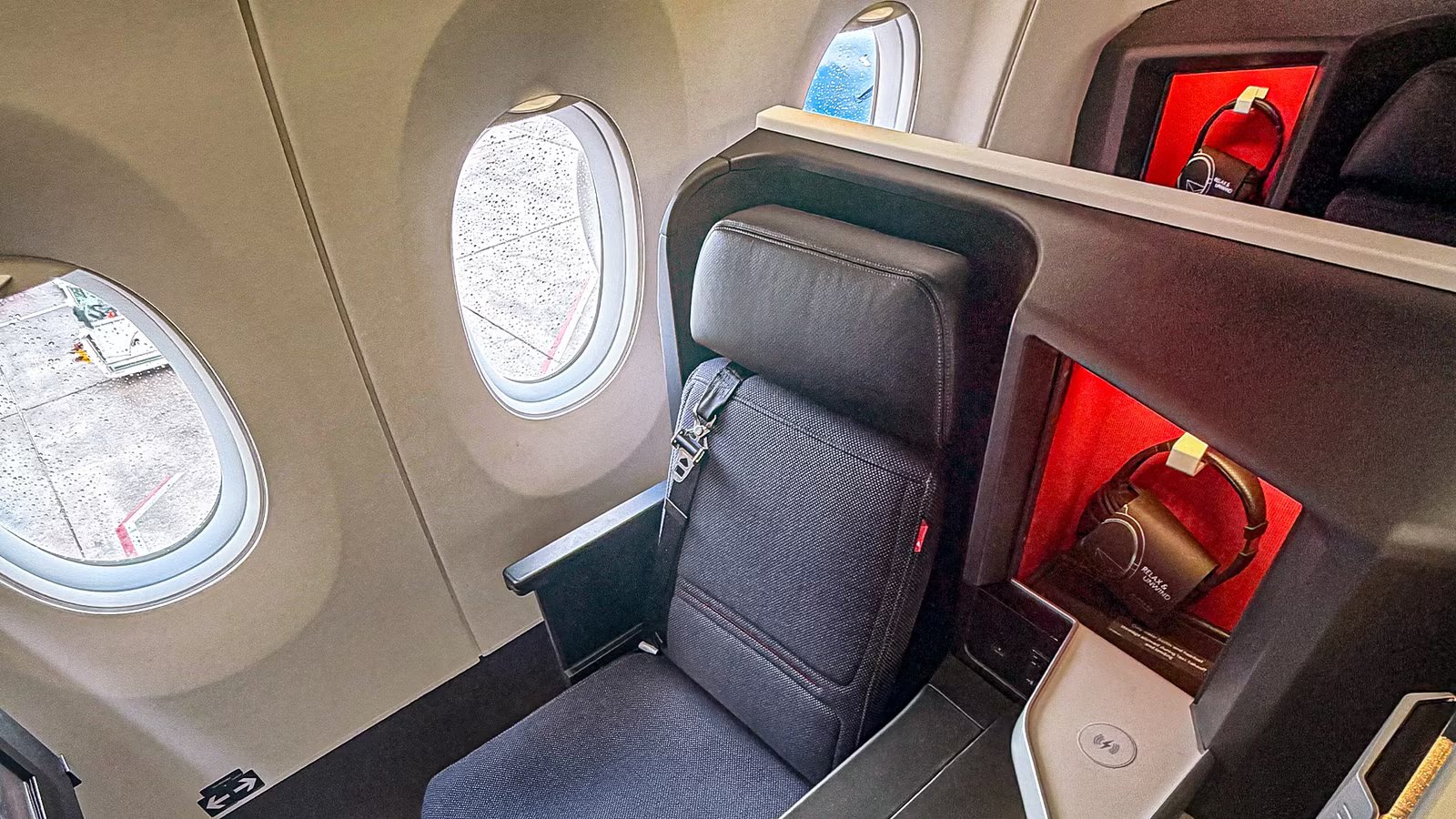
Business class legroom has never been more competitive – or diverse. A survey of major carriers shows business-class seat pitch ranging from as little as 38 inches on some regional configurations to over 88 inches on the most generous long-haul products currently flying. Airlines like All Nippon Airways, Virgin Atlantic, and  British Airways have long offered beds that exceed 78 inches, according to the survey, and newer entrants are going even further than that standard, offering bed designs that prioritize width and personal space over seat pitch alone. But the gap between the best and the rest has never been wider.
In this article, Simple Flying takes a look at the airlines leading the race – examining which carriers currently offer the most legroom in business class, what’s driving the shift from simple distance measurements to full-size couchettes, and what passengers can realistically expect when booking a premium long-haul seat today.
Which Airlines Offer The Longest Legroom In Business Class In 2026?

The meaning of “longest legroom” in business class has changed significantly in recent years. What used to be measured by the pitch of a single seat is now better understood as a combination of the length of the bed, the width of the suite, and the overall amount of personal space airlines can provide. According to a Forbes report, most airlines will no longer offer flat beds by 2026. They’re competing to make the cabin feel closer to a “private hotel room”, with enough room to stretch out, turn over, and actually sleep, especially on ultra-long-haul routes.
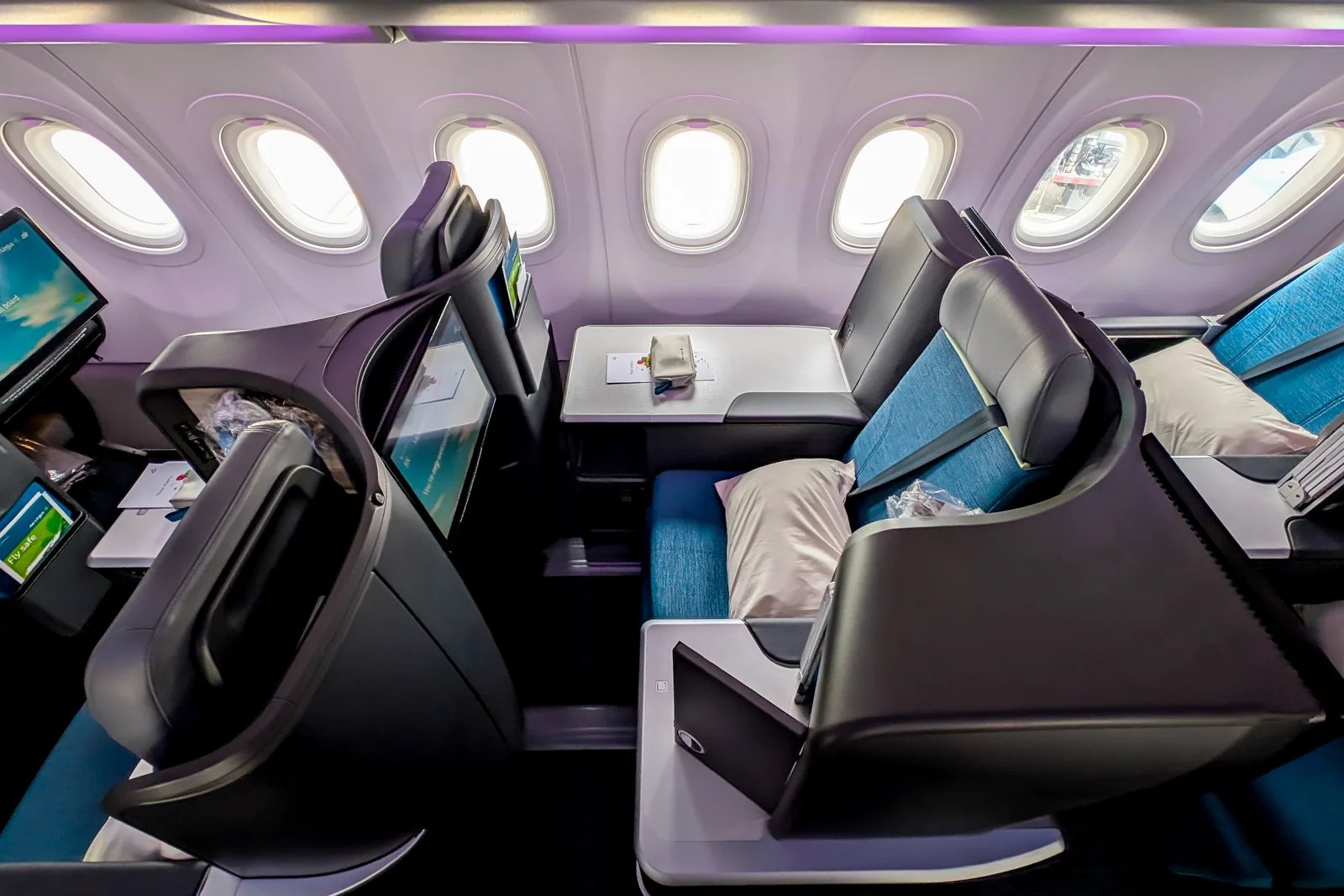
So which airlines currently offer the most legroom in business class? The answer depends on how you measure it. In terms of sheer bed length, ANA’s The Room FX stands out, offering up to 103 inches of seat pitch in the sleeping area and 41.5 inches of width – making it the widest business class seat in its class. SWISS’s new Senses cabin features beds that are up to 2.2 meters long.  Qatar Airways’ Qsuite, long considered the benchmark for business class space and flexibility, remains one of the most generous offerings in the sky.
Meanwhile, United Airlines and American Airlines are introducing upgraded suites in 2026 that will be considerably larger, especially in the premium front rows, which offer significantly more legroom than standard business class rows.
How Airlines Are Increasing Legroom Without Adding Seats

This year, airlines will be looking for increasingly sophisticated ways to increase legroom without reducing the number of seats in the cabin. Rather than simply removing rows, carriers are fundamentally rethinking the distribution of space, introducing staggered layouts, deeper legrooms, and more efficient suite configurations that give passengers more room to move around without reducing the aircraft’s commercial capacity.
According to a recent Simple Flying analysis of premium economy cabins, legroom is not just about seat recline, but also how effectively that space reduces fatigue and improves comfort on long flights. Airlines like Cathay Pacific and Air New Zealand have been demonstrating for years that thoughtful design can significantly improve the perception of space without increasing the physical size of each seat. The same philosophy has now fully migrated to business class, where the results are arguably even more dramatic.
The most significant change has been the widespread adoption of 1-2-1 configurations with direct aisle access. By arranging seats diagonally rather than parallel to the fuselage, airlines can achieve significantly longer bed lengths while using the same floor space that would be wasted with a more traditional layout. This approach is essential for newer products such as United’s Polaris Elevated and American Airlines’ Flagship Suite, both of which feature significantly longer sleeping surfaces without taking up more cabin space than their predecessors. In addition, many carriers are now introducing so-called “business plus” first-row suites, which offer up to 25% more space for multiple seats at the front of the cabin.

Why Do Airlines Still Invest In Premium Economy Instead Of Business Class?
It seems to be one of the use of space aboard aircraft for maximizing revenue.
The Aircraft That Make It Possible: Why The A350 And 787 Lead In Comfort

Wikimedia Commons | Simple Flying
When it comes to business class legroom, seat design and cabin layout are incredibly important, but so is the aircraft itself. As Simple Flying reported previously, both the Airbus A350 and Boeing 787 Dreamliner have introduced a new generation of cabin thinking based on passenger well-being rather than simply maximizing the number of seats. These two aircraft now operate the majority of the world’s premium long-haul flights, and understanding how they differ helps explain why some airlines can offer more space in business class than others.
According to Airbus’ own published specifications, the A350 cabin is 225 inches wide – 10 inches wider than the Boeing 787 – giving passengers comfort across all classes and giving airlines the flexibility to accommodate all types of configurations. That extra width is no small difference. In a business-class suite, this can mean the difference between a seat that feels truly spacious and one that simply functions as a flat bed. Airbus also notes that the A350 features its award-winning Airspace cabin, described as the quietest twin-aisle cabin in the sky, with wider seats, high ceilings, and adaptive ambient lighting to help reduce jet lag. The cabin air is refreshed with a HEPA filter every two to three minutes. It’s this combination of physical width and environmental engineering that gives airlines like Singapore Airlines and Qatar Airways the ability to create some of the most spacious business class aircraft in the world.
Boeing, meanwhile, makes a different but no less compelling argument. According to the US manufacturer’s official website, the 787 Dreamliner’s composite fuselage allows the cabin to be pressurized at 6,000 feet—2,000 feet lower than conventional aluminum-bodied aircraft, reducing the physical symptoms of fatigue and jet lag that make long flights so tiring. The 787 also burns 20 to 25 percent less fuel than the aircraft it typically replaces, allowing US airlines like United and American to operate ultra-long-haul routes where ample business class legroom is key. The 787 may be narrower than the A350, but its efficiency makes these routes commercially viable, and without a route, a seat is irrelevant.
How To Actually Make Sure You Get The Most Legroom In Business Class

Knowing which airline offers the most legroom in business class is only half the battle. The other half is making sure you end up in the right seat on the right aircraft – and in business class, that distinction matters more than most travelers realize before they board.
The first and most important step is verifying the aircraft, not just the airline or the route. According to AwardFares, the aircraft is everything in business class – an airline’s brand name means nothing if you are on the wrong plane, and the difference between an older 777 and a newer A350 can be the difference between a 72-inch bed and an 80-inch one on the exact same route, at the exact same price. Always confirm the specific aircraft assigned to your travel date at the point of booking, and check again closer to departure. Airlines swap equipment more often than passengers expect, and a last-minute change from a new-generation widebody to an older frame can significantly reduce the legroom and bed length you were counting on.
The second consideration is your row within the cabin. In business class, not all seats within the same product are equal. Several airlines now designate front-row configurations – sometimes called “business plus” or studio suites – that offer measurably more space than standard rows in the same cabin. According to Booking.com’s report, seat maps displayed during the booking process give travelers a clear view of the cabin layout before committing, making it possible to identify which rows sit closest to the bulkhead, which have the least restricted footwells, and which deliver the longest sleeping surface. On a 15 or 16-hour flight, those extra inches can really make a difference.

60 Inches Of Legroom: Inside This Transpacific Airline’s Record-Breaking Business Class
The Star Alliance member’s business class product is one of the best across the Pacific.
Do Airline Legroom Numbers Really Mean Anything?

Emirates | Simple Flying
Frequent flyers have been asking this question for years, and the honest answer is: sometimes. An airline brochure might advertise a business-class seat as having 78 inches of pitch, but that number doesn’t reflect how spacious it actually feels when you’re lying down at 35,000 feet and trying to fall asleep. The shape of the seat, the depth of the legroom, the mechanics of the backrest, and the construction around the ottoman or tray all determine the actual experience – and none of it is listed on the spec sheet.
Two business class seats with identical pitch measurements can feel completely different in practice. If one has deep, uncovered legroom while the other has large structures covering the leg area, the passenger in the second seat will notice the difference within the first hour – regardless of what the brochure says. As seasoned long-haul travelers know, published dimensions, while useful as a starting point, rarely tell the whole story about what a seat actually offers in the air.
Real passenger reviews consistently reinforce this distinction. Travelers who regularly fly multiple carriers often find that US airlines like United and American can feel more cramped in practice than their published specifications suggest, especially compared to Middle Eastern and Asian carriers whose cabin designs prioritize ample physical space over simply a competitive number on a spec sheet. Cabin layouts further complicate the situation – narrow aisles, closely spaced armrests, and dense seat configurations can make even a long seat feel more cramped than expected. The number matters. But so does everything around it.
The Business Class Cabin Is Still Getting Better – Here Is Where It Is Heading

A fold-down bed is no longer something airlines promote. It’s become a minimum expectation, and carriers that can’t offer it are already losing ground. Airlines are now competing to design cabin environments to feel like well-appointed hotel rooms in the air.
Carriers across North America, Asia, Europe, and the Middle East are introducing revamped business-class products in 2026 that prioritize privacy, personal space, and in-cabin technology. Overall, the direction of travel is clear: more confinement, more width, and a more conscious use of every square foot of cabin space.