dailynewsnblog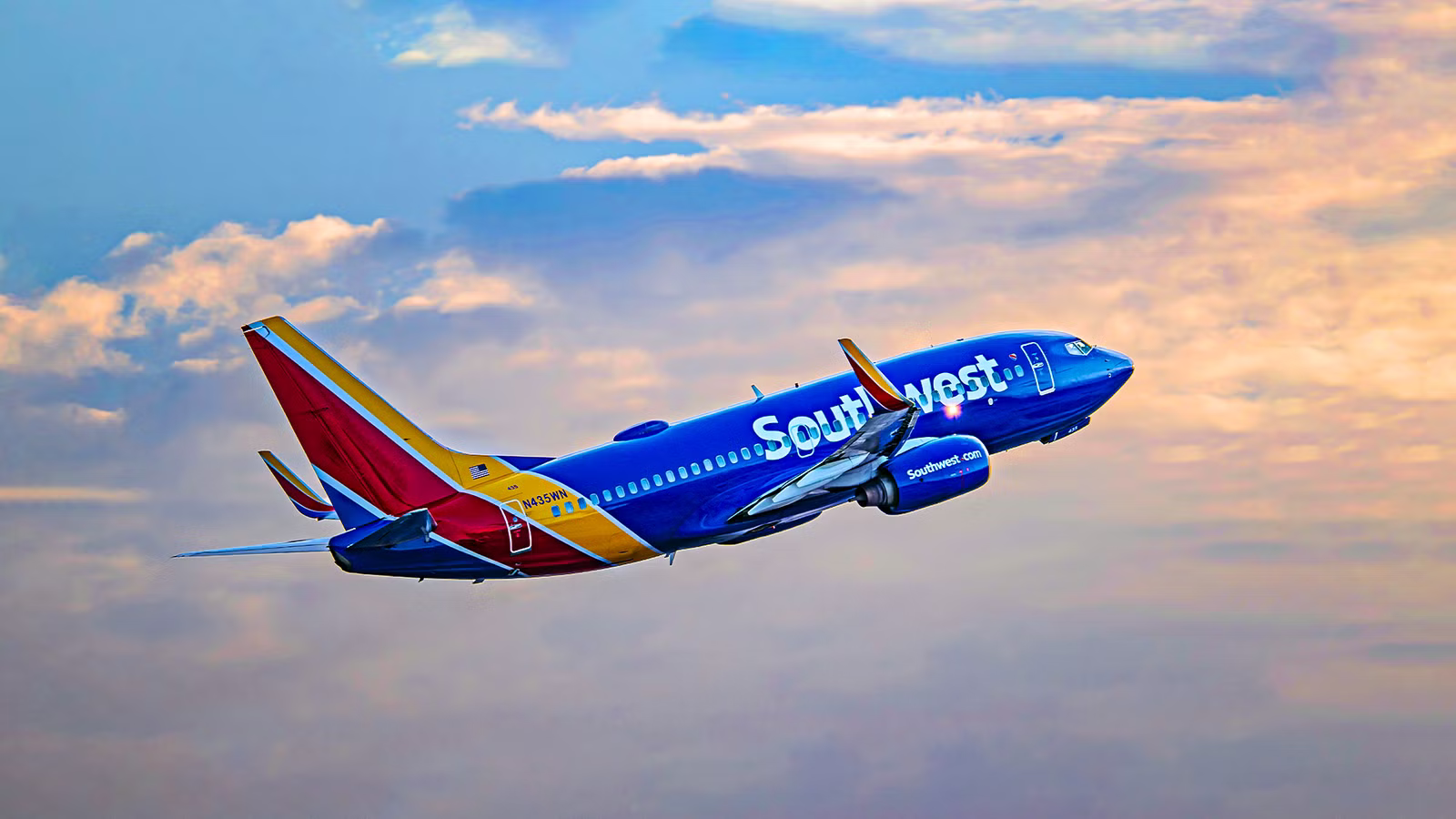
 Southwest Airlines is the world’s largest customer for the Boeing 737, having operated the type since its first flight in 1971. Apart from a brief stint flying leased 727s, the 737 has always been the sole aircraft type in Southwest’s fleet. However, the airline has traditionally favored the smaller 737 variants, flying the 737-200 (admittedly, the only variant delivered in the 1970s), followed by the 737-300 and 737-500, but not the larger 737-400. Meanwhile, following the release of the 737NG family, Southwest began receiving 737-700s and simply didn’t stop.
Between 1997 and 2018, Southwest Airlines took delivery of 514 737-700s. One of these was written off in 2013 after an accident, so at the fleet’s peak, Southwest operated 513 737-700s before it began retiring them. The Dallas-based carrier was already a large airline by the 1990s, but adding the 737-700s grew it to an unprecedented scale, where it now rivals legacy carriers in its domestic network. However, the 737-700’s days at Southwest are numbered, as their replacements finally start arriving.
Southwest & Its 737-700 Fleet

Southwest, which had only been operating for 26 years at this point, was the launch operator of the 737-700 and the 737NG as a whole in 1997. At the time, the airline’s fleet consisted of the 737-200, the 737-300, and a small fleet of 737-500s, totaling 260 aircraft before the first 737-700 arrived. The 737-300 was the most common variant in the carrier’s fleet and the most popular model in the 737 Classic lineup, but it was also the middle-sized option.
The 737-700 was designed as a direct replacement for the 737-300, and Southwest naturally got onboard with the type. At the variant’s debut, the carrier had accumulated 126 firm orders for the 737-700, along with 62 options. Southwest would later order 361 737-700s directly from Boeing, while leasing 17 examples from ILFC. It accumulated an additional 74 737-700s through the second-hand market over the years, 54 737-700s from its merger with AirTran Airways, and another eight were later leased from GECAS.
The 737-700 was reasonably successful, but airlines generally preferred the 737-800 for its extra capacity and superior operating economics. Southwest, however, wouldn’t order the 737-800 until 2010, and would accumulate a total of 207 examples. While this is a large fleet, it’s less than half the size of the airline’s 737-700 fleet at its peak, and the 737-700 has long been the primary aircraft for Southwest’s business model, as the carrier has traditionally avoided larger 737s.
Southwest’s Preference For Small 737s

Southwest notably did not order the 737-400 when that aircraft was on sale. In part, this was due to performance constraints, given Southwest’s large operations out of Chicago Midway International Airport (MDW), but the airline is also heavily focused on commonality. By operating only one aircraft type, the airline saves tremendous money in parts and crew training, but Southwest takes this a step further by limiting the number of aircraft variants in its fleet, making most planes essentially interchangeable.
Catch what other flight trackers miss
Emergency squawks, holds, NOTAMs — live signals, no signup.
Open tracker
Catch what other flight trackers miss
Emergency squawks, holds, NOTAMs — live signals, no signup.
Open tracker
Before the 737-700’s debut, Southwest operated three 737 variants, although the 737-200 and 737-500 had the same configurations, making them interchangeable. Meanwhile, the 737-700 added an extra row over the 737-300. Southwest operated 122-seat 737-200s (retired in 2005) and 737-500s, 137-seat 737-300s, and 143-seat 737-700s. With the removal of the 737-200s, Southwest’s operations increasingly relied on the 137-seat and 143-seat aircraft, as the airline flew only 25 737-500s.
Southwest Airlines Aircraft | Total Ordered & Operated |
|---|---|
Boeing 737-200 | 62 |
Boeing 737-300 | 195 |
Boeing 737-500 | 25 |
Boeing 737-700 | 514 |
Boeing 737-800 | 207 |
Boeing 737 MAX 7 | 269 |
Boeing 737 MAX 8 | 500 |
Planespotters.net
It wouldn’t be until the 737-800 that Southwest really began experimenting with larger aircraft, as these planes feature 175 seats. Before that, the carrier standardized on smaller models partly for operational simplicity and partly because of its commercial strategy. The airline tends to operate multiple daily flights on its routes, and using smaller planes helps the carrier right-size capacity. However, by the 2010s, the airline was becoming increasingly constrained in its key operating bases, and the 737-800s became necessary.
The Future Of Southwest’s Fleet

Southwest has been actively retiring 737-700s, and currently only 277 are in service. These are the oldest aircraft that Southwest flies, and the carrier’s fleet is now dominated by the 175-seat 737-800s and 737 MAX 8s. The MAX 8, in particular, has become the airline’s most common aircraft, with over 300 in service, while it also operates 188 737-800s. Southwest plans to retire all 737-700s and 737-800s by 2031, aiming to transition to an all-MAX fleet by then.
But while the 737 MAX 8 is already Southwest’s most common type, with the airline having ordered a total of 500 units, the airline has also committed to the 737 MAX 7, the successor to the 737-700. Southwest is the only commercial airline with the MAX 7 on firm order today (all other customers have converted their firm orders to larger variants), and it has ordered 269 examples. The carrier had tremendous influence over the MAX 7’s design, as the aircraft is longer and heavier than the 737-700 and is therefore tailored for Southwest.
The MAX 8 will make up the majority of Southwest’s fleet in the future, as it offers extremely compelling operating economics given its higher capacity, but the MAX 7 will still be extremely important. The type is now certified, and Southwest intends to put the plane into service during the first quarter of 2027. While the 737-700s will be gone within the next five years, they will continue to play a significant role in Southwest’s operations as the 737 MAX 7 becomes more prevalent in the fleet.
The Future Of The 737-700 Fleet

While Southwest is actively retiring the 737-700s, the fleet remains large, and the carrier still has five years to meet its 2031 deadline. As such, the carrier is committing to refurbishing its 737-700s with new cabin enhancements. All 737-700s have now been retrofitted with extra-legroom seating, which has reduced capacity from 143 seats to 137, and the airline also plans to retrofit most of its 737-700s with new seats that include USB ports.
The 737-700s currently have aging B/E Aerospace Innovator II seats that cannot support in-seat power. As such, 172 737-700s will be retrofitted with Collins Aerospace Meridian seats that incorporate USB-A and USB-C ports. The carrier is also embarking on a fleetwide interior modernization project that does include the 737-700s, but it’s unclear how extensive the upgrades will be for the older, smaller jets. The project includes installing Boeing Space Bins, the Boeing Sky Interior, and mood lighting.
The Boeing Sky Interior and Space Bins are expensive products, while installing these modifications requires a Supplemental Type Certificate (STC), which is a major expense as well. Although Southwest could support doing this for a fleet of well over 100 737-700s, these planes are Southwest’s oldest, and they’re meant to leave within five years. As such, while we know they will receive interior upgrades, it’s unclear how far the airline will go with these improvements.
Southwest & The 737 MAX

Southwest has ordered a total of 769 737 MAX aircraft, split between 500 MAX 8s and 269 MAX 7s. It is currently the only airline to hold firm orders for the MAX 7, and it has again abstained from buying the larger MAX 9 or MAX 10. Southwest’s decision to not order the 737 MAX 10 is particularly noteworthy, as this aircraft has already become the second-best-selling 737 MAX model, behind only the MAX 8. It promises to be the most economical 737 model ever, but Southwest isn’t currently interested.
The carrier has already been upgrading network-wide with its rapidly growing fleet of 737 MAX 8s, which have been replacing 737-700s, and introducing a large 737 MAX 10 fleet would further increase capacity. This matters because the carrier often schedules multiple daily flights on many routes, making capacity discipline especially useful. In addition, the 737 MAX 10 would face performance restrictions out of airports like MDW, where Southwest has a major operation.
But while the MAX 10 isn’t on the cards for now, it’s certainly possible that Southwest will go up in size again, especially if the airline decides to introduce a first class cabin that would cut down on overall capacity compared to today (rumored and hinted at, but not confirmed). Meanwhile, the MAX 8 will become the standard aircraft in Southwest’s fleet, and the MAX 7 will play a smaller but still crucial role in right-sizing capacity on routes and serving airports that need better performance than the MAX 8 can provide.