dailynewsnblog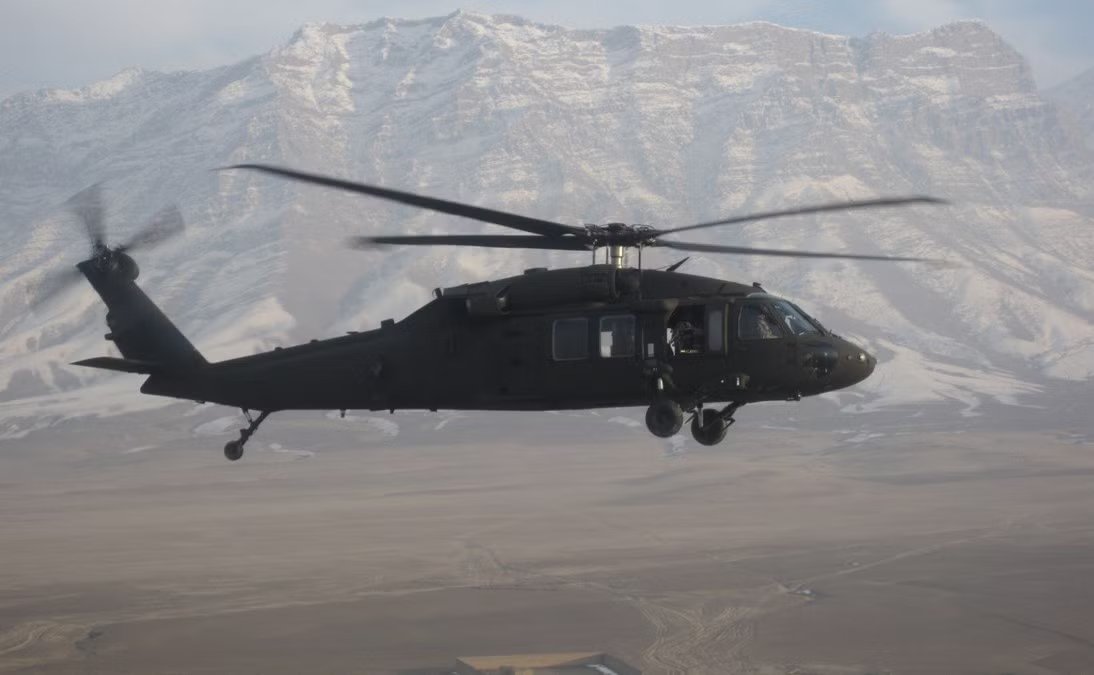
The US Army is accelerating its revolutionary Future Long-Range Assault Aircraft MV-75 Cheyenne II tiltrotor to enter service by around 2030 and start replacing the iconic Black Hawk. This will start with the Army’s elite 101st Airborne Division and is explicitly described as part of the Army’s pivot to projecting power and countering adversaries in the Indo-Pacific, such as China. While the Cheyenne II only offers modest improvements in payload and troop capacity, its focus is on increased range and speed.
However, the MV-75 Cheyenne is better not thought of as a direct replacement for the UH-60 Black Hawk, at least not initially. Instead, the Army will continue receiving new-built Black Hawks to around 2030 and then plans to operate them deep into the century alongside the Cheyenne II. These are to be complementary platforms with the Cheyenne II increasingly taking on more high-end assault missions where range and speed are important. It is unclear if it will ever fully replace the Black Hawk.
The Army Is Gearing Up For Its Final Major Black Hawk Order

The US Army’s UH-60 Black Hawk family is arguably the backbone of its Army Aviation branch. With around 2,300 Black Hawks in service, this alone would constitute one of the largest air forces in the world by number of manned aircraft. These are not expected to fully retire in the foreseeable future, although some of their roles will be progressively taken over by the incoming MV-75 Cheyenne II tiltrotor through the 2030s.
In recent years, the US Army has been purchasing the Black Hawk at a rate of around 20–30+ per year. These are built by Lockheed Martin’s Sikorsky at its plant in Stratford, Connecticut. The most recent order for the Black Hawk by the US Army was placed in 2022 for a baseline of 120 copters to be delivered between Fiscal 2022 and Fiscal 2026, with a late 2025 modification adding another 24 examples to be delivered in 2026–2027.
The Army is in negotiations to place another order for a baseline of 100–120 Black Hawks with options for 135-155 more. According to reporting by Aviation Week, the US Army has indicated this may be the final major new-build procurement of the Black Hawk ahead of the Bell MV-75 tiltrotor entering operational service in the 2030s. The Army is also working to keep parts of its Black Hawk fleet flying past 2050, with some reports suggesting past 2070.
Initially Complementing The Ubiquitous Black Hawk

To understand the MV-75 Cheyenne II replacing the Black Hawk, it is first important to understand what the Black Hawks’ roles are. The Black Hawk family’s primary roles are air assault and troop transportation including being able to carry an 11-soldier infantry squad for rapid insertion and extraction. It is also used for general support and as a utility helicopter, offering up to 9,000 lbs of external cargo payload.
Another important role is MEDEVAC, and this includes the dedicated HH-60M variant. Other roles include command and control, special operations support, search and rescue, armed escort, suppressive fire, humanitarian support, and more. MV-75 has been designed for transformational improvements in speed, going “twice as far, twice as fast,” including boosting cruise speed from 150 knots to around 280+ knots.
Early in its fielding, it is expected to fill long-range and deep air assault operations as a troop transport in contested environments. It will come with a MEDEVAC role and will support special operations deep penetration missions. However, it is not expected to fully replace the Black Hawk in all its roles initially. This will be a gradual process as the aircraft matures and becomes available in sufficient numbers.
The Cheyenne II’s Naming In 2026

In April 2026, the US Army announced it was naming the MV-75 the Cheyenne II, in honor of the Cheyenne tribe and in keeping with its helicopter naming tradition. The US Army wrote that “the designation continues a 79-year tradition, once mandated in Army Regulation 70-28, of Army aircraft be named after Native American tribes.”
HON Brent Ingraham, Army Acquisition Executive, stated that “the Cheyenne tribes represent a resilient warrior culture and embody the key attributes of the MV-75.” He added that the MV-75 is the Army’s first conventional tiltrotor aircraft. The US Marines, Navy, and Air Force already operate a fleet of CV-22 Ospreys, but not the Army. It notes the aircraft is able to transport around 14 soldiers and was crafted for operating in the Indo-Pacific theater.
The Army’s 101st Combat Aviation Brigade, stationed at Fort Campbell, Kentucky, will be the first to field the new helicopter, with the first expected to arrive in 2027. Tyler Partridge, the Commander of the 101st CAB, said that “the speed and range of the MV-75 Cheyenne II will fundamentally change how we conduct air assaults, giving us a decisive advantage and ensuring our ground forces can strike farther and faster than any adversary.”
First Prototypes Funded With First Being Assembled

Fiscal Year 2027 budget documents said that “the FY 2027 budget request initiates delivery of MV-75 prototype aircraft, continues to build and integrate remaining developmental prototype and Limited User Test aircraft, continues production planning, and initiates MV-75 prototype testing required to verify weapon system performance in preparation of a user assessment.” The documents show MV-75 Fiscal 2025 funding at $1.0 billion, Fiscal 2026 funding at $1.2 billion, and Fiscal 2027 funding at $2.1 billion.
This includes funding to continue integrating and assembling the first MV-75 prototype and two planned Limited User Test aircraft. It will begin initial prototype aircraft deliveries and initial prototype testing. The first representative aircraft is expected to be delivered in Fiscal 2030.
Black Hawk vs Cheyenne II (per Bell, US Army) | UH-60M (current standard) | MV-75 (FLRAA/Cheyenne II) |
|---|---|---|
In service | 2007 (original variant 1979) | Targeted 2030 |
Primary role | Utility, air assault, multi-mission | Long-range assault, utility, multi-mission |
US Army inventory | 2,300 (all variants) | 1,000+ planned |
Troop capacity | 11 | 14 |
External payload | 9,000 lb (4,082 kg) | 10,000 lb (4,536 kg) |
Cruise speed | 150 knots | 280 knots |
Max speed | 159 knots | 300+ knots |
Combat range | Up to 320 nautical miles | 500–800 nautical miles |
In June 2026, Bell announced it had completed the wing structures for the first two MV-75 tiltrotors, marking a major milestone in the production of the first eight test aircraft. The first six aircraft were in various stages of assembly in June. Culley Shafer, Bell’s director of operations, is reported to have said that “after decades of building V-22 wings, we’ve learned new ways to do things better, faster and smarter by implementing these lessons into the design upfront.”
The Timeline Of The MV-75 Cheyenne II

The Army launched its Future Vertical Lift initiative in 2009 to find an eventual replacement for the Black Hawk, with the effort leading to the FLRAA program in 2013. For FLRAA, Bell’s V-280 Valor (the predecessor of the MV-75) competed with Sikorsky-Boeing’s SB-1 Defiant. The first Bell V-280 demonstrator took flight in 2017, and in 2022 it was announced as the winner of the FLRAA program.
The first virtual prototype was delivered to the Army in June 2025, with construction of the first physical prototypes starting in 2026. They will be delivered to the Army in late 2026 or in 2027, and the type is expected to enter low-rate initial production in 2028. The first unit will receive MV-75s in Fiscal 2030, with Initial Operational Capability expected around 2030. Full Operational Capability is expected later, with MEDEVAC kit capability targeted for fielding around Fiscal 2033.
By Fiscal 2040, the Army is expected to have up to 334 Cheyenne II tiltrotors in service (per a 2024 Army briefing to a congressional committee). This is planned to support up to three light combat aviation brigades, three heavy or theater-enabling combat aviation brigades, a training base, a MEDEVAC capability, and initial USSOCOM fielding.
A High Priority For The Army

The development of cargo drones able to provide the “last mile” of supply is now a priority for the Marine Corps, while the development of Collaborative Combat Aircraft, the B-21 Raider, and the F-47 sixth-generation fighter are priorities for the Air Force. For the Army, the MV-75 has become a high priority.
All these priorities have an Asia-Pacific focus and center on a future conflict with China. While so many aerospace programs are delayed, the MV-75 is not only not delayed but is currently on an accelerated timetable reflecting the urgency in the Army. Previously, it had been scheduled to enter Initial Operational Capability from 2031 to 2033, and now that has been brought forward to around 2030.
It can also be noted that while the V-22 Osprey has been frequently in the news for mishaps and has had teething developmental issues, tiltrotors are seen as the future. China is developing its own tiltrotors, with the first example of a prototype appearing in 2025 that bears a striking resemblance to the European Leonardo AW609.
Additionally, most eVTOL air taxi designs (such as Archer and Joby) are tiltrotor designs. Many of these are being developed as dual-use hybrid examples for the US military, including to fill the Marine Corps’ “last mile” requirements. These are often autonomous or optionally manned and are for cargo, troop movement, and a range of ISR, strike, and other missions.