dailynewsnblog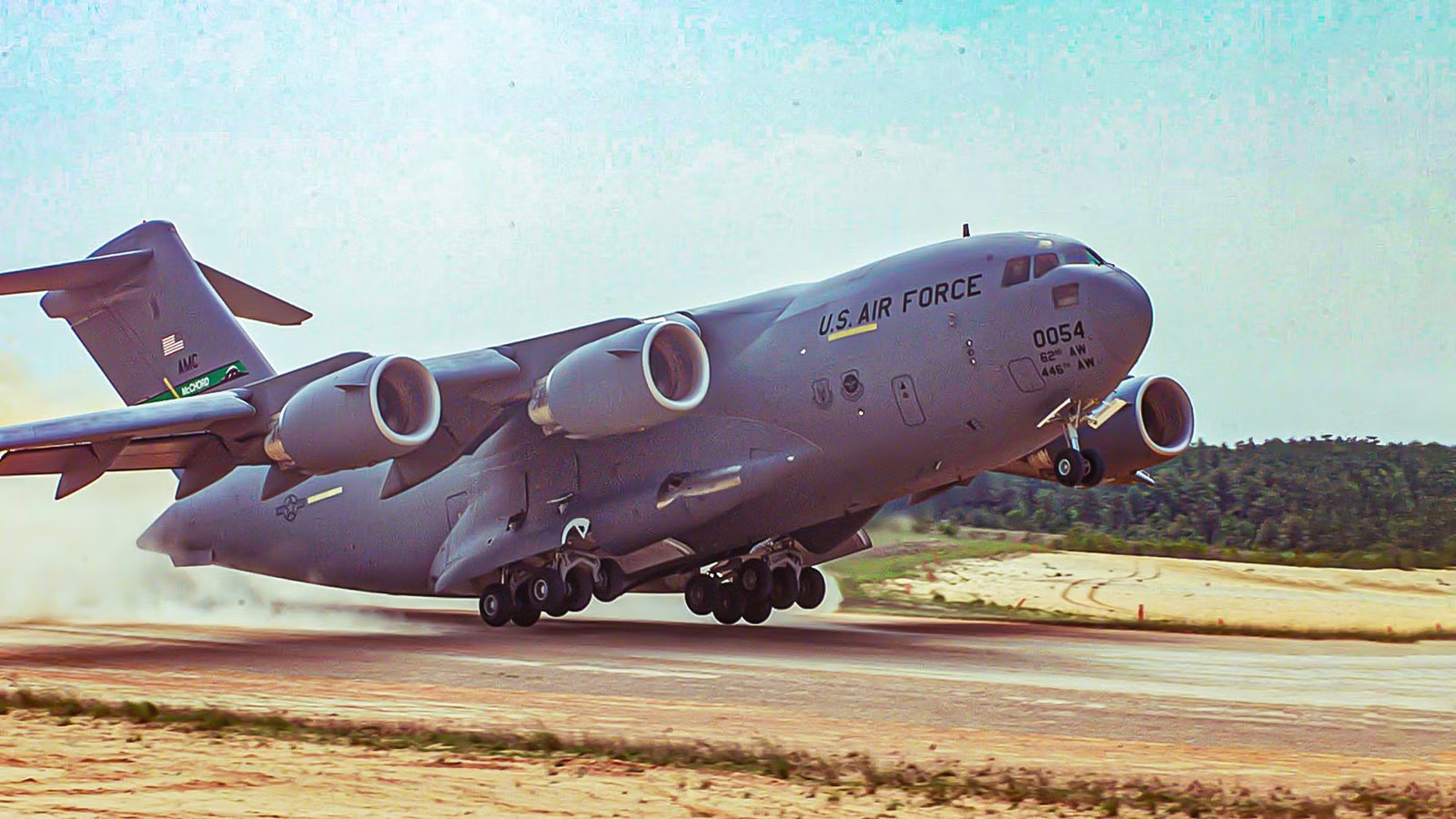
For more than 30 years, the  BoeingC-17 Globemaster III has stood at the center of United States Air Force global mobility. Whether delivering tanks and helicopters into austere airstrips, evacuating civilians from crisis zones, or rushing humanitarian aid across continents, the aircraft has become a visual shorthand for American airlift power.
However, even icons face the realities of time, technology shifts, and changing strategic demands, prompting a growing conversation about what will eventually replace the C-17. Today, Air Mobility Command leaders are publicly laying out what comes next and why the future of airlift looks both ambitious and fundamentally different.
In this article, we will explore the future of the C-17 in US Air Force service and the aircraft concepts, programs, and strategic thinking shaping its eventual replacement. Rather than focusing on a single jet that will abruptly take over, the reality is more nuanced, a longer historical arc. It stretches back to the lockheed C-141 Starlifter and forward, reflecting changing warfare, logistics priorities, and rapid advances in aerospace technology and air mobility in contested environments.
The Legacy Of The C-17 & The Lessons Of The C-141 Starlifter

When the C-17 entered service in the early 1990s, it represented a fundamental shift in how the US Air Force approached airlift. Designed by McDonnell Douglas to bridge the gap between long-range strategic transport and front-line tactical delivery, the Globemaster III combined intercontinental range with short-field performance and rugged operation near forward areas, something its predecessors could not do at scale.
In many ways, the C-17 inherited the mantle once held by the Lockheed C-141 Starlifter. Introduced in the 1960s, the C-141 was the Air Force’s first jet-powered strategic airlifter and a transformative platform during the Cold War and especially the Vietnam War. It brought outstanding speed and global reach, replacing slower propeller-driven transport and reshaping military logistics. However, it lacked the rough-field performance and payload flexibility that later conflicts would demand.
That’s where the C-17 stepped in. Over the years, the C-17 proved its worth in conflicts in the Middle East, humanitarian missions following natural disasters, and rapid-response deployments across Europe and the Indo-Pacific. Its ability to self-deploy reverse thrust on landing and operate from semi-prepared airstrips made it uniquely versatile within the US mobility fleet.
Today, the US Air Force operates around 220 C-17s, forming the backbone of its heavy airlift capability. Despite the aircraft’s continued relevance, the average age of the fleet is steadily increasing, and production ended in 2015. Sustainment, modernization, and long-term replacement planning have therefore become central topics within Air Mobility Command.
A Next-Generation Platform

Despite its continued relevance, the C-17 fleet is aging. With no production since 2015 and an average age exceeding two decades, sustainment is becoming challenging. Any discussion of the C-17’s successor must also include the Lockheed Martin C-5M Super Galaxy, the USAF’s largest strategic airlifter with enormous payload capability.
After the Reliability Enhancement and Re-engining Program, Air Force Times noted that the C-5M emerged as a dramatically more reliable and capable aircraft, with service life projections extending well into the 2040s. In practical terms, the Air Force cannot sustain these fleets indefinitely. While incremental upgrades and life-extension efforts can keep them flying, emerging threats, especially advanced air defense systems and long-range missiles, demand an airlift platform capable of speed, agility, and survivability.
Feature | C-5M Super Galaxy | C-17 Globemaster III |
|---|---|---|
Maximum Payload | ~281,000 lbs (127 tonnes) | ~170,900 lbs (77 tonnes) |
Cargo Hold Volume | Significantly larger (e.g., 6 Apache helicopters or 2 M1 Abrams tanks) | Versatile tactical focus (1 Abrams + support vehicles) |
Range with Max Payload | ~2,400 nm (extendable with refueling) | ~2,400 nm |
Runway Requirements | Longer prepared runways | Short/unprepared airstrips (~3,500 ft) |
Primary Role | Heavy outsized/intercontinental strategic | Tactical/strategic hybrid |
Fleet Size (USAF, 2025) | 52 aircraft | 222 aircraft |
Projected Retirement | Mid-2040s | Mid-2070s |
According to General John Lamontagne, head of Air Mobility Command, the goal is to begin the ability to transition to a replacement around the 2040s, ideally before chronic service life erosion hampers global mobility. He has described the C-17 as the “workhorse of the fleet” but noted that future airlift platforms must also be capable of operating in higher-threat environments with enhanced agility and survivability.

6 Reasons The C-17 Globemaster III Will Be Hard To Replace
The C-17 is a mainstay of US strategic airlift capability and is set to continue to serve the Air Force for many years to come.
One Aircraft For Both Roles

The most significant shift in current USAF airlift planning is this: rather than planning separate replacements for the C-17 and C-5M, Air Mobility Command is targeting a single next-generation strategic airlifter that can fulfill the mission sets of both. This ‘two-for-one’ conceptual approach would streamline logistics, reduce lifecycle costs, and potentially enable a more flexible and capable global mobility force.
Known as the Next-Generation Airlifter (NGAL), this platform is envisioned to blend the massive outsized cargo capacity of the C-5M with the tactical flexibility and austere-field operations of the C-17. By late 2025, AMC’s Airlift Recapitalization Strategy outlined that it would be fielding the first NGAL aircraft as early as 2038, with initial operational capability by 2041. The C-5M fleet would retire first around 2045, followed by a gradual one-for-one swap with the C-17 through the mid-2070s.
Milestone | Projected Date | Details |
|---|---|---|
Analysis of Alternatives | FY2027 | Accelerated requirements definition |
First Production Aircraft | As early as FY2038 | Dependent on funding and acquisition speed |
Initial Operational Capability | FY2041 | Early NGAL units are operational |
C-5M Full Retirement | ~2045 | NGAL replaces all 52 C-5Ms |
C-17 Full Retirement | ~2075 | NGAL replaces all 222 C-17s |
Total NGAL Fleet Goal | ~274 aircraft | Maintains uninterrupted strategic capacity |
This consolidated approach stems from budget realities and the need for efficiency in an era of peer competition, particularly in the vast Indo-Pacific theater where range, speed, and survivability are paramount. Crucially, this remains conceptual planning, not an acquisition program. The Air Force is conducting capability-based assessments and will eventually move into a formal Analysis of Alternatives. These steps are designed to define what the aircraft must do, not to rush industry toward a premature design.
Emerging Technologies & Design Concepts Shaping NGAL

As the United States Air Force begins to chart a path toward a Next-Generation Airlifter capable of succeeding both the C-17 Globemaster III and C-5M Super Galaxy, planners are looking well beyond conventional tube-and-wing designs. The thinking today embraces disruptive aerodynamics, advanced propulsion technologies, integrated systems, and future battlespace awareness, all aimed at improving efficiency, survivability, and operational flexibility in a highly contested environment.
One of the most often discussed concepts in NGAL exploratory circles is the blended wing body (BWB) configuration. Unlike traditional tube-and-wing aircraft, a BWB integrates the fuselage and wings into a unified aerodynamic lifting surface. This architecture offers several theoretical advantages, such as Significant fuel efficiency gains, increased usable volume, and reduced radar signature. To mature BWB concepts, the Air Force has partnered with industry on a subscale demonstrator.
In 2023, start-up JetZero, in partnership with Northrop Grumman, won a contract to build a BWB prototype under Air Force sponsorship. The prototype, nicknamed ‘Pathfinder,’ is a 23-foot-wingspan demonstrator designed to explore control laws and aerodynamics in preparation for larger designs. Its first flight remains on track for 2027, and early flights have validated baseline aerodynamic behaviors, as reported by Air & Space Forces Magazine.
How The C-17 Globemaster Stacks Up Against The C-5 Galaxy In 2025
In 2025, the C-5 still leads in raw payload and range, while the C-17 dominates in flexibility and access, two giants that shape modern air mobility.
Challenges & Strategic Imperatives
![3144811 - C-17 Lands at McMurdo Station [Image 1 of 2]](https://static0.simpleflyingimages.com/wordpress/wp-content/uploads/2024/12/3144811.jpg?q=49&fit=crop&w=500&dpr=2)
Beyond airframe and engine technologies, NGAL planning reflects a broader shift toward networked, autonomous, and survivable air systems. Future airlifters are being conceptualized not just as cargo haulers, but as integrated nodes in Joint All-Domain Command and Control architectures, capable of sharing real-time data with other platforms across air, land, sea, cyber, and space domains.
This integration, coupled with advanced autonomous logistics planning tools and onboard situational awareness systems, could allow NGAL aircraft to adapt routes dynamically, avoid threats, and operate semi-autonomously with reduced risk to crews. Defensive systems are also a consideration, as planners envision future conflict zones where airlifters could be exposed to advanced air defenses or long-range missiles.
These might include integrated electronic warfare suites, directed energy self-defense weapons, or advanced countermeasures packages designed to enhance survivability without imposing excessive weight penalties. Concepts like BWB and adaptive propulsion surely hold promise, but they come with risks and trade-offs: a BWB design optimized for fuel efficiency and large internal volume may face challenges in short takeoff and landing performance or payload modularity, which were central to the C-17’s success.
If not carefully balanced, these trade-offs echo historical limitations such as the C-141 Starlifter’s relatively long runway requirements compared to later airlifters. Furthermore, the emerging geopolitical environment, particularly deterrence requirements in the Indo-Pacific, places a premium on airlift platforms that can sustain dispersed operations and minimize vulnerability. NGAL will likely be expected to support Agile Combat Employment concepts and high-tempo logistics across great distances.
What This Means For USAF Mobility

In 2026, the NGAL program represents a paradigm shift in strategic air mobility. The evolutionary arc from C-141 to the C-17, and now toward a potential NGAL, highlights a broader theme in USAF strategy: capability adapts to strategy. The Starlifter pushed mobility to the global reach of the jet age, and the Globemaster III blended that reach with tactical access. Meanwhile, the upcoming generation will likely integrate battlefield awareness, survivability, and global logistics.
Rather than a sudden handover, these transitions unfold over decades, with overlapping service lives and continuous adjustments to doctrine, threat assessment, and technology. That continuity preserves capability while making room for innovation, a balancing act that will define the future of strategic airlift as it prepares to replace the aircraft that followed the Starlifter’s legacy.