dailynewsnblog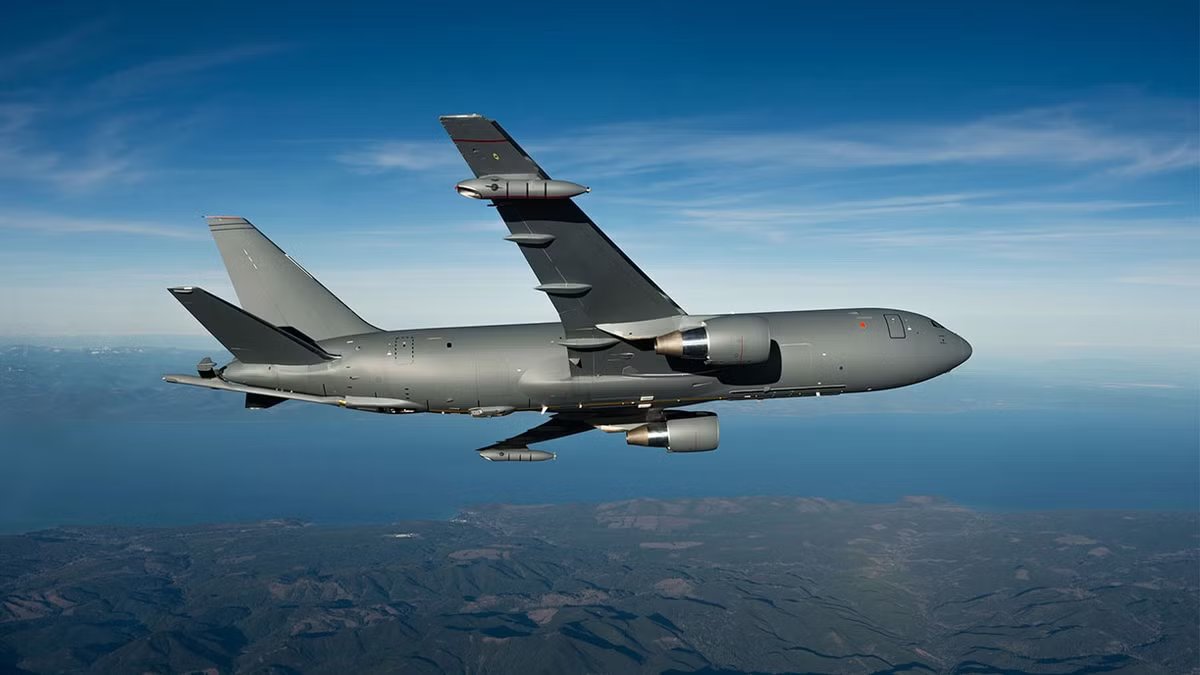
The  Boeing KC-46A Pegasus was supposed to begin retiring the KC-135 Stratotanker, a design that traces back to the Eisenhower era. Yet, the legendary planemaker has now lost more money building the US Air Force’s newest aerial tanker than the entire contract was ever worth. Today, more than a decade after Boeing won the contract, the older jet still outnumbers its replacement roughly three to one.
The newer aircraft is still flying with an unresolved camera system that the Air Force itself has classified as a safety deficiency. How did a jet built from a proven airliner airframe end up this far behind schedule? What does that delay mean for a Stratotanker fleet the Air Force once expected to retire decades ago?
The Next-Gen Cameras That Can’t See Clearly

The core of the KC-46’s trouble lies inside the boom operator’s station, where a series of digital cameras and screens, known as the Remote Vision System, replaced the direct window view that boom operators had always used on the KC-135. Per The Aviationist, light glare and shadow could distort the video feed badly enough that a boom operator might misjudge distance and strike a receiving aircraft, a flaw the Air Force designated a Category 1 deficiency, its most serious classification.
In 2020, Boeing consented to redesign the system at no additional expense to the government, resulting in RVS 2.0. Since then, the redesign has frequently slid. According to Air and Space Forces Magazine, the initial 2023 deadline was shifted to 2025, then to 2026, and then to the summer of 2027 last year. At the end of 2025, the tanker still had five Category 1 problems, two of which were directly related to the vision system, per Air Force Chief of Staff General David Allvin, who testified before the House Appropriations Committee.
The second-largest unresolved issue is the fuel boom itself, which Allvin said remains too stiff for safe contact with the A-10 Warthog, a limitation that has kept that aircraft off the KC-46’s certified receiver list years after deliveries began. A separate mechanical problem has also cropped up during flight testing. The Aviationist reported in detail on the nozzle binding issue. The problem comes when the boom’s nozzle jams during contact with a receiving aircraft on at least three occasions, causing tens of millions of dollars in damage.
A Deal That Has Become A Money Pit For Boeing

The KC-46 was built under a firm fixed price development contract worth $4.9 billion, a structure meant to shield taxpayers by making Boeing responsible for any costs above the agreed ceiling. That structure has instead produced what Boeing chief executive Kelly Ortberg called a bad contract for the company’s last decade, as reported by Air and Space Forces Magazine.
According to Breaking Defense, Boeing revealed an additional $565 million charge on the program in the fourth quarter of 2025. This resulted in overall cost overruns on the tanker climbing to over $7 billion by early 2026, or nearly double the initial contract amount.
In addition to the additional technical personnel Boeing has retained at its Everett, Washington facility to minimize factory rework, Aviation Week traces a portion of that quarter’s charge to cost growth on the 767 commercial airliner that forms the basis of the tanker’s design. Early in 2025, deliveries were still suspended for months after The Aviationist revealed that two recently constructed aircraft had cracks in their outboard trailing edge support structure.
Catch what other flight trackers miss
Emergency squawks, holds, NOTAMs — live signals, no signup.
Open tracker
Catch what other flight trackers miss
Emergency squawks, holds, NOTAMs — live signals, no signup.
Open tracker
Steven Grundman, a former Pentagon industrial base official now at the Atlantic Council, told Defense News the KC-46 program has become a cautionary tale about the risks of fixed-price development work, one that will make both the Pentagon and its contractors far more cautious about which programs are procured under such terms in the future. He said:
“[The KC-46 story] makes both sides of the market — the Pentagon and the contractors — sharpen their pencils. The Pentagon will be more cautious about programs that it thinks [lend themselves to] an efficient and effective fixed-price contract type. And contractors will be more discerning about the readiness of their engineering chops and the ability of their balance sheets to absorb risk.”
The Pegasus Advantage Over The Stratotanker

The KC-46’s baseline design offers real gains over the aircraft it is meant to replace. Boeing states the tanker carries 212,000 lb (96,162 kg) of fuel, roughly 10% more than the KC-135, and unlike the older jet, the Pegasus can itself take on fuel in flight from another boom-equipped tanker, an endurance feature the current KC-135 fleet lacks. Its fly-by-wire boom, adapted from the larger KC-10 Extender, offers a receiver envelope Boeing describes as three times larger than the KC-135’s.
The aircraft carries both centerline and wing-mounted hose and drogue systems that can refuel probe-equipped aircraft independently of the boom, letting one tanker service multiple aircraft types on a single sortie. The Air Force lists 28 certified boom and drogue receivers, including foreign clearances that let the aircraft support coalition partners flying the F-35, F-18, F-16, and P-8 on the same missions.
The KC-46 also carries roughly three times the cargo pallets, up to twice the passengers, and about 30% more aeromedical patients than the KC-135. The aircraft also brings defensive systems the Stratotanker was never built with, including large aircraft infrared countermeasures, a radar warning receiver, and nuclear, chemical, and biological hardening, plus communications relay and Advanced Battle Management System connectivity meant to make the tanker a data node as well as a fuel source.
Boeing also points to a cost argument, noting that the operating cost of four KC-46s roughly equals that of three larger legacy refuelers, which the company says lets the Air Force keep more booms in the air for the same money. On paper, that is a substantial leap over a jet designed in the 1950s, but does that capability actually translate into performance once the aircraft is flying real missions?
Why The Stratotanker Is Not Going Anywhere Soon

The KC-135 remains the backbone of the tanker fleet not by accident but because the Air Force has kept rebuilding it. Air and Space Forces Magazine reported that the most recent major overhaul, the Block 45 upgrade completed in the 2010s, replaced navigation and structural systems. It was intended to keep the airframe flying into the 2040s, a plan the service has repeatedly reaffirmed even as individual jets in the fleet now average roughly 60 years old.
Air Mobility Command chief General John D. Lamontagne told Air and Space Forces Magazine the service is recapitalizing the KC-135 fleet at a pace of roughly one squadron a year. That is the typical rate at which the Air Force replaces aircraft types, which by his own arithmetic would still leave Stratotankers flying into the 2050s. He added that further life extension work is possible if needed, including additional defensive systems layered onto the existing airframe, describing the KC-135 as no longer the same aircraft it was when it entered service given decades of upgrades.
The Air Force’s 2027 budget request nonetheless proposes divesting another 20 KC-135s, a break from the one-for-one retirement pace the service had followed as new Pegasus aircraft arrived. Still, the full planned buy of 319 KC-46s, even if delivered on the current schedule, would not reach completion until deep into the 2030s and still would not meet the 502 tanker requirement Congress has set for the fleet, leaving a gap that only continued KC-135 service can fill in the meantime.
That math is also why the Stratotanker has been quietly handed a new role rather than simply run into the ground, flying more of the domestic and permissive airspace missions while the KC-46 takes on strategic routes and works closer to contested frontlines.
A Growing Fleet With Limited Capabilities

The Air Force accepted its 100th Pegasus in December 2025 at Travis Air Force Base, a milestone Air and Space Forces Magazine noted took nearly seven years to reach from first delivery, with the fleet now assigned to squadrons at eight bases and flying alongside Japan’s and Israel’s own KC-46 units.
Boeing says the fleet had offloaded more than 60 million lb of fuel across its operational history as of 2025, and the Air Force reported completing a 45-hour nonstop circumnavigation flight in 2024 that relied on tanker-to-tanker refueling to stay aloft, a demonstration of the endurance feature the KC-135 cannot replicate. Even so, the restrictions tied to the vision system and boom stiffness mean the aircraft still cannot refuel the A-10 and has not been tested against the E-7 Wedgetail the Air Force plans to field.
The Pentagon’s own operational test office still would not certify the tanker for full unrestricted capability. The Air Force is nonetheless leaning on the growing fleet, with plans for 263 aircraft by 2030, including a separate Tanker Production Extension order beyond the original 179 jet buy. With a KC-135 fleet that still outnumbers the Pegasus by more than three to one, the pace of that conversion says much about how long the older jet will be expected to keep carrying the mission.