dailynewsnblog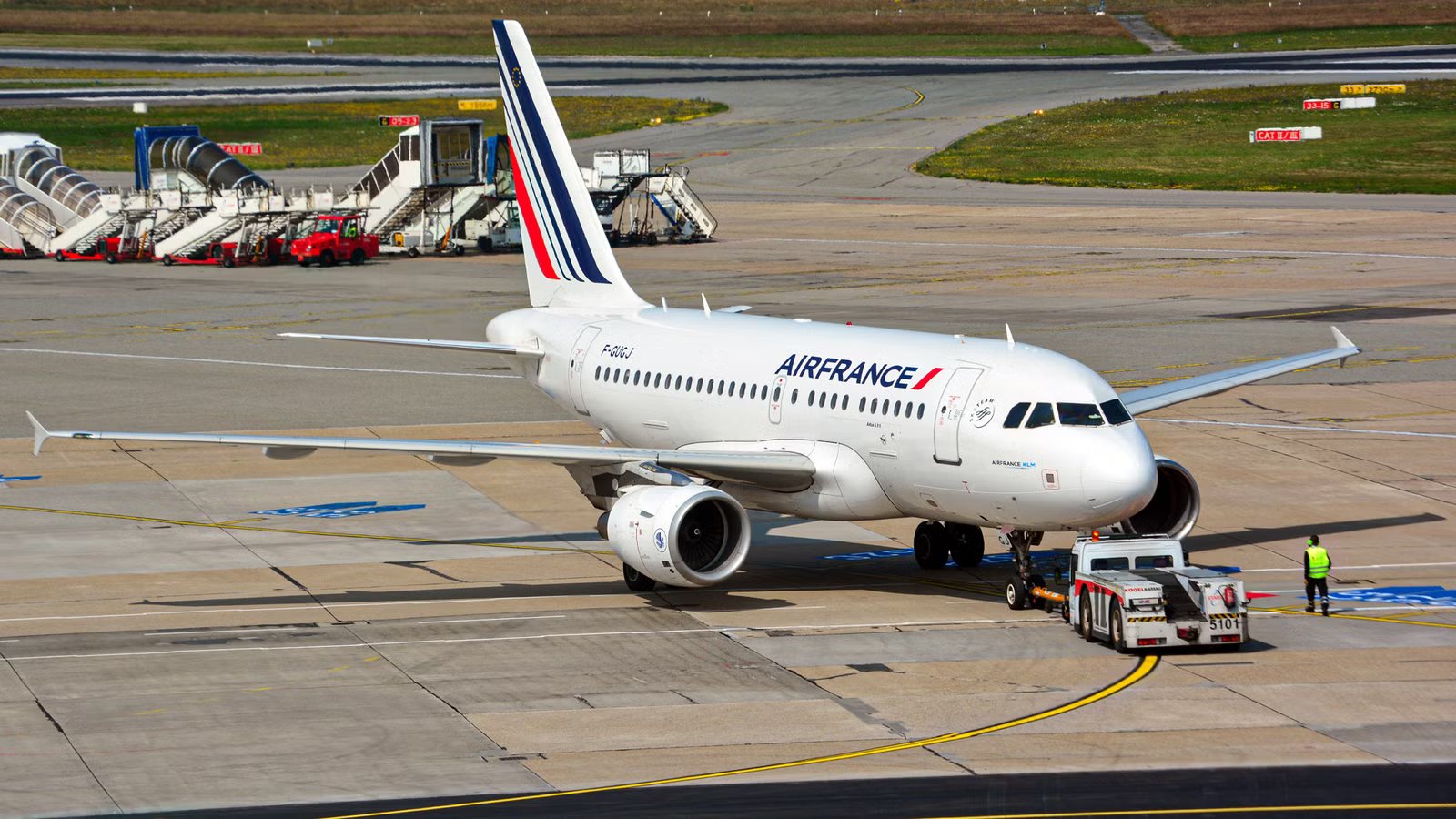
The Airbus A318 was built around a remarkably specific problem: how to make a roughly 100-seat airliner operate from airports where conventional passenger jets face unusual approach constraints. As the smallest member of the Airbus A320 family, it combined the family’s cockpit and fly-by-wire architecture with a shortened fuselage and strong short-field performance. Airbus developed its most distinctive capability as an EASA-certified steep-approach system, particularly useful at airports constrained by obstacles and noise.
The engineering solution was unusually elegant. Rather than adding a complicated mechanical system, Airbus modified the aircraft’s flight-control software, helping the A318 maintain a steeper approach than conventional operations. Yet the feature also exposed the aircraft’s commercial weakness. It could find valuable niches, but the markets were too small to support widespread demand for an aircraft that otherwise carried fewer passengers than the Airbus A319 while retaining much of the A320 family’s operating complexity.
A Small Aircraft Designed Around A Large Constraint

The A318 emerged from Airbus’ effort to extend the A320 family’s market downward. It was designed as a shortened A319 derivative for the roughly 100- to 120-seat segment, earning it the nickname “Baby Bus.” The fuselage is slightly shorter than the A319, while the aircraft retained the family’s wide single-aisle fuselage and core cockpit architecture. Airbus ultimately delivered only 80 A318s, a tiny production run beside the thousands of A319s, A320s, and Airbus A321s built.
The aircraft entered service in 2003, when airlines increasingly found that slightly larger narrowbodies could spread fixed costs across more seats without proportionally higher trip costs. The A319 therefore offered a broader commercial proposition, while the A320 became an even stronger baseline for carriers seeking capacity and efficiency. The A318, by contrast, had genuine strengths. Its shorter fuselage reduced its physical footprint, yet it remained a true airliner, being larger than a regional jet. The A320-family commonality also allowed operators already familiar with Airbus narrowbodies to integrate it without a separate cockpit architecture. Additionally, it offered strong takeoff and landing performance, making it suitable for airports where runway length, surrounding terrain, or noise restrictions complicate conventional operations. Those characteristics created the conditions for its signature feature; the A318 did not need to become a fundamentally different airplane to serve difficult airports. It needed a way to exploit its existing control surfaces and landing configuration more effectively.
Airbus A320 Family Size Comparison | ||||
|---|---|---|---|---|
Dimensions | A318 | A319 | A320 | A321 |
Length | 103 feet, 2 inches (31.44 meters) | 111 feet (33.84 meters) | 123 feet, 3 inches (37.57 meters) | 146 feet (44.51 meters) |
Wingspan | 111 feet, 11 inches (34.10 meters) | 117 feet, 5 inches (35.8 meters) | 117 feet, 5 inches (35.8 meters) | 117 feet, 5 inches (35.8 meters) |
Height | 41 feet, 2 inches (12.56 meters) | 38 feet, 7 inches (11.76 meters) | 38 feet, 7 inches (11.76 meters) | 38 feet, 7 inches (11.76 meters) |
The Steep-Approach System Was A Software Solution

London City Airport (LCY) provided the defining use case. Its location and surrounding obstacles made a conventional approach less suitable for certain operations. Airbus therefore developed a configuration capable of a 5.5-degree approach, steeper than the conventional three-degree approach path. To accomplish this, engineers needed additional drag, but sought to achieve it with existing aircraft systems rather than introducing a new external device.
For steep-approach certification, the aircraft had to demonstrate the target path with appropriate safety margins. The solution centered on existing spoiler panels. Modified flight-control laws could command additional spoiler deployment, increasing drag while preserving the aircraft’s ability to descend at a steeper angle. EASA certified the capability in 2006 for operations at LCY. When the steep-approach function was selected, the software modified the relevant control laws and provided associated crew alerts. Specifically, below 120 feet (37 meters), specified spoiler panels would deploy automatically during landing, adding drag as the aircraft transitioned toward touchdown.
This is what made the feature clever rather than merely unusual. Airbus did not create a separate mechanical braking or high-lift architecture for one airport. Instead, it adapted software and existing control surfaces to produce a new operational capability. The approach could reach 5.5 degrees, substantially steeper than a conventional profile, while the aircraft retained its broader family architecture.
London City Proved The Concept, But Not The Market

The A318’s London City capability produced its most famous commercial application when British Airways used the aircraft for an all-business-class service between London City and New York. The route became a showcase because the A318 could use London City while offering a premium long-distance product that would have been difficult to replicate with a larger aircraft. Its steep-approach certification was particularly valuable at an airport where operating constraints helped shape aircraft selection.
Yet a successful showcase is not necessarily a scalable business model. The steep-approach certification addressed a highly specific airport constraint, and relatively few airports impose the same combination of runway, obstacle, and noise requirements. The capability could therefore command attention without generating enough demand to justify a large fleet. Some A318s moved into corporate and government roles, where low-volume production mattered less because the aircraft could provide a compact cabin with Airbus systems. Others entered conventional airline service, including fleets at Air France and TAROM.
Catch what other flight trackers miss
Emergency squawks, holds, NOTAMs — live signals, no signup.
Open tracker
Catch what other flight trackers miss
Emergency squawks, holds, NOTAMs — live signals, no signup.
Open tracker
According to Aerospace Global News, most airlines did not need the aircraft’s defining advantage often enough to accept its disadvantages elsewhere. A carrier operating primarily from unconstrained airports could obtain similar route capability from a larger A319 or A320, then use the additional seats to improve revenue potential. As fleet planning evolved, the A318 increasingly became an aircraft that made sense for a particular mission rather than a flexible asset that could be redeployed throughout a network. That limited flexibility became more consequential as newer aircraft entered the 100-to-150-seat market with better economics.
The A220 Removed The A318’s Remaining Economic Rationale

The aircraft that most clearly exposes the A318’s commercial weakness is the A220-300, which was designed specifically for the smaller single-aisle market. Air France provides the clearest example. The airline ordered 60 A220-300s as part of its fleet renewal and positioned the aircraft as a replacement for its A318s and A319s. Air France says the A220-300 reduces fuel consumption by 20 percent compared with the aircraft it replaces, lowers seat costs by 10 percent, and reduces its noise footprint by 34 percent, according to InsideFlyer.
That difference changes the category’s economics. The A318’s short fuselage came from removing sections from an existing family design. The A220 was conceived from the outset for smaller single-aisle missions, incorporating a lighter structure, advanced aerodynamics, and geared turbofan engines. It can therefore provide capacity in the same general range without carrying the same legacy compromises.
For airlines, that efficiency applies across ordinary network operations, not only at airports requiring a special approach profile. The A220 also gives carriers a modern aircraft that can address smaller markets without maintaining a highly specialized subtype. The result is a difficult choice for the A318. Its most sophisticated feature remains valuable where it’s needed, but an airline cannot base an entire fleet strategy around a handful of constrained airports. Once the broader network rewards lower fuel consumption and stronger seat economics, the A318 becomes difficult to justify even when its steep-approach capability remains technically impressive.
Four Aircraft Now Represent The Final Commercial Chapter

TAROM’s retirement demonstrates how quickly the remaining A318 population can disappear once an operator decides the type no longer fits its strategy. According to reisetopia, the Romanian airline’s final A318 commercial service was on October 26, 2024, completing the withdrawal of a type that had served in its fleet since the mid-2000s. The aircraft were subsequently offered for sale to a UK-based end-of-life aircraft specialist. After TAROM’s departure, Air France became the only remaining scheduled passenger operator of the A318. Current fleet reporting identifies four aircraft, registered F-GUGM, F-GUGN, F-GUGO, and F-GUGP. Their continued presence is unusual because Air France is simultaneously replacing the type with A220-300s.
The retirement timeline has also shifted later than previously expected. Current schedule filings extend A318 operations into March 2027, although individual aircraft assignments can change and a scheduled endpoint does not necessarily represent a confirmed final flight. The remaining jets continue to serve European destinations from Paris Charles de Gaulle, giving the type a small but still visible role within Air France’s narrowbody network. Their survival now depends less on the mission that originally justified the A318 and more on the pace of Air France’s fleet transition. As replacement aircraft arrive, keeping a handful of older jets becomes harder to justify because fixed costs, maintenance requirements, crew planning, and spare-parts support are spread across very few airframes.
A Brilliant Solution To A Problem That Disappeared

The A318 is unlikely to be remembered as a commercial success, but its steep-approach system demonstrates how targeted engineering can make an aircraft exceptionally capable in a narrow operating environment. The software-controlled use of existing spoilers allowed Airbus to turn a conventional narrowbody into an aircraft capable of a 5.5-degree approach, creating access to London City that helped define the type’s identity.
Its decline offers a broader lesson for future aircraft development. A specialized capability can be technically brilliant without creating a sufficiently large market to sustain a dedicated variant. Modern manufacturers increasingly address niche missions through software, flexible configurations, and common platforms rather than creating very small derivative fleets.
If Air France’s current schedule holds, the last commercial A318 operations could disappear in 2027. The aircraft will leave scheduled service not because its cleverest feature stopped working, but because the industry found a better way to solve the larger problem of serving the smaller end of the single-aisle market. The A318’s most impressive innovation ultimately became a footnote to its commercial history.