dailynewsnblog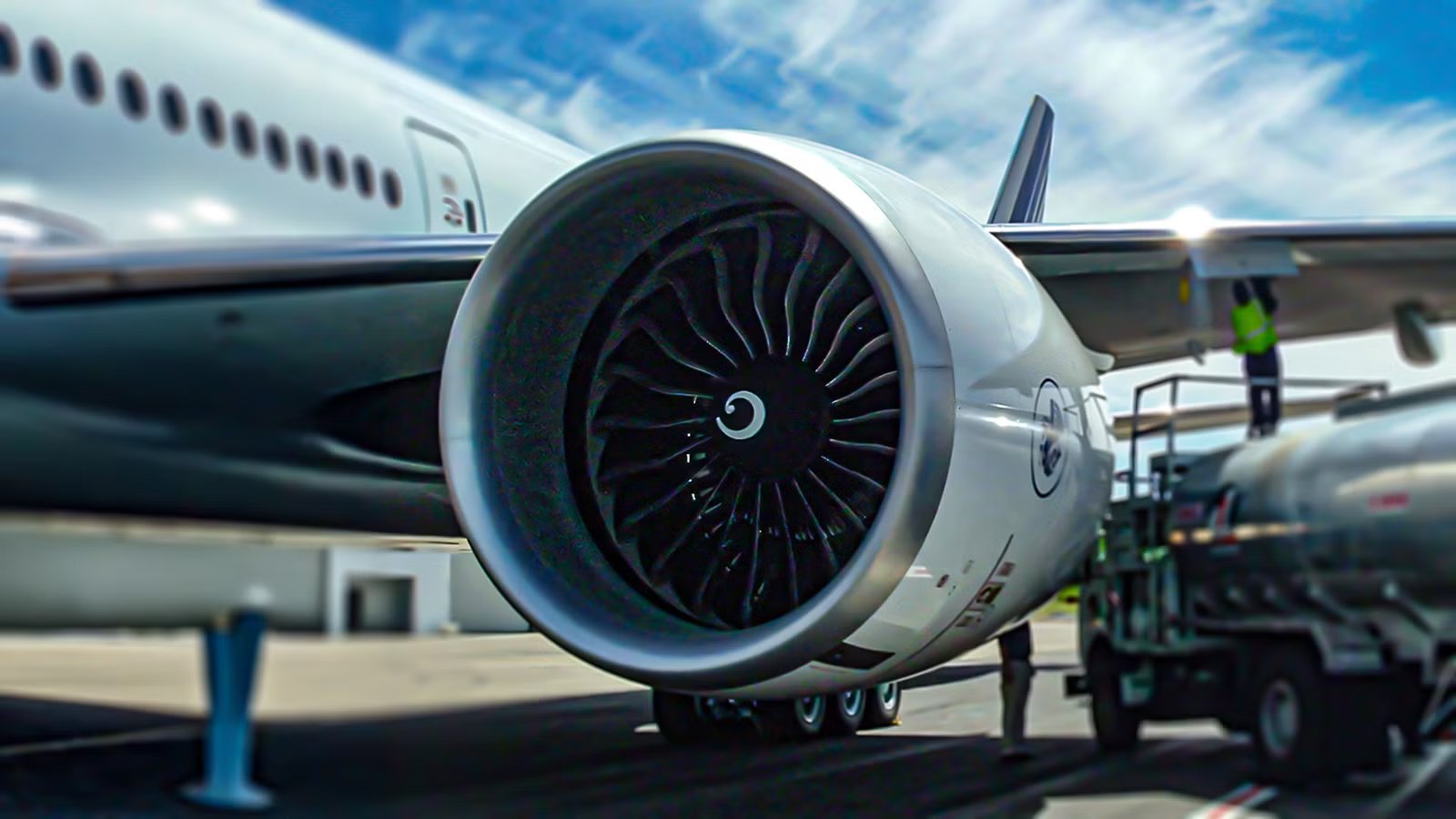
The moment the throttles advance on the runway is a truly incredible sensory experience, a surge of noise and a sudden feeling of compression against the seatback. It is a very different experience for the flight crew and the aircraft’s avionics; this is the most critical phase of the departure. Before the aircraft begins its high-speed roll, the crew pauses to allow the engines to stabilize at an intermediate thrust setting. This is the moment the aircraft becomes dynamic, with the Full Authority Digital Engine Control (FADEC) systems verifying that every internal parameter, from fuel flow to exhaust gas temperatures, is perfectly matched across both powerplants.
This brief pause is actually not only a regulatory formality, but is a vital safety protocol designed to mitigate the risks of asymmetric thrust. At low speeds, when the aircraft is moving too slowly for the rudder to provide effective directional control, even a slight divergence in engine output could result in dangerous yawing. This intermediate threshold gives the heavy fan and compressor assemblies the time required to overcome rotational inertia, while also providing the FADEC with a window to perform thousands of high-speed checks.
Not Like Your Average Car

To really understand why a flight crew pauses at an intermediate thrust setting, the assumption that a jet engine behaves like an automotive powerplant should be forgotten about completely, because it does not. In an automobile, the throttle is a direct command to increase power; in a modern airliner, the thrust lever is a request to the Full Authority Digital Engine Control (FADEC). The reality of the powerplants hanging under the wing is defined by immense mass and extreme rotational inertia. A modern high-bypass turbofan is, at its core, a massive, spinning flywheel that lacks the kinetic energy required to deliver immediate, symmetric thrust from an idle state.
Advancing the levers instantly to the takeoff position, often referred to as a slam acceleration, is a physical stress test that modern engine design is explicitly engineered to avoid. The fan assembly, which can exceed 10 feet (3 meters) in diameter, and the multi-stage compressor spools possess significant inertia. Attempting to accelerate these thousands of pounds of rotating machinery from idle to takeoff thrust in a single motion invites a host of inefficiencies, including potential compressor stalls or transient surges. The intermediate stabilization setting, typically between 50% and 60% N1, is the kinetic buffer where airflow is consistent, and pressure ratios are balanced.
This stabilization is particularly critical for engines that are incredibly powerful and thrust-heavy. The massive fan blades require time to build the necessary angular momentum; by holding at 55% N1, the crew ensures that engines are synchronized before the aircraft accelerates to a speed where directional control becomes a safety factor. If one engine lags during this transition due to wear or bleed air demand, the aircraft will naturally yaw toward the weaker engine. At this point, the aircraft is moving at a low speed where the rudder is not yet effective, so this pause is the engineered solution to spot any asymmetry while the nose-wheel steering is easier to control.
Watching Over The Most Critical Stage Of Flight

The Full Authority Digital Engine Control (FADEC) is the silent overseer of the entire takeoff process and is often overlooked. The pilot advances the thrust levers, but it is the FADEC that executes the command, managing the fuel metering units and variable stator vanes with precision. The system samples engine parameters at a rate of 70 times per second, a sampling frequency that effectively makes it a high-speed logic controller. The constant data stream allows the FADEC to detect even the slightest discrepancies in spool-up characteristics that would be invisible to the flight crew or undetectable by old-fashioned mechanical linkages.
During the intermediate pause, the dual FADEC units, one for each engine, engage in a sort of digital handshake. They monitor critical metrics including fuel flow, high-pressure compressor discharge pressure, and exhaust gas temperature (EGT). Each engine has a unique maintenance history and internal component wear profile, so one might naturally attempt to spool faster than the other. The FADEC monitors these variances, keeping the acceleration curves synchronized.
FADEC digital oversight provides a level of protection that manual controls never could. If the FADEC detects that one engine is failing to respond to the fuel flow command or is demonstrating an anomalous compression ratio, it can proactively limit the thrust or trigger an alert before the aircraft reaches critical decision speeds. It ultimately prevents the aircraft from entering a high-speed roll with uneven power distribution. By the time the crew pushes the levers forward for full takeoff thrust, the FADEC has already verified that both engines are healthy, responsive, and, most importantly, pulling in perfect harmony.
Too Small To Fight On Its Own

The rudder, located at the tail, derives its control authority strictly from dynamic pressure, the energy of the air moving over the flight control surfaces. Before the aircraft accelerates to approximately 30 to 40 knots (35 to 46 mph), this airflow is nonexistent, rendering the rudder a useless slab of metal. This creates a critical zero-authority zone at the start of the takeoff roll where the aircraft has no natural aerodynamic stability. As a result, the flight crew is forced to rely entirely on nose-wheel steering to maintain the runway centerline, which is not substantial enough to rely on its own.
The move from mechanical steering to aerodynamic control is the most delicate phase of the takeoff sequence. When the aircraft is stationary or crawling at low speeds, the nose-wheel steering is the only mechanism available to counter forces that would turn the aircraft, such as crosswinds or uneven thrust. If a powerplant generates even a slight variance in output during this window, the resulting yaw force can easily overwhelm the hydraulic limits of the nose-wheel steering system. Unlike the rudder, which can be deflected significantly at higher speeds to counteract engine failure, the nose-wheel steering is designed for low-speed taxiing and lacks the power to arrest a rapid, thrust-induced pivot.
By ensuring that the engines are perfectly synchronized before the aircraft reaches the speed where yaw forces become dangerous, crews avoid testing the limits of the nose-wheel steering system against an asymmetrical engine output. It eliminates the hand-wrestling match with the tiller that would otherwise be necessary if one engine responded faster than the other while the rudder was still dormant.
The Perfect Example

The Boeing 777 and its GE90 powerplant are easily the best case study for this procedure because of the sheer magnitude of the thrust involved. With engines generating up to 115,000 lb (52,163 kg) of force, the kinetic energy contained within the rotating assembly is immense. The 55% N1 stabilization point was established as the specific calibration threshold for this airframe, selected because it marks the precise moment where the massive front fan transitions from its initial, sluggish movement into a balanced, predictable energy state.
This specific threshold is critical because it prioritizes engine longevity and uniform performance over rapid power application. Unlike smaller narrowbody engines that might tolerate a more aggressive throttle advancement, the sheer mass of the GE90’s fan makes slamming the throttles a risk for uneven thrust onset. The 55% N1 hold therefore makes the engines reconcile their performance differences before the final command to takeoff power is issued.
It is important to emphasize that this 55% figure is an operational standard tailored to the 777, rather than an immutable law of physics. While the 50% to 60% N1 range is a common guideline for modern widebodies, the 777/GE90 pairing exemplifies how specific procedures are codified for high-output engines to protect the airframe. Pilots treat this pause as a mandatory verification gate, which keeps the heavy-duty machinery beneath the wings reaching a uniform output that the aircraft can safely manage during the initial, critical seconds of the takeoff roll.
When The Cold Strikes

In addition to standard stabilization checks, environmental factors introduce a separate, high-priority procedure known as ice shedding. When aircraft operate in freezing conditions, moisture inevitably accumulates on the fan blades during taxiing. If left untreated, this ice layer can break loose once the engines are throttled up, leading to severe foreign object damage or internal engine surges. To mitigate this risk, flight crews will use a deliberate engine run-up while stationary to utilize the immense centrifugal force of the fan blades and throw the accumulated ice off the engine intake.
This protocol is strictly time-gated to ensure maximum effectiveness without compromising engine health. Pilots are typically required to perform these runs every 15 to 30 minutes of taxi time in icing conditions, depending on the severity of the weather. During each event, the crew advances the throttles for up to 30 seconds to ensure the blades reach the necessary rotational speed to shed the ice buildup. Unlike the takeoff stabilization procedure, which is performed just before rolling, these shedding runs are conducted during the taxi phase, often while the aircraft is stopped at a designated area to avoid blasting debris onto other aircraft or ground equipment.
The process may appear to be a simple revving of the engines, but it is far more complex than that. The goal is to clear the airflow path before the aircraft commits to a high-thrust takeoff, where any ingested debris would have the greatest impact on engine core integrity. Shedding the ice while the aircraft is stationary and the engines are under light load proactively removes a potential failure point.
The Final Layer Of Protection

Standard operating procedures (SOPs) are what take individualistic piloting styles to a highly systematized discipline. In modern commercial operations, the goal is to remove subjectivity from engine management so that every takeoff, whether in a Boeing 777 or a smaller regional jet, follows a predictable pattern. Codifying the stabilization pause reduces the cognitive load on the flight crew, allowing them to focus on situational awareness and path management rather than troubleshooting power discrepancies during the most dynamic phase of flight. What results is a repeatable safety baseline, protecting the operation from the variables of pilot fatigue, environmental conditions, or mixed-fleet configurations.
Aggressive throttle application can quickly accelerate engine wear and erode EGT margins, and so the stabilization pause prioritizes structural integrity and control. The one to two-second delay does not degrade operational efficiency; rather, it preserves the powerplant’s operational life, guaranteeing the heavy machinery is functioning within the manufacturer’s thermal and mechanical specifications before the final takeoff thrust is commanded.
Ultimately, the 70-times-per-second engine check is a silent, continuous partnership between digital oversight and human command. The pilot provides the intent, or the decision to go, while the FADEC provides the verification, constantly sampling data to ensure that the engines are ready to produce the required thrust. This synchronization turns the takeoff into a deliberate, engineered event rather than a reactive one, securing both the aircraft and the integrity of the engines for the long-haul flight ahead.
Catch what other trackers miss
Emergency squawks, holds, NOTAMs — live signals, no signup.
Open tracker
Catch what other trackers miss
Emergency squawks, holds, NOTAMs — live signals, no signup.
Open tracker

![Emirates Unveils 1st-Ever Flights To This Massive Long-Haul Destination [Map]](https://dailynewsnblog.com/wp-content/uploads/2026/08/emirates-777-300er-landing.jpg)