dailynewsnblog
Canada has more than 1,400 airports, from major international hubs handling tens of millions of passengers a year to remote grass strips serving communities that have no other practical connection to the outside world. But among all of them, only a handful can trace their origins back to the earliest decades of powered flight, to an era when aviation in this country meant bush pilots improvising seaplane bases on northern lakes, flying clubs staking out fields on the prairie edge of growing cities, and airmail routes stitching together a vast and sparsely connected nation.
The five airports on this list have been operating continuously since that period, surviving wars, recessions, the jet age, deregulation, and a pandemic that grounded the industry entirely. Some grew into major international gateways. Others never left their roots. All of them were open for business before most of the infrastructure that defines modern Canadian aviation existed.
Windsor International Airport (YQG)
September 8, 1928

Windsor International Airport (YQG) opened on September 8, 1928, as Walker Airport, named after Hiram Walker, the whiskey distiller behind the Canadian Club brand whose family had become one of the most prominent in the region. The opening drew a crowd of roughly 20,000 people, a remarkable turnout that reflected just how significant a civic moment the arrival of air travel represented for a border city already in the middle of an ambitious decade. That same year, Windsor was simultaneously constructing the Ambassador Bridge and the Detroit-Windsor Tunnel, and the new airport fit neatly into a broader vision of the city as a gateway between Canada and the United States.
The airport’s early decades were defined as much by war as by commerce. In 1940, the Royal Canadian Air Force assumed control of the field and established No. 7 Elementary Flying Training School as part of the British Commonwealth Air Training Plan, putting the airport at the center of Allied pilot training in southwestern Ontario. Trans-Canada Air Lines also began service that year, marking the airport’s first scheduled passenger operations. After the war, the airport returned to civilian use and expanded steadily, eventually developing a 9,000-foot runway that ranks as the third longest in Ontario, behind only Toronto and North Bay. The airport was renamed Windsor International in 1967 when it was added to the national portfolio of Canadian airports.
Today, Windsor International operates as a mid-sized regional airport serving southwestern Ontario, with its proximity to Detroit Metropolitan Wayne County Airport giving it a unique cross-border character that few Canadian airports share. It handles a mix of scheduled passenger flights, general aviation, and cargo operations, with Fedex Express holding a long-term lease on its cargo hub.
Ottawa Macdonald-Cartier International Airport (YOW)
July 2, 1927

Ottawa Macdonald-Cartier International Airport has its roots in a muddy field on the south side of the city that was known as Hunt Club Field, a modest strip of cleared land that pilots in the early 1920s had begun using informally as a landing ground. The site announced itself to the wider world on July 2, 1927, when Charles Lindbergh arrived in his Spirit of St. Louis at the invitation of Prime Minister William Lyon Mackenzie King, as Canada marked its Diamond Jubilee of Confederation. An estimated 60,000 spectators turned out to watch the landing, and the field was promptly renamed Lindbergh Field in his honor, though the celebration was tempered by tragedy when one of the escort pilots, Lieutenant Thad Johnson, was killed when another aircraft struck his plane’s tail during the approach. The following year, the Ottawa Flying Club was incorporated and granted the first official airport license on July 26, 1928, and the site was renamed Uplands Aerodrome.
The airport’s early civilian character did not last long. Financial pressures forced the Ottawa Flying Club to eventually cede the site, and the Department of Transport took ownership before the Second World War, converting the aerodrome into a major training facility under the British Commonwealth Air Training Plan. Through the 1940s and into the 1950s, Uplands handled more military traffic than any other civil airfield in Canada and became the home of the RCAF’s No. 2 Navigation School and the largest NATO air training facility in the country. By the end of that decade, it had recorded the highest volume of aircraft movements of any airport in Canada, a remarkable statistic for a field that had started as an unmarked strip of prairie grass.
Commercial aviation eventually caught up with the airport’s scale, and in 1964, the site was formally redesignated Ottawa International Airport, with a new passenger terminal opening that year after a memorable delay caused by a USAF F-104 Starfighter that accidentally went supersonic during a low pass over the facility, shattering windows and damaging structural elements throughout the nearly completed building. The airport received its current name in 1993, in honor of the Fathers of Confederation, John A. Macdonald and George-Étienne Cartier. Today, it is Canada’s sixth-busiest airport by passenger traffic, handling nearly five million passengers annually, and still shares its airfield with the RCAF’s 412 Transport Squadron.

What Is The Oldest Airport In New York?
New York’s oldest airport dates back to 1919.
Winnipeg Richardson International Airport (YWG)
May 27, 1928

Winnipeg Richardson International Airport traces its origins to the late spring of 1928, when the Winnipeg Flying Club opened an airfield on 165 acres of prairie land in the Rural Municipality of St. James over two days in late May. Named Stevenson Aerodrome after Manitoba aviation pioneer Captain Fred Stevenson, who died in a plane crash just before the facility opened, the new airfield consisted of little more than a small cabin, a modest hangar sized for folding-wing aircraft, and sod and clay runways pressed out of the flat Manitoba landscape. A crowd of 7,000 attended the opening ceremonies, and within three years, Stevenson Field had achieved a distinction no other Canadian airport could claim, becoming the country’s first international airport after Northwest Airways inaugurated a passenger and mail service between Winnipeg and Pembina, North Dakota, in 1931.
The airport’s position at the geographic center of Canada made it strategically indispensable during the Second World War. The federal government assumed control of Stevenson Field in 1940, transforming it into the headquarters for the British Commonwealth Air Training Plan, the program that produced more than 130,000 pilots and aircrew for the Allied war effort and led American President Franklin Roosevelt to call Canada the aerodrome of democracy. The airport handled more military traffic than any other civil airfield in the country during those years, and also became the home of the largest NATO air training school in Canada during the Cold War years that followed. By the 1950s, Stevenson Field had grown into Canada’s fourth-largest airport.
The airport was renamed Winnipeg International Airport in 1958 and received its current name in 2006, honoring James Armstrong Richardson, the Winnipeg businessman who founded Western Canada Airways and was one of the driving forces behind commercial aviation in the country. A new terminal opened in 2011, designed by architect César Pelli and inspired by Manitoba’s vast prairie landscape. It was the first airport terminal in Canada to receive LEED certification. What began as a grass strip on borrowed farmland nearly a century ago is now the seventh-busiest airport in Canada, still anchored to the same patch of Winnipeg prairie where the Winnipeg Flying Club first leveled the ground in 1928.

The United States’ 10 Oldest Airports Still In Operation
A closer look at America’s ten oldest continuously operating airports .
Montreal Metropolitan Airport (YUL)
November 1927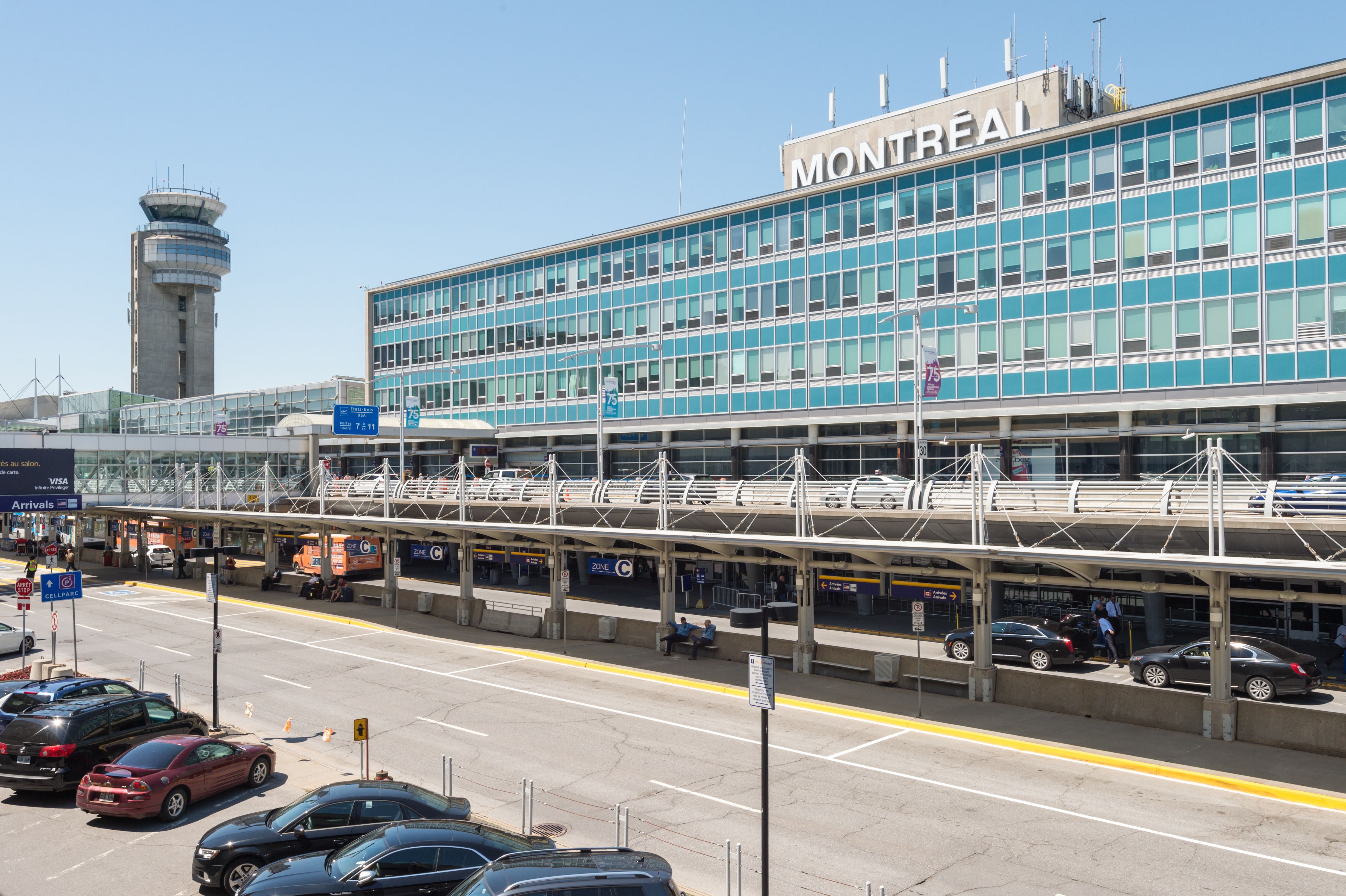
Montreal Metropolitan Airport, known for most of its life as Saint-Hubert Airport, has a founding story that connects directly to one of the more ambitious technological ventures of the 1920s. The site was selected in 1927 as Canada’s contribution to the Imperial Airship Scheme, a British Commonwealth program that aimed to link the empire by dirigible, and work on the airfield began almost immediately after the decision was announced in August of that year. Saint-Hubert’s first airmail delivery took place in November 1927, and the airport’s early reputation was cemented on August 1, 1930, when the British airship R100 arrived after completing what was possibly the first non-stop passenger-carrying powered transatlantic flight to land in Canada. The terminal’s new passenger facility, currently under construction, has been designed in the shape of a dirigible specifically to honor that landmark arrival nearly a century ago.
The airport served as Montreal’s only commercial aviation facility until Dorval opened in 1941, at which point Saint-Hubert shifted toward a primarily military role, hosting No. 13 Service Flying Training School under the British Commonwealth Air Training Plan through 1944. In subsequent decades, the airport operated as a mixed civilian and military facility, sharing its field with the RCAF and later CFB Saint-Hubert before the military base was eventually decommissioned. Through it all, the airfield kept operating, serving general aviation, flight schools, and a Pratt and Whitney maintenance facility, quietly accumulating nearly a century of continuous operation while the larger Dorval airport absorbed Montreal’s commercial traffic and received most of the attention.
That is now changing. In 2024, the airport was rebranded as Montreal Metropolitan Airport, and a new passenger terminal developed in partnership with Porter Airlines and Macquarie Asset Management is scheduled to open on June 15, 2026, with Porter launching 12 nonstop routes to destinations across Canada, including Toronto, Vancouver, Calgary, Edmonton, Halifax, and Winnipeg. The terminal has been designed to handle up to four million passengers annually, offering a compact, fast-moving alternative to Montreal Trudeau for travelers on Montreal’s south shore.
Edmonton/ Cooking Lake Airport
1926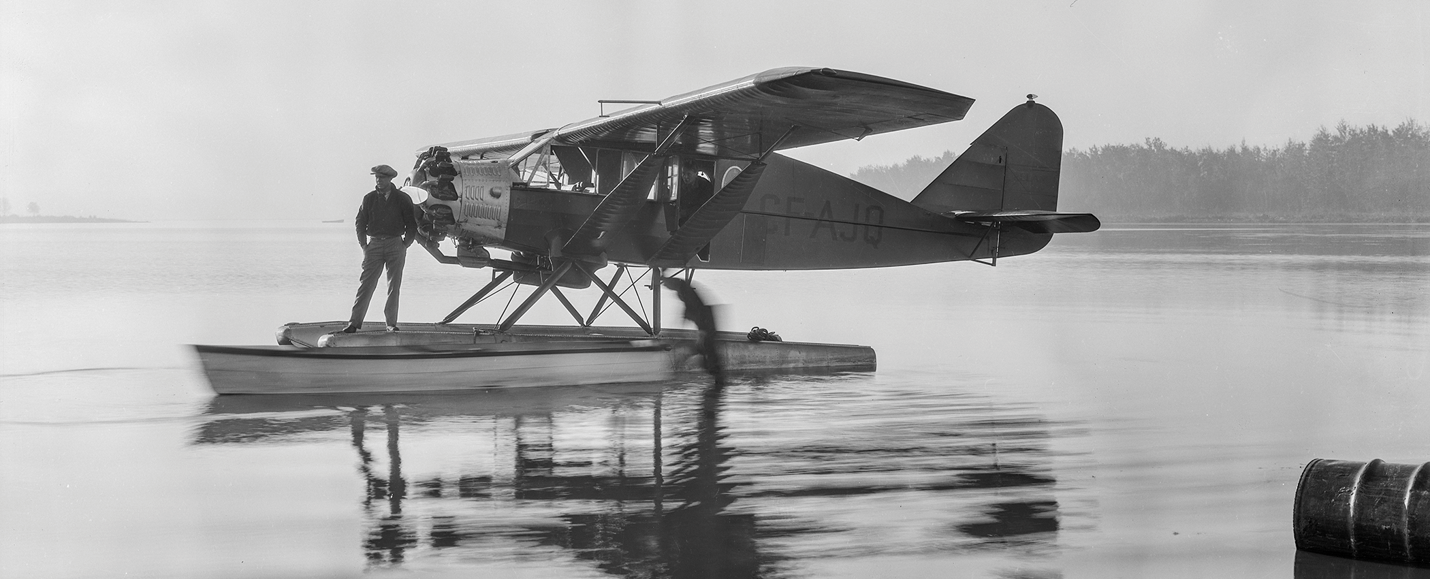
Cooking Lake Airport in Alberta holds a distinction that no other operating airport in Canada can claim, and it came about in the most Canadian way imaginable. In 1926, a Vickers Viking Mark IV amphibian operated by Laurentide Air Service of Montreal landed in the water just off Plover Point at Cooking Lake, returning from an unsuccessful search for a lost gold mine near Great Slave Lake. The prospector who had discovered the mine was suffering from amnesia after being struck in the head with a beer bottle during a bar brawl in Calgary, leaving him unable to retrace his route. The pilots set up their docks, cranes, and fuel shacks on the lakeshore without asking anyone’s permission, and an airport was born. There was no formal owner, no regulator, and no runway. As far as the bush pilots were concerned, it was the real deal.
Word spread quickly through the small and tight-knit flying community of the Canadian north, and Cooking Lake became the staging point for some of the most consequential bush flying operations of the era. Wop May, whose earlier claim to fame was surviving a dogfight with the Red Baron in 1918, began using the base in 1929 when his company, Commercial Airways, won the contract to fly Royal Mail into the far north along the Mackenzie River to Aklavik. Punch Dickens, Leigh Brintnell, Roy Brown, and Max Ward all flew from Cooking Lake, and in 1953, Ward took delivery of his first de Havilland Otter at the airport before going on to found Wardair. The airport also served as the primary aircraft staging route for the construction of the Alaska Highway during the Second World War, cementing its role as one of the most operationally significant airfields in the country’s northern aviation history.
Cooking Lake is the sixth busiest of its kind in Alberta, still operating on the same lake where bush pilots improvised a seaplane base without paperwork or permission nearly a century ago. It never became an international hub or a military installation. It never had a terminal named after a Prime Minister or a César Pelli design. It simply kept flying, season after season, sustained by the same spirit of practical improvisation that produced it in the first place. In a list defined by airports that outlasted their eras, Cooking Lake is the one that never needed to reinvent itself at all.