dailynewsnblog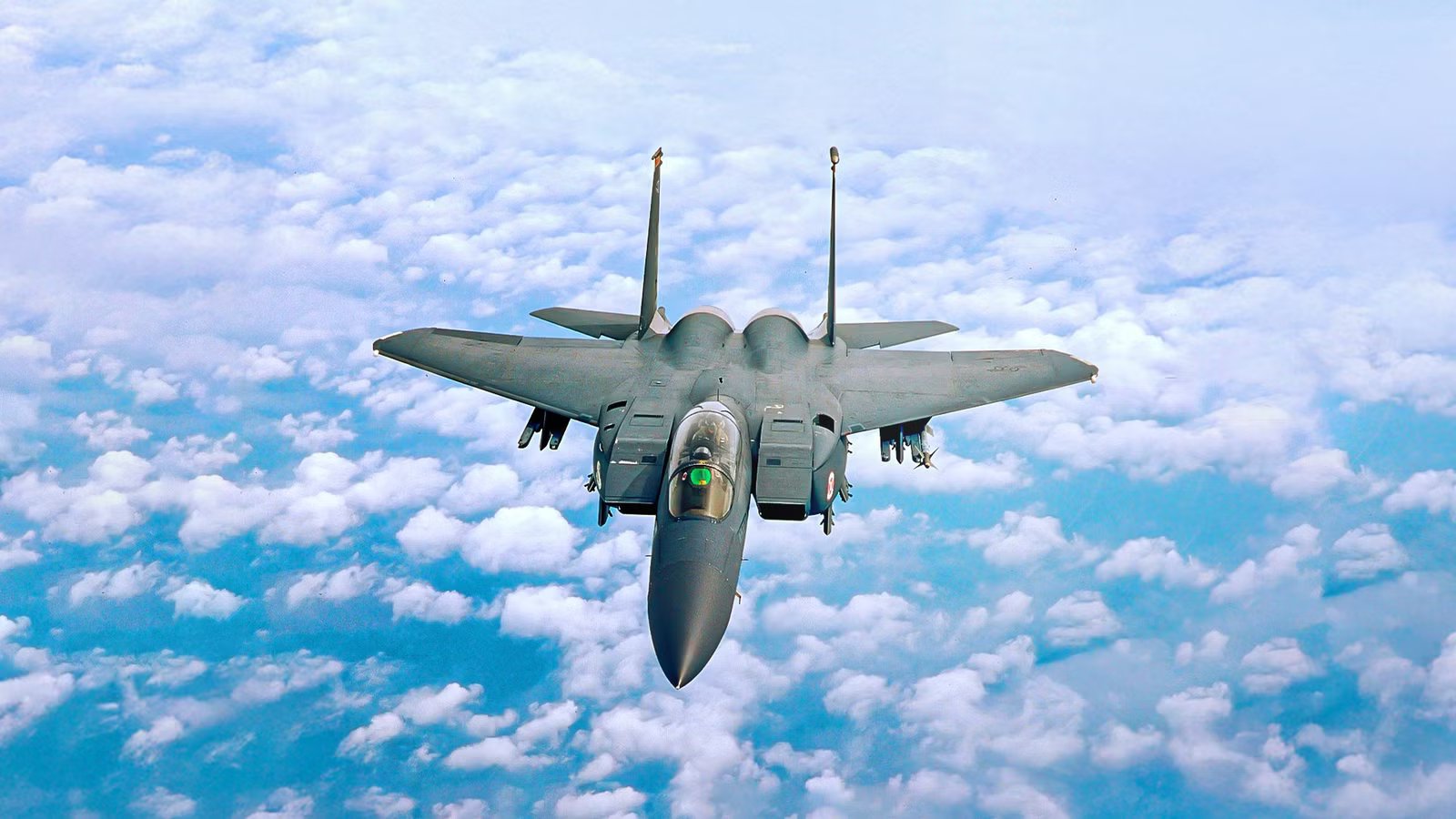
Some Air National Guard and Air Force Reserve squadrons are being retired from flying fighter jets as the US Air Force is recapitalizing its fleet to modernize aircraft, unit missions, and strategic capabilities. This transition is hotly contested by the leadership of Guard and Reserve units as well as lawmakers. The retirement of some aircraft and the transition of their units have been delayed in some cases, including a portion of the Fairchild A-10C Thunderbolt II fleet, but for many that is not the case.
Fighter wings flying the A-10C Warthog and the Boeing F-15C/D Eagle are increasingly on the Chopping Block. The US Air Force is pursuing a ‘divest to invest’ procurement strategy to free up funding currently consumed by sustaining legacy aircraft and reinvesting it in newer platforms like the Lockheed Martin F-35 Lightning II or the upcoming Boeing F-47 Next Generation Air Dominance. These next-gen fighter jets will be fewer in number, with theoretically greater impact on the battlefield, and will require fewer aircrews; thus, many standing units are being retasked to new mission sets.
California ANG’s 144th Fighter Wing
Enter The Eagle II

The 144th FW is a unit of the California Air National Guard stationed at the Fresno Air National Guard Base, California. The unit routinely deploys to critical geographic theaters, including theater security packages at Kadena Air Base, Japan, and joint NATO air policing missions in Europe. While the Air Force has selected the 144th to receive the Boeing F-15EX Eagle II, it has not publicly announced a firm date for the first aircraft’s arrival in Fresno.
The 194th Fighter Squadron will transition, as it is responsible for the wing’s air sovereignty alert mission. The 194th is a historic unit established during World War II. Before transitioning to the F-15C in 2013, the Squadron flew the General Dynamics F-16 Fighting Falcon for over two decades. In the past decade, these Guardsmen have regularly deployed to Eastern Europe and the Indo-Pacific.
Individual legacy F-15Cs are progressively being retired as they reach their maximum flying hours. Transitioning to the F-15EX minimizes infrastructure changes at Fresno Air National Guard Base because it shares a high degree of compatibility in parts, tooling, and general layout with older F-15 variants. More importantly, veteran fighter pilots have spent decades mastering specific air-to-air and air-to-ground tactics tailored to the Eagle platform.
The 144th is one of just a few National Guard and Reserve wings that will be upgraded to the F-15EX under the Air Force’s fleet recapitalization program. The other wings transitioned under this initiative include the 33rd Fighter Wing, 49th Wing, 56th Fighter Wing, 149th Fighter Wing, 162nd Fighter Wing, and 173rd Fighter Wing.
The consolidation is part of the new Air Expeditionary Wing 2.0 model, slated for implementation in 2027. For the units not selected, after divesting their fighter jets, the troops will be retrained for other mission sets, such as cyber warfare, as Maryland’s 175th FW did until last year, when it flew the A-10C Warthog.
Massachusetts ANG’s 104th Fighter Wing
Making The Switch To Stealth

Another one of the lucky units to keep its fighter jets, the 104th is a highly decorated unit of the Massachusetts ANG with nearly 1,000 Guardsmen. The 131st Fighter Squadron currently operates the F-15C Eagle to provide 24/7 air control alert coverage. The unit has been heavily deployed across major global operations, including Operation Noble Eagle, Operation Enduring Freedom, and Operation Iraqi Freedom. Instead of adopting the new F-15EX Eagle II, however, it will switch to the F-35A fifth-generation stealth fighter.
Not every Squadron has been as lucky. ANG Major General Bryony Terrell revealed the scale at which guard units are being left out of complete modernization in Air and Space Forces magazine.
“Thirteen of our 24 fighter squadrons have no advanced recapitalization plan. Some are programmed to receive legacy aircraft, and some have no identified follow-on platform at all. The Air National Guard must modernize alongside the Air Force—not after it.”
Known by their nickname the “Barnstormers,” the wing traces its tactical flying lineage back to August 1942 with the activation of the 333rd Fighter Squadron under the US Army Air Forces. The wing initially stood up flying the rugged P-47 Thunderbolt. As the Cold War intensified, they transitioned into the jet age, flying the F-94 Starfire, F-86 Sabre, and the supersonic F-100 Super Sabre. As it transitions to a next-gen stealth fighter, over $1 billion has been invested in modernizing the unit’s facilities to support the F-35.
Oregon ANG’s 173rd Fighter Wing
End Of The Eagle Era

Stationed at Kingsley Field ANG Base in Klamath Falls, Oregon, the 173 FW was established in 1996 as a host unit for the 114th Fighter Squadron. Under the fleet recapitalization program, the 114 FS is one of the units that will modernize rather than fully divest. At the close of 2025, the last of these jets will be retired as the Squadron transitions to the new F-35 Joint Strike Fighter. Two of the jets were transferred to NASA’s Armstrong Flight Research Center to participate in the X-59 Quesst research program.
The incoming fleet of 20 F-35A aircraft brings advanced stealth, sensor fusion, and electronic warfare capabilities to keep future pilots ahead of evolving global threats. Originally, the Squadron operated the F-16 and served as a formal training unit. In 1998, the first F-15A/B Eagles began to arrive, but they were soon upgraded to the F-15C/D in 2004.
The 114 FS was originally formed in the early 1980s to serve as a fighter interceptor training unit dedicated to the McDonnell Douglas F4C Phantom II. The 173 FW was established after the dramatic expansion of its capabilities and troop levels following the transition to the F-15. The unit was almost chosen to transition to the F-15EX before the decision to go with the F-35. The first JSFs are expected to begin deliveries in the summer of 2027.
Idaho ANG’s 124th Fighter Wing
Trading In The Warthog For Vipers

The 124 FW is undergoing a different phase of change than the other wings previously mentioned in this list as it sunsets the venerable A-10 Warthog in favor of the F-16 Block 40. While these aircraft will not be as modern as the F-15EX or F-35, they are better suited to the Air Force’s future ‘high-low fleet mix’ under the new strategic doctrine. The Idaho unit officially began divesting its A-10 aircraft in May 2025. Its fleet retirement is finalized for fall 2026, and the first Vipers are expected to arrive in the spring of 2027.
Stationed at Gowen Field Air National Guard Base in Boise, the 124th will receive an older model of the F-16 that did not receive the SABR radar upgrade. Despite a renaissance in the perceived combat value of the A-10, the 190th Fighter Squadron of the 124 FW did not make the list of units to extend their Warthog service lives. While the US Air Force announced a fleet extension through 2030 due to combat demands in the Middle East, the 124 FW is proceeding with its scheduled transition.
Although the 190 FS did not receive the most cutting-edge variant of the Viper, that does not mean they will soon be on the short list to transition out of fighter duty entirely. These aircraft are less capable in highly contested environments but remain very lethal and cost-effective in permissive-saddle spaces.
Block 40 excels at executing close air support, dropping precision-guided bombs, and conducting counter-insurgency missions in the absence of advanced enemy electronic warfare or stealth threats. This is a perfect match for its predecessor, the A-10, retaining the value of the experience and training that veteran pilots have built over years.
Michigan ANG’s 127th Fighter Wing
Bidding Farewell To The Thunderbolt II

The 127 FW is a composite wing with a dual mission and 1,700 Guardsmen that support both the 107 FS, which operates the A-10C Warthog, and Boeing KC-135T Stratotanker aerial refueling jets. The 107 FS is one of the few squadrons that will adopt the F-15EX, and the 171st Aerial Refueling Squadron will soon begin retiring its Stratotankers to take delivery of the new Boeing KC-46A Pegasus. The wing will continue its duties of defending the skies over America from Selfridge Air National Guard Base in Harrison Township, Michigan.
ANG squadrons are a vital component of support for active-duty Air Force units, including Operation Epic Fury this year. As a former Guardsman, Chairman of the Joint Chiefs of Staff, General Dan Caine, highlighted the Guard currently deployed in Air and Space Forces magazine.
“The integrated Reserve and National Guard Forces have continued to demonstrate the value of America’s Reserve Forces, including the Wisconsin Army National Guard operating in Kuwait and Iraq and Air National Guard units from a variety of states, to include Vermont and Virginia.”
Selfridge is one of the oldest air bases in America, having been established in 1917 as the 107 FS, but the 127 FW is a relatively new unit, having been stood up in 1996. Known as the ‘Red Devils,’ the 107 traces its unit history back to Texas; it was only after WWII that the Squadron took a permanent residence in Michigan. Similarly, the 171 ARS was formed in the midst of WWII as a Fighter Squadron based in the United Kingdom before being moved to Selfridge in the early 1970s.

![Emirates Cancels Airbus A380 Flights On These 2 Major Long-Haul Routes [Map]](https://dailynewsnblog.com/wp-content/uploads/2026/08/emirates-unique-livery-airbus-a380.jpg)