dailynewsnblog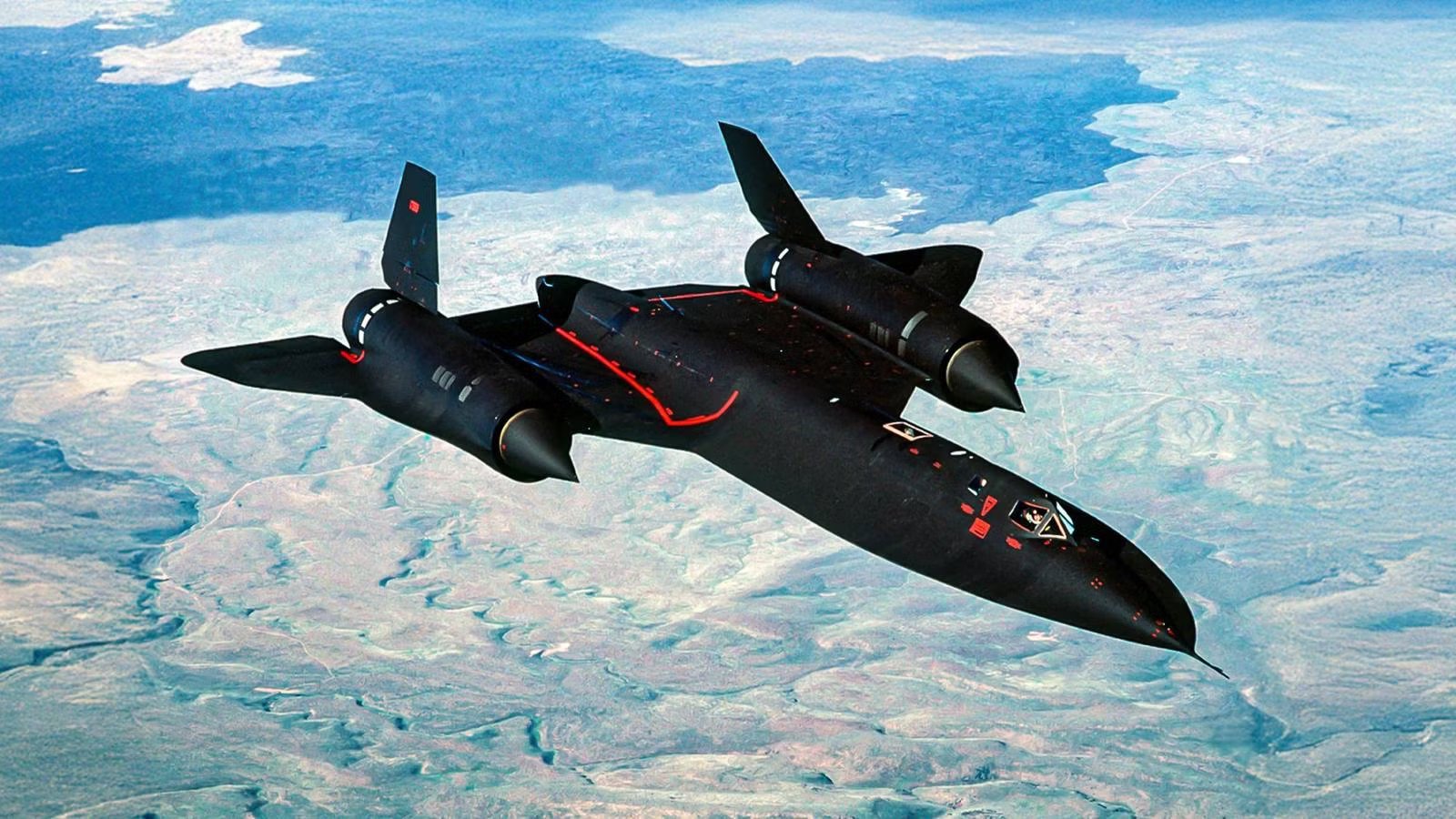
The upcoming Boeing F-47 sixth-generation fighter jet is set to push the boundaries of what is possible with modern aerospace engineering. It has onerous requirements that will require challenging engineering solutions. The program is likely to leverage a large range of accumulated aerospace knowledge, including from countless NASA experiments. One historical program that illustrates the type of publicly available research Boeing engineers could draw upon is NASA’s Laser Air Data Sensor (LADS) project. This was conducted by NASA with SR-71 Blackbirds in the 1990s.
The LADS flights predated NASA’s better-known Linear Aerospike SR-71 Experiment (LASRE), which flew in 1997 and 1998. Interestingly, these experiments took place at the same time as NASA used a heavily modified Soviet/Russian Tupolev Tu-144 supersonic airliner (designated the Tu-144LL ‘Flying Laboratory’) between 1996 and 1999. Those experiments focused on things like reducing cabin noise and may be less applicable to the F-47.
NASA Used SR-71 For LASRE

NASA was one of the operators of the famous SR-71 spy plane (loaned from the Air Force). In fact, it was the type’s final operator as the Air Force temporarily retired them in 1989 and permanently in 1998. NASA ultimately operated two Blackbirds: an SR-71A and an SR-71B, the latter being the rare two-seat trainer variant. NASA retired its experimental SR-71s in 1999. One of the most notable experiments that NASA used its SR-71 for was the Linear Aerospike SR-71 Experiment (LASRE).
The experiment sought to gather flight data to support the development of reusable launch vehicles and future hypersonic flight technologies. At the time, NASA reported, “To provide some of these data before flying on the X-33 vehicle and the RLV, a spacecraft rocket engine has been flight-tested atop the NASA SR-71 aircraft as the Linear Aerospike SR-71 Experiment (LASRE).“
It added that a 20%-scale, semispan model of the X-33 vehicle, the aerospike engine, and all the required fuel and oxidizer tanks and propellant feed systems had been mounted atop the SR-71 airplane. NASA stated that a major technical objective of the LASRE flight test was to get installed engine performance flight data for comparison to wind-tunnel results as well as for the “development of computational fluid dynamics-based design methodologies.”
Lockheed Martin X-33

LASRE is remembered as one of NASA’s most unusual flight research programs. The experiments were conducted in 1997 and 1998 using a modified SR-71 Blackbird as a flying testbed carrying an experimental linear aerospike rocket engine developed for Lockheed Martin’s X-33 reusable spaceplane demonstrator.
The X-33 was a proposed uncrewed, sub-scale technology demonstrator suborbital spaceplane that was worked on during the 1990s. It was a technology demonstrator for the VentureStar orbital space plane, which was intended to replace the Space Shuttle. The X-33 program was canceled in 2001 after the vehicle was roughly 85% complete by weight, around 96% of its parts had been manufactured, and its launch facility at Edwards Air Force Base was essentially complete.
With the cancellation of the X-33 program, the VentureStar program was effectively ended in 2001. In 2011, the Space Shuttles were retired without immediate replacement. This left the US dependent on Russia and its Soyuz spacecraft as the US adopted a commercial partnership model under the Commercial Crew Program to develop a manned space capsule replacement. In 2020, the SpaceX Dragon space capsule entered service, ending the US’s dependence on Russia. This was followed by the second crewed space capsule, the troubled Boeing Starliner.
Why NASA Used The SR-71

The SR-71 had been built to fly at an altitude of 80,000 feet (24,000 meters) and at speeds exceeding Mach 3. This exceeded the capabilities of any other manned aircraft and offered a number of unique experimental opportunities for NASA. During the LASRE tests, NASA described the SR-71 as functioning “like a kind of flying wind tunnel that allowed engineers to gather aerodynamic data under realistic flight conditions.”
The experiment formed part of NASA’s Reusable Launch Vehicle (RLV) program, which sought to develop technologies capable of dramatically reducing the cost of reaching orbit. One of the most promising technologies was the linear aerospike engine. This offered a major theoretical advantage over conventional rocket engines.
Select NASA SR-71 experiments/programs | Approx. dates | Note (per NASA statements) |
|---|---|---|
Laser Air Data Sensor (LADS) | 1992-1996 | Replace pitot tubes and vanes with laser-based optical air-data systems |
Jet Propulsion Laboratory ultraviolet astronomy platform | 1993-mid 1990s | Use SR-71 as high-altitude observatory with ultraviolet camera |
Linear Aerospike SR-71 Experiment (LASRE) | 1997-1998 | Test sub-scale X-33 lifting body and linear aerospace rocket engine |
High-speed aerodynamics research | 1991-1999 | Gather data on aerodynamic behavior at Mach 3 |
Propulsion research | 1991-1999 | Investigate engine integration and propulsion at extreme speed |
By the time of cancellation, the engine was never fired in flight, but the LASRE program still provided valuable information. Because LASRE was developed specifically to support the X-33 program, its future became closely tied to that vehicle. When NASA canceled the X-33 in 2001, further development of LASRE effectively came to an end, as there was no longer an immediate flight program requiring the technology. NASA has published these results, meaning that aerospace companies like Boeing, SpaceX, and Blue Origin can access them if they choose.
The Laser Air Data Sensor (LADS) Experiments

Although LASRE generated valuable research data, there is little public evidence that its aerospike-specific findings were directly incorporated into modern launch vehicles such as Dragon, Falcon 9, Falcon Heavy, New Shepard, New Glenn, Starliner, or Starship by SpaceX, Blue Origin, and Boeing. One of the first major experiments (Laser Air Data Sensor or LADS) conducted on NASA’s SR-71s was a laser air-data sensor that used laser light rather than conventional pressure probes to measure airspeed and other air-data parameters.
This experiment could be more interesting for next-generation aircraft, like the upcoming F-47. As stated, it was one of NASA’s most innovative flight research projects during the 1990s. It sought to measure the surrounding airflow remotely using laser light instead of pitot tubes and static ports. NASA writes, “The system used six sheets of laser light projected from the bottom of the airplane. As microscopic-size atmospheric particles passed between the two beams, direction and speed were measured and processed into standard speed and attitude references.”
Pitot-static systems work by measuring ram (dynamic) pressure through forward-facing pitot tubes and measuring static atmospheric pressure through small ports in the aircraft’s fuselage. The LADS experiment tested replacing these with carbon dioxide (CO2) lasers. It projected several thin sheets or beams of infrared light ahead of the aircraft. The high altitude and high Mach number of the SR-71 made it almost uniquely suited to evaluating advanced air-data systems.
Why LADS Could Have Something For F-47

LASRE generated valuable research in areas including high-fidelity computational fluid dynamics (CFD) validation, transonic and supersonic airflow around unusual vehicle shapes, cryogenic propellant handling, and propulsion integration. Separately, NASA’s Laser Air Data Sensor (LADS) experiments explored a potentially revolutionary way for aircraft to measure atmospheric conditions using laser light rather than conventional pressure probes. The extent to which either program could contribute to Boeing’s development of the next-generation F-47 fighter remains unknown.
One area of potential interest is LADS’ use of a carbon dioxide (CO₂) laser to replace or supplement conventional pitot-static measurements. Traditional aircraft used pitot tubes and static ports to enable the computer to calculate airspeed, Mach number, altitude, and vertical speed. However, these also protrude into the airflow, create radar reflections, are difficult to integrate into very low-observable aircraft, and are susceptible to icing.
These could be attractive to the stealthy F-47 as they would be embedded into the aircraft skin, reduce radar signature, be lower maintenance intensive, and have no moving parts. If future stealth aircraft were to adopt optical air-data systems, they could offer several theoretical advantages over conventional pitot probes, including reduced radar reflections, fewer exposed components, and potentially lower maintenance requirements. However, there is no public evidence that the F-47 will employ such a system.
An Attractive Technology If Now Practical

It is important not to get ahead of what is actually known, and almost nothing is known about the engineering solutions of the F-47. No reliable mock-up, demonstrator, or render has been publicly unveiled. While two partial official renders exist, it is unknown if they have misdirections, and they purposefully don’t provide details anyway.
What is known is the F-47’s requirements. These include extreme stealth, high supercruise (possibly Mach 2), operation across a wide flight envelope, an extremely advanced sensor suite and fusion, and high survivability. If an optical air-data system of the type explored by NASA’s Laser Air Data Sensor (LADS) program were now sufficiently mature, it could prove attractive for such an aircraft. Even tiny protrusions from sensors can increase radar reflections, and a flush optical system could eliminate these external features. They would also likely be more resistant to combat damage, bird strikes, etc.
They could provide better redundancy if the aircraft incorporated a hybrid system. But it should be noted that there were significant challenges NASA ran into when developing the LADS program, and the ideas have not become standard in today’s operational aircraft. Saying that the experiment could inform the F-47 is plausible, but ultimately, it is based on little more than conjecture. It is reasonable to assume the F-47 is seeking to build on the flush air-data systems (FADS) already found in the F-22s and F-35s, but this is all very much classified.
Catch what other trackers miss
Emergency squawks, holds, NOTAMs — live signals, no signup.
Open tracker
Catch what other trackers miss
Emergency squawks, holds, NOTAMs — live signals, no signup.
Open tracker