dailynewsnblog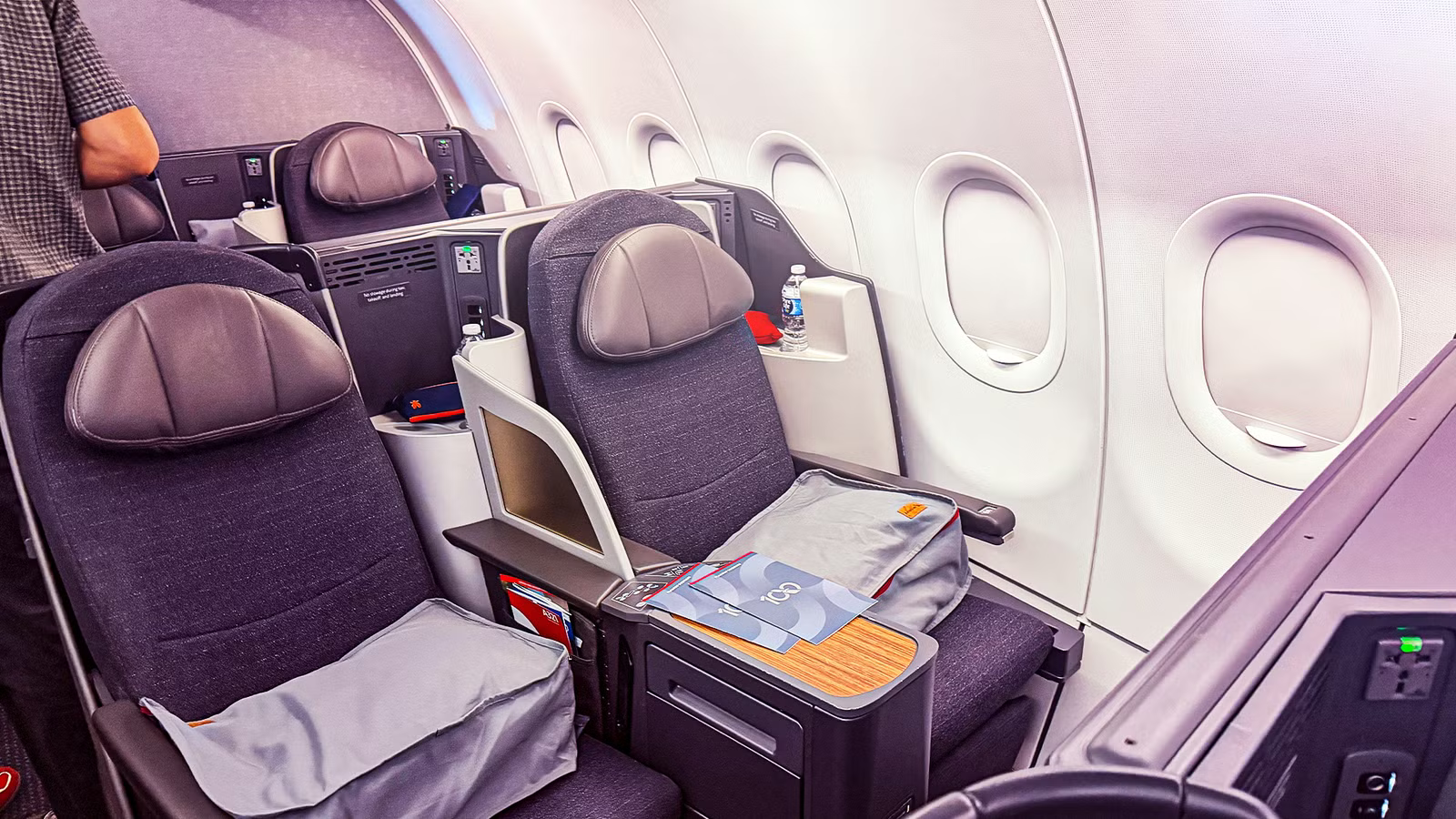
 American Airlines is transforming one of the most unusual aircraft in its fleet. The carrier is removing the specialized interiors from its Airbus A321T transcontinental jets, which were configured with only 102 seats, and converting the remaining aircraft into much denser layouts carrying roughly 190 to 196 passengers. The work is part of a broader fleet strategy that is moving American away from a small, dedicated premium sub-fleet and toward more premium seats distributed across a much larger narrowbody operation.
The change is scheduled to be completed as American ends A321T operations on its premium transcontinental routes by March 28, 2027. The aircraft that once concentrated lie-flat seats, extra space, and a separate Flagship First cabin into a 102-seat layout will instead resemble the airline’s standard Oasis-style narrowbodies. Meanwhile, the Airbus A321XLR is taking over the role on routes between New York and California, with 20 Flagship Suite business-class seats, while Airbus A319s and Airbus A320s are being redesigned to carry more premium passengers elsewhere in the network.

The A321T was an unusually low-density version of the A321. American configured it with just 102 seats, significantly lower compared with the much higher capacities found on conventional A321s. American is now removing the features that made those aircraft distinctive and installing interiors designed around substantially greater passenger volume. Depending on the resulting configuration, each converted airframe will gain approximately 88 to 94 seats. Across the 17 remaining A321Ts, that represents a significant increase in the number of passengers the same basic airframes can carry without acquiring additional aircraft.
American A321T Configuration | |
|---|---|
Class | Total Seats |
Flagship First | 10 |
Flagship Business | 20 |
Main Cabin | 72 |
The change is more than a seat-map adjustment. A specialized transcontinental cabin requires space for wide premium seats, generous seat pitch, dedicated service areas, and the systems associated with those products. Reconfiguring the aircraft reallocates that interior volume toward a broader mix of passengers. American’s existing A321 fleet has already demonstrated the operational logic behind the approach, with standardized narrowbody interiors serving a wide range of domestic and short-haul international markets.
The timing also reflects the end of a product era. American’s A321T represented a relatively rare attempt to make a narrowbody aircraft function as a dedicated premium transcontinental platform. Its retirement does not mean premium transcontinental flying is disappearing. Instead, the airline is separating the aircraft type from the premium mission and assigning that role to a newer platform.
Why American Is Moving Away From The A321T

The A321T’s low seat count made sense when American wanted to differentiate its New York to Los Angeles and New York to San Francisco services with an unusually broad premium offering. The economics of a dedicated cabin, however, depend on consistently generating enough high-value demand to justify the interior space devoted to premium seating. American’s newer strategy distributes premium capacity more widely. The airline has said its A319 retrofit will raise the premium cabin to 12 seats, while A320 conversions will provide 16. Those aircraft serve a much broader network than the A321T, allowing premium inventory to be offered across more markets rather than concentrated on two transcontinental city pairs. American says the retrofit program is part of its effort to expand premium seating and create a more consistent cabin experience.
“We are excited to introduce our refreshed interiors and new premium seats on our narrowbody aircraft, offering our customers more space to stow their carry-ons and a convenient way to power their devices” – Heather Garboden, American Chief Customer Officer
That shift follows a larger change in the airline’s fleet planning. In 2024, American ordered 85 Airbus A321neos, alongside 85 Boeing 737 MAX 10s and 90 Embraer E175s, while describing the orders as a way to upgauge its network and add premium capacity. The airline also said at the time that premium seating across its fleet was expected to grow by more than 20% by 2026. The A321T conversion therefore sits within a fleet-wide allocation decision. Rather than preserving a small group of aircraft for one specialized mission, American can use the converted A321s in a larger range of markets while using new aircraft for routes where long-range capability and a premium cabin justify the investment.
A321XLR Takes Over The Transcontinental Role

The replacement for the A321T is not a conventional high-density A321. American is using the A321XLR, an aircraft designed to combine single-aisle economics with the range required for long-distance missions. American became the first US airline to introduce the type, and its configuration includes 20 Flagship Suite seats, 12 Premium Economy seats, and 123 Main Cabin seats. The Flagship Suite is a fundamentally different premium product from the A321T’s former cabin. Each suite provides a privacy door, a chaise lounge option, and additional personal storage. American designed the product for long-haul travel, and the airline has deployed it on both the A321XLR and Boeing 787-9. The aircraft therefore allows American to retain a premium proposition on transcontinental flights while gaining an airframe capable of supporting international missions as well.
That flexibility matters because the A321XLR is not restricted to the New York to California market. American has already used the aircraft for international service, including New York to Edinburgh, demonstrating how the same fleet type can move between domestic premium flying and longer international routes. The airline’s XLR strategy effectively replaces the A321T’s specialization with a more versatile aircraft.
There is also a capacity difference. The A321XLR’s 155-seat configuration is larger than the A321T’s 102 seats, but it remains far below the 190-plus seats planned for the converted A321s. American is therefore using different versions of the A321 family for different economic purposes rather than seeking one cabin arrangement to cover every market.
Premium Seats Are Moving Across The Fleet

American’s narrowbody strategy is not simply about adding more seats overall. The airline is simultaneously increasing the proportion of premium seating available on aircraft that operate across its domestic network. Its A319 and A320 retrofits add first-class seats, new premium seating features, larger overhead bins, power at every seat, and refreshed interiors. The A319 rises to 12 premium seats, while the A320 rises to 16.
The broader investment is occurring alongside new long-haul aircraft. American says premium-configured Boeing 787-9s and A321XLRs, together with refurbished Boeing 777-300ER and Boeing 777-200ER aircraft, are expected to increase lie-flat seating on international aircraft by more than 50% by the end of the decade. That indicates the carrier is not abandoning premium products. It is changing where and how those products are deployed.
The economics behind the strategy are also becoming more visible. American reported that premium corporate travel bookings rose nearly 15% year-over-year during the 12 months ending in May 2026. That demand gives the airline a reason to expand premium inventory, but the response is not limited to flagship transcontinental routes. By placing additional premium seats on A319s, A320s, A321XLRs, and widebodies, American can pursue higher-value demand across more markets. The result is a more distributed premium network. A passenger no longer needs to be flying on a specialized A321T to encounter a higher-end narrowbody cabin. Instead, premium capacity can be adjusted according to market demand while the underlying aircraft remain useful across multiple routes.
Cabin Changes Do Not End With Seat Counts

The A321T conversion also fits into a broader reconsideration of American’s narrowbody interiors. In August 2026, the airline announced plans to install seatback entertainment screens at every seat across its fleet, with the narrowbody rollout beginning in 2028. That decision reverses an earlier element of the Project Oasis philosophy, which emphasized removing seatback screens while increasing density. American is therefore pursuing two objectives that address different parts of the passenger experience. The carrier is making some aircraft denser while adding amenities intended to improve the experience within those configurations.
Connectivity is another part of the equation. American began expanding free high-speed satellite Wi-Fi across its narrowbody fleet in 2026 and plans to equip more than 500 narrowbody aircraft with Starlink beginning in 2027. The airline says the service is intended to support streaming, browsing, and real-time communications. This combination suggests that the new cabin philosophy is not simply maximum density. It is a reallocation of physical space, technology, and premium inventory. The A321T is losing the spacious configuration that defined it, but the broader fleet is gaining connectivity, entertainment, and additional premium capacity. American is effectively trying to make a denser aircraft more commercially useful without abandoning investments that passengers can see and use.
American Is Building A More Flexible Narrowbody Fleet

The A321T conversion is best understood as a fleet-management decision rather than an isolated cabin retrofit. American is taking a small group of highly specialized aircraft and making them usable across a much larger portion of its network. At the same time, the A321XLR is providing a dedicated platform for transcontinental and international flying where longer range and Flagship Suite seating can command a premium.
The next phase will reveal whether this division of roles gives American greater flexibility as demand changes. The converted A321s can be assigned to markets that need capacity, while XLRs can move between premium domestic and international missions. Meanwhile, A319 and A320 retrofits give the airline more ways to place premium seats where demand supports them.
By 2028, the contrast will be even clearer. The former A321T fleet will have been absorbed into a denser operating model, while new seatback screens, satellite connectivity, and expanded premium cabins will be spreading across American’s narrowbody fleet. The underlying strategy is a shift from designing individual aircraft around one market to designing the fleet around changing revenue opportunities.