dailynewsnblog
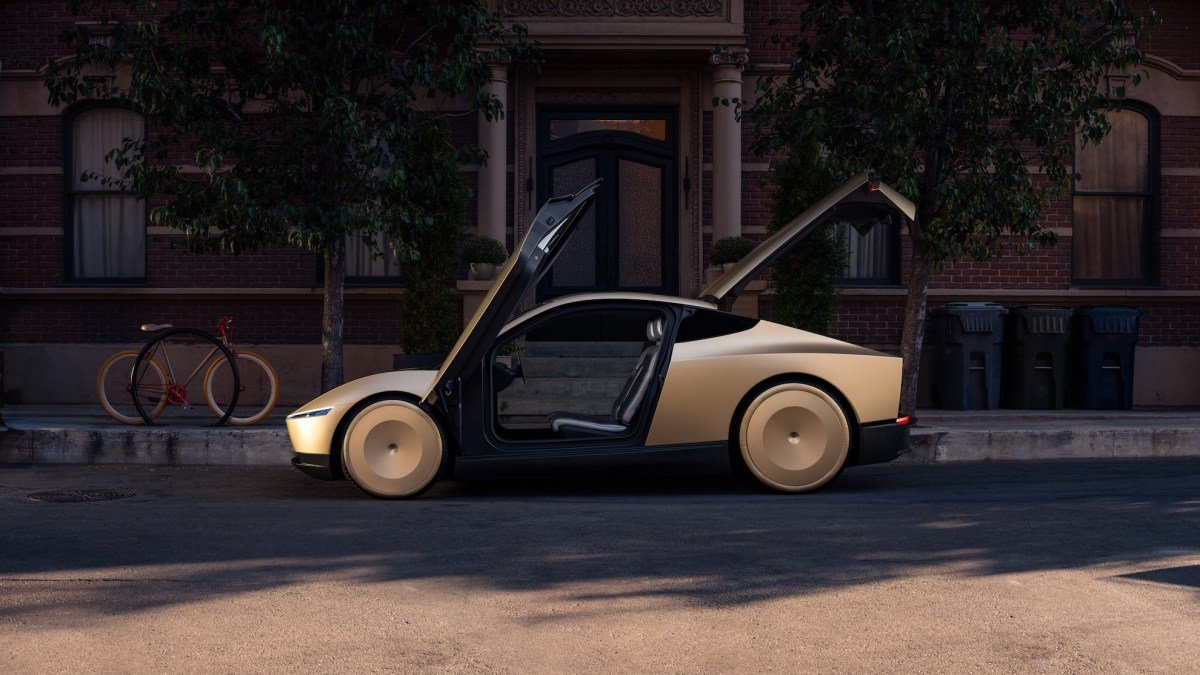
Tesla said Wednesday it will start selling its Cybercab to customers by the end of the year, even as federal regulators investigate whether the vehicle meets vehicle safety standards. The gold-hued, autonomous two-seater lacks a steering wheel and other traditional controls.
During the company’s third-quarter earnings call, Lars Moravy, vice president of engineering at Tesla, said the Cybercabs produced today are all destined for the company’s own robotaxi fleet. As that fleet grows, the company will “mainly deliver fully designed autonomous vehicles to our customers,” he said, noting that it will start small. The company will scale as it learns about delivery, ownership, and fleet management of autonomous vehicles, Moravy added.
Tesla first floated the idea of selling the autonomous vehicle to third parties last month around its Cybercab event in Austin and even posted a form for people interested in buying robotaxis. But it wasn’t clear if Tesla would follow through, or how.
Tesla CEO Elon Musk has talked for years about building a massive fleet of low-cost robotaxis, but until recently, those plans centered on turning privately owned Tesla vehicles into self-driving taxis with a software update.
That plan has yet to materialize, and Musk’s comments on the call show how his views have shifted.
Today, Tesla owners can subscribe to Full Self-Driving (Supervised), an advanced driver-assistance system that automates many driving tasks but still requires the driver to take control. The company continues to push out software updates to the system to improve its capabilities, but a human driver is still required to remain engaged and ready to take over — even though many videos show drivers testing the limits of that rule.
Musk said Wednesday that an unsupervised version of FSD, the fully self-driving version, would be rolled out to customers sometime in the second quarter of next year, yet another delay for Tesla owners, many of whom bought or subscribed to the software years ago.
If both timelines hold, it would mean third-party fleet customers would be able to buy the autonomous Cybercab and potentially operate it as a robotaxi service before Tesla owners would get access to the same autonomous capability in their own cars.
Musk said the Cybercab is meant to be a ride-hailing vehicle, not a car people own. “Cybercab is primarily going to be something that is offered as like transport as a service, whereas our other cars would be more, you know, the cars that you’d want to own, like the 3 and the Y and whatnot, and the Roadster, obviously,” Musk said Wednesday on the call. “But, you know, the vast majority of the Cybercab stuff will be essentially Tesla-owned and transported as a service.”
There is at least one obstacle that could throw off Tesla’s Cybercab fleet plans. The National Highway Traffic Safety Administration (NHTSA), the federal auto safety regulator, announced last month that it had opened an investigation into the Cybercab, just hours after the vehicles began operating on public streets in Austin.
Federal Motor Vehicle Safety Standards (FMVSS) require manual controls like brake pedals, as well as other features such as rearview and side mirrors. Automakers traditionally self-certify whether their vehicles comply with FMVSS rules, and Tesla did the same.
Current regulations don’t accommodate vehicles without manual controls, though the Department of Transportation recently proposed removing those requirements for vehicles that are designed to be autonomously driven. In the meantime, NHTSA said it would investigate the Cybercab to “examine the process and technical data on which Tesla relied when certifying the Cybercab and related issues.”
The outcome of that investigation could affect whether Tesla, or anyone else, can legally operate the Cybercab.
When you purchase through links in our articles, we may earn a small commission. This doesn’t affect our editorial independence.