dailynewsnblog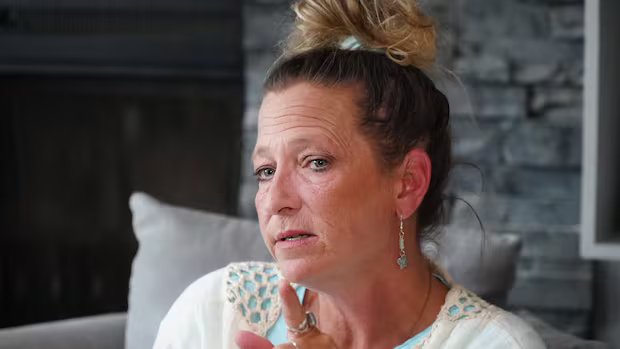

Listen to this article
Estimated 4 minutes
The audio version of this article is generated by AI-based technology. Mispronunciations can occur. We are working with our partners to continually review and improve the results.
The daughter of a woman with stage four cancer says her mother spent 21 hours on a gurney in a hallway at the emergency department in the Health Sciences Centre.
Theresa Chanowski says she only had five minutes to stay with her mother Colleen Titanich after she arrived at a “jam-packed” emergency department on Tuesday, where she described seeing several patients going through withdrawals, yelling and spitting at nurses.
“Seeing what was happening in that hallway, it was appalling, it was disgusting,” said Chanowski, whose mother is turning 71 in November.
“We went back the next morning and I’ll tell you, we went there — my mom was in pain, and not making any sense.”
Titanich was diagnosed with cancer in 2024, and it started in her lungs, then spread to her brain, and her spine, Chanowski said.
Her mother had been living with her for nearly three years, but the day after a family barbecue early last week, her condition took a turn for the worse.
“It was like somebody flipped the light switch off, that’s how fast she went down,” said Chanowski.

Chanowski said that her mother had been feeling pain in her back, and after she looked, she could see a rash.
Then on Tuesday, after her mother was struggling to walk, she called for an ambulance.
“And that was not an easy call to make because I knew in the state that she was in and the condition that the odds of her coming home were probably not well,” said Chanowski.
When she got to the emergency department, she says she was told her mother would have to wait between 21 and 24 hours to see a doctor.
She says she called the hospital around 2:30 a.m. in the morning, and was told that her mother was resting, and had not seen a doctor yet.
Later that morning, she called again around 6 a.m., and says her mother had still not seen a doctor.
“So then I was so upset and angry, I’m like, that’s it. I’m calling the Minister of Health — I’m done,” she said.
“I would say half an hour to an hour later, my mom was taken out of the hallway and put into a bed.”
A half hour later, she says she got a call from a co-ordinator from palliative care who said they would be transferring her mother that day to the Riverview Health Centre.
“Had I not said anything, had I not pushed, and pushed, and pushed, I can guarantee you my mom would have still been in that hallway and who knows — she could have passed,” Chanowski said.

Manitoba’s health minister Uzoma Asagwara acknowledged wait times in urgent care and emergency departments are too long in a news conference on Friday afternoon. They say the focus is on staffing, in addition to extended hours at primary care clinics.
“We would love for these challenges to get fixed much more quickly. We would all love to see those wait times addressed much faster,” said Asagwara.
“But the reality of it is we did not get to a place where those wait times were high overnight, and we’re not going to get out of it quickly either.”

Chanowski says she’d like to see patients with addictions treated in a separate facility than elderly, youth and terminally-ill patients in emergency care situations.
“Because they’re [people with addictions] clogging the ER’s and the people like my mom and elder, other elderly people, kids, children, young people that are very, very ill are being pushed on the back burner,” she said.
CBC has reached out to the provincial government for comment.
“We need to figure out another solution — and that’s really what my hope is,” Chanowski said.
“That people start to fight for their loved ones, stand up, push back, say this is unacceptable, especially when they’re terminally ill.”