dailynewsnblog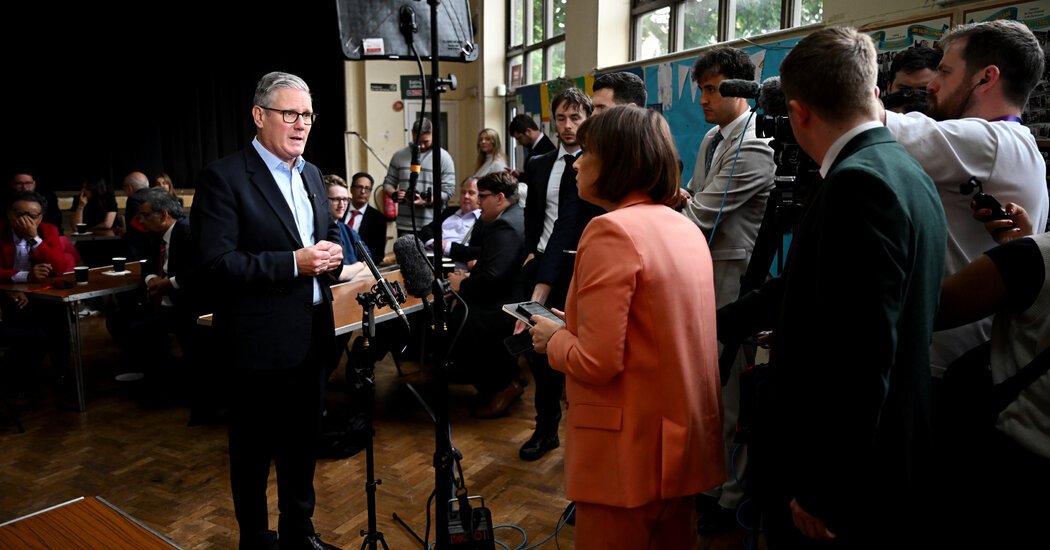
Prime Minister Keir Starmer on Thursday faced his biggest electoral test since coming to power in 2024. Millions of Britons voted in elections to Parliaments in Scotland and Wales, and to municipalities in England. And they delivered a damning verdict on Mr. Starmer’s governing Labour Party.
Mr. Starmer took responsibility for Labour’s losses, saying that he would “not sugarcoat” voters’ scathing verdict on his 22 months in office. But he said he would not step down.
The main victor on Thursday was the right-wing populist Reform U.K. party, which gained more than 1,400 seats on municipal councils across England. The party took seats from the Conservative Party and from Labour and consolidated its status as the dominant party of Britain’s political right. But the left-wing Green Party also made gains at the expense of Labour.
The results shattered the grip on power long held by Labour and the Conservatives, and signaled a new political landscape in which at least seven parties are vying for votes across Britain.
Here are four takeaways.
Nigel Farage, leader of the populist Reform U.K. party, is on a roll
An ally of President Trump, Mr. Farage was in celebratory mood on Friday morning, declaring he had ushered in “a truly historic shift in British politics.” Hyperbole aside, it was a great set of election results for Reform, which has spread its electoral success across the country. It won in parts of northern England that were once Labour Party strongholds. It took its first borough in London from the Conservative Party. And in Wales, Reform came second in elections for the Welsh Parliament.
The only nagging doubt for Reform supporters was whether the party might have peaked. In England, one analysis suggested that its national vote share was 27 percent, in line with recent opinion polls, and well ahead of its rivals. But that was lower than the estimated 32 percent of the vote it scored in the local elections in 2025.
Britain has entered an era of multiparty politics
For around a century, Britain was dominated by Labour and the Conservatives. Even in the 2019 general election, the two rivals together scooped up three-quarters of the vote. Not any more. In addition to Reform, the left-wing Greens have arrived on the scene. The longer-established Liberal Democrats made gains. In Scotland, the left-of center Scottish National Party was emerging as the victor, and in Wales, Plaid Cymru, which also tilts left, won the largest number of seats, although it fell short of a majority.
Both the Scottish and Welsh elections took place under different, more proportionate systems. But in municipal votes in England — and in British general elections — the voting system appears ill-equipped for a world in which five or more parties vie for support. The system known as “first past the post” awards a seat to the candidate with the most votes in each electoral area. Losers get nothing. That means seats can be won on a very low share of the overall vote, meaning that some politicians could be elected even if a majority of voters cast ballots against them.
Keir Starmer’s in trouble — but he may hold on for now
Sensing his political peril, Mr. Starmer was out early on Friday to make it clear he would not be quitting, declaring “tough days like this don’t weaken my resolve.” As results came in, a handful of Labour lawmakers called on him to consider his position, and several referred to the animosity of voters toward the prime minister.
None of the party’s big figures have as yet publicly pressed Mr. Starmer to stand aside, but that may primarily reflect the practical and political difficulties of replacing him. Among contenders to succeed Mr. Starmer, the momentum is with Andy Burnham, the popular mayor of Manchester, who polls well with the British public. But he does not have a seat in Parliament and would need to win one before mounting a challenge. The other main rivals, Angela Rayner, a former deputy prime minister, and Wes Streeting, the health secretary, have so far not moved against Mr. Starmer, who is expected to keep his job in the short term.
Labour will also have an internal party debate over its direction. Should it tilt to the left to reach out to disgruntled progressive voters who are defecting to the Greens? Or would it do better to double down on its tough stance on issues like immigration to try to win over more right-leaning voters in working-class areas that supported Brexit?
Either way, there is a consensus that the prime minister is so unpopular that he is unlikely to lead Labour into the next general election, which must be held by 2029 at the latest.
The Greens gained ground
Under its new leader, Zack Polanski, the Greens have transformed themselves from a party campaigning on environmental issues into an insurgent left-wing political force.
Mr. Polanski’s proposed policies include a wealth tax for billionaires, rent controls and nationalization of water companies. His pitch to young voters impatient for change has invited comparisons to Mayor Zohran Mamdani of New York. By attacking the Labour Party from the left, the Greens scored some high-profile successes, winning mayoralties in Hackney, north London — where they ended 24 years of Labour power — and in Lewisham, in the southeast of the capital.
Across England they gained more than 250 council member seats and in elections to the Welsh Parliament, known as the Senedd, the Greens won two seats. That demonstrated their ability to appeal to left-wing voters in urban areas — something that spells trouble for Labour, which is being squeezed by Reform on the right and the Greens on the left.
Michael D. Shear contributed reporting.