dailynewsnblog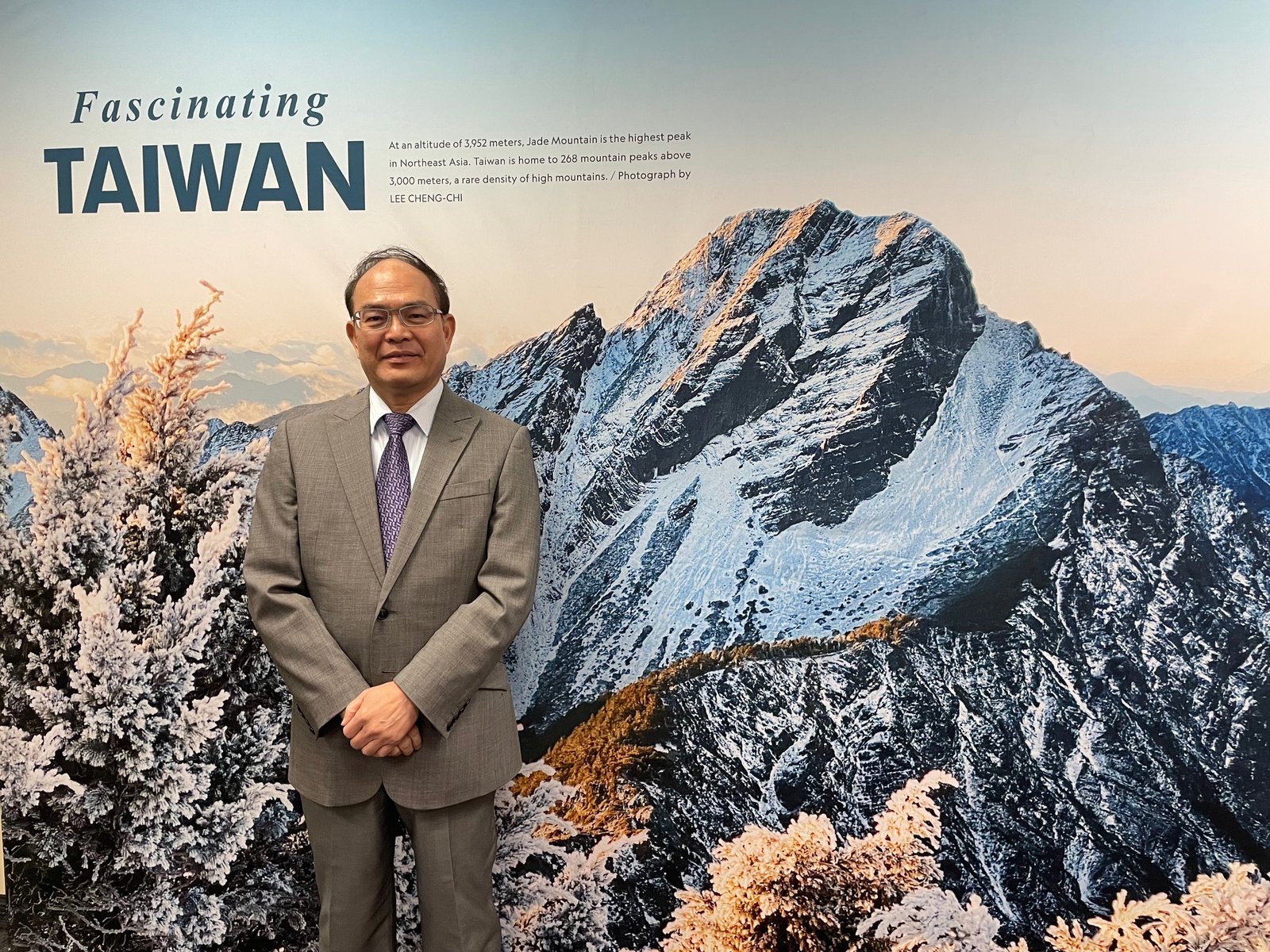
Harry Tseng, Taiwan’s ambassador to Canada, told Politics that China has “repeatedly weaponized trade to pressure its partners.”
Taiwan’s ambassador is warning that efforts to foster closer economic cooperation with China increase the threat of coercion, after Beijing imposed a 73.5 per cent tariff on Canadian pea starch.
The levy came after the Liberal government tabled legislation combatting forced labour in supply chains, which could end up targeting Chinese imports.
The UN Human Rights Office warned that China’s “poverty alleviation through labour transfer” program effectively coerces the Uyghurs in Xinjiang and other minorities into forced labor.
Harry Tseng, Taiwan’s ambassador to Canada, said in a statement to iPolitics that China has “repeatedly weaponized trade to pressure its partners.”
“From Australian wine to Taiwanese agricultural products, the lesson is clear: the greater the dependence on China, the greater the risk of coercion,” he said.
Tseng said Taiwan has responded by “diversifying trade and strengthening resilience,” and warned that Beijing’s new Ethnic Unity Law “risks extending transnational repression worldwide.”
“Freedom and the rule of law demand vigilance,” he added.
That law requires Mandarin to be taught to children before kindergarten and until they graduate high school, and advocates charge that it will allow for more aggressive forced assimilation of ethnic minorities.
It also includes a clause that says the Chinese government can hold legally accountable those outside its borders that undermine “ethnic unity and progress or inciting ethnic separatism.” Critics have said this permits China to crack down on dissidents living abroad.
READ MORE: Forced labour bill faces first scrutiny in committee before summer break
Canada tabled the forced labour bill in June after the U.S. Trade Representative’s Office launched investigations into 60 countries who failed to enforce and prohibit imported goods from forced and child labour.
Canada was one of six places the U.S. listed to have “failed to effectively enforce prohibition” on imported goods.
The legislation would overhaul Canada’s existing regime by allowing the government to create a public list of goods, regions and entities suspected of being linked to forced labour, while placing greater responsibility on importers to demonstrate their products are free of it.
It comes as the U.S. has signalled its intention to not renew the Canada-U.S.-Mexico Agreement, which has a clause that calls for all parties to “prohibit the importation of goods into its territory” in whole or parts from “compulsory labour,” including child labour.
READ MORE: Ottawa set to reexamine legislation on importing forced laboured goods amid new tariffs from the U.S.
The tabling of the bill comes as Canada has started taking steps to improve ties with Beijing, including slashing tariffs on 49,000 Chinese EVs each year from 100 per cent to 6.1 back in January.
China has responded by lowering tariffs on canola seed from 85 per cent to 14.9, and suspended tariffs on Canadian canola meal, peas, lobsters and crabs.
Those tariffs will come back into force in 2027, if not renewed by China. Producers have warned this complicates planning for harvesting this season, and those in the sector told iPolitics they’re not anticipating any announcement until the fall, possibly when Prime Minister Mark Carney makes a return visit to China for the APEC summit in November.
Conservative agriculture critic John Barlow said uncertainty about Canada’s access to the Chinese market shows the risk of Carney’s overtures to Beijing.
“This was supposed to be a reset of this relationship with China when we let in 50,000 Chinese EVs into Canada. I think this is a stark reminder that the communist regime in China is not one that is reliable,” he said, noting that tariffs are still in effect for pork and other canola products.
“As we said right from the beginning, there’s no guarantee or long-term certainty. And when you are a farmer and you plan years in advance, you have to buy your seed and fertilizer. You’re rotating your crops. This is not something that the farmers can make a knee-jerk response to — they need certainty long-term on where their markets are going to be.”
The Chinese embassy didn’t return a request for comment prior to publication.
The Conservative have also questioned if the new forced labour bill will make it challenging for Canada to import EVs from China.
The U.S.’s Bureau of International Labour Affairs maintains a list of 204 goods from 82 countries that deemed to be produced by child and forced labour. The list includes electronics and lithium-ion batteries from China, and it’s unclear if similar products could eventually appear on Canada proposed forced labour watch list.
The government has promised to consult on the bill over the summer.
The Carney government has also signalled that relaxing tariffs on Chinese goods could pave the way for investment in Canada’s auto sector, which is reeling from tariffs imposed by the U.S.
Industry Minister Melanie Joly said recently that increased access to the Canadian market would only come if Chinese vehicle makers set up shop in Canada.
The head of the group that represents Canadian auto manufacturers cautioned that a Chinese firm coming here wouldn’t match the footprint of a GM or Honda.
Brian Kingston, the president and CEO of the Canadian Vehicle Manufacturers’ Association, said Ottawa’s criteria for accessing the Canadian market doesn’t align with the operation of Chinese manufacturers, who typically use “knock down” kits in foreign markets to get around hefty tariffs. This process involves disassembling goods manufactured in China and then shipping them abroad for final assembly, requiring minimal local support.
“They’re not using a local supply chain. They’ll use imported labor for the construction of a plant. You’re highly unlikely to see a unionized workforce, and of course, they have their own technology from China that they use in the vehicles,” Kingston explained.
“So, the idea that we’re going to create a manufacturer that looks like any of the five OEMs [original equipment manufacturer] here in Canada now is extremely unrealistic.”
Spokespeople for Joly, Agriculture Minister Heath MacDonald and International Trade Minister Maninder Sidhu didn’t immediately provide a response to a request for comment on Thursday.
Kingston cautioned that encouraging any auto manufacturer to build new facilities in Canada would prove challenging as long as U.S. tariffs are in effect.
He said the Liberals’ efforts would be “better focused on supporting the five [major automakers] that are here, as opposed to trying to attract new investment.”
“If we don’t have clarity with the Americans on our trade relationship, you will not be able to attract new automotive investment into Canada. We are a sizeable market, but we already have five OEMs that build here,” he said.
“There is one oft-repeated misnomer about the auto industry, and that is the industry could simply diversify, find new markets in Europe or Asia. That doesn’t work. We happen to sit beside the largest, wealthiest economy in the world, in the United States. It makes no commercial sense whatsoever to build a vehicle in Canada and then ship it across an ocean to another market.”