dailynewsnblog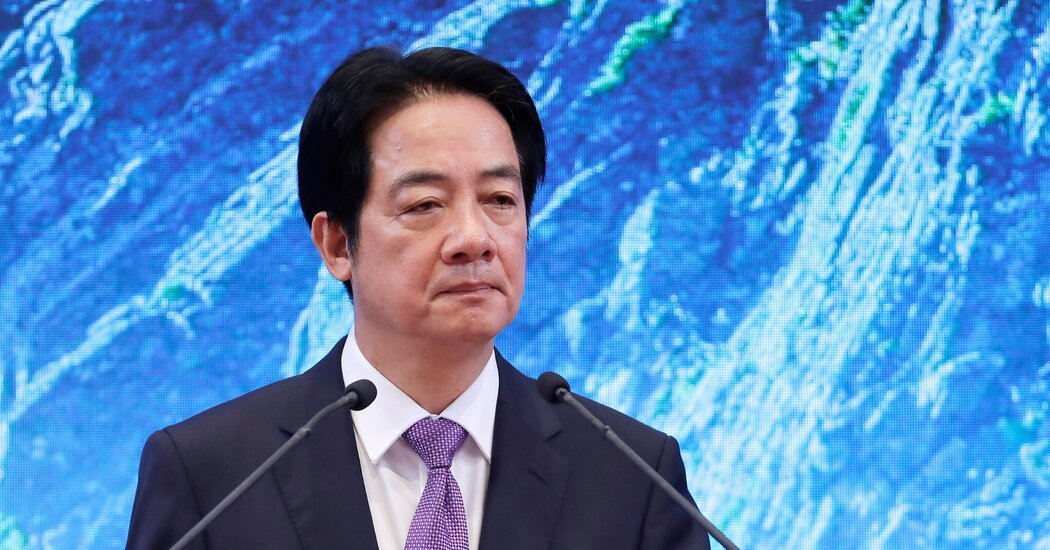
A spokeswoman for Taiwan’s president, Lai Ching-te, criticized Beijing for expelling a New York Times reporter from China in response to Mr. Lai’s appearance by video at a Times DealBook summit in New York in December.
The reporter, Vivian Wang, who was based in Beijing, was expelled in February. She was not involved in the DealBook conference, an annual event that features prominent executives and politicians. Chinese officials had complained for months about Ms. Wang’s reporting, which often addressed topics Beijing considered sensitive.
At the same time, China has sought to isolate Taiwan, a self-governed island that Beijing considers its territory, and largely regards any engagement with Taiwan’s leaders as a violation of Chinese sovereignty.
In a statement posted online on Sunday, the Taiwan president’s spokeswoman, Kuo Ya-hui, said China’s efforts to pressure media organizations not to engage with Mr. Lai was a threat to press freedom and the safety of journalists.
“China’s use of baseless pretexts and brutal methods to threaten the media and interfere with press freedom not only fails to improve its international image, but also highlights that China is currently a source of instability and a troublemaker,” Ms. Kuo said.
The expulsion of Ms. Wang, who had been a China correspondent for the paper since 2020, is the latest example of a crackdown by Beijing on foreign correspondents whose reporting challenges Beijing’s official line.
Ms. Wang’s reporting focused on the lives of ordinary Chinese people and the challenges they faced with censorship, Beijing’s unpopular response to the coronavirus pandemic and the steady expansion of China’s security state.
In a diplomatic tit-for-tat, the Trump administration revoked the visa of a U.S.-based journalist for the Chinese state news agency, Xinhua, which is widely regarded by experts as a propaganda organ. The Times played no role in the Chinese reporter’s expulsion, a spokesperson for the paper said last week.
Ms. Kuo defended Mr. Lai’s interviews with foreign media as a way to “explain the country’s position, share democratic experiences, and express the shared commitment to maintaining regional security and peace.”
To isolate Mr. Lai, Beijing has also tried to sever the Taiwanese leader’s access to international flight paths, according to Taiwanese officials. In April, Mr. Lai was forced to call off a trip to the tiny southern African kingdom of Eswatini after three countries rescinded permits for him to fly through their airspace, apparently because of pressure from Beijing.
Mr. Lai eventually made the trip in May.
Pei-Lin Wu contributed research.