dailynewsnblog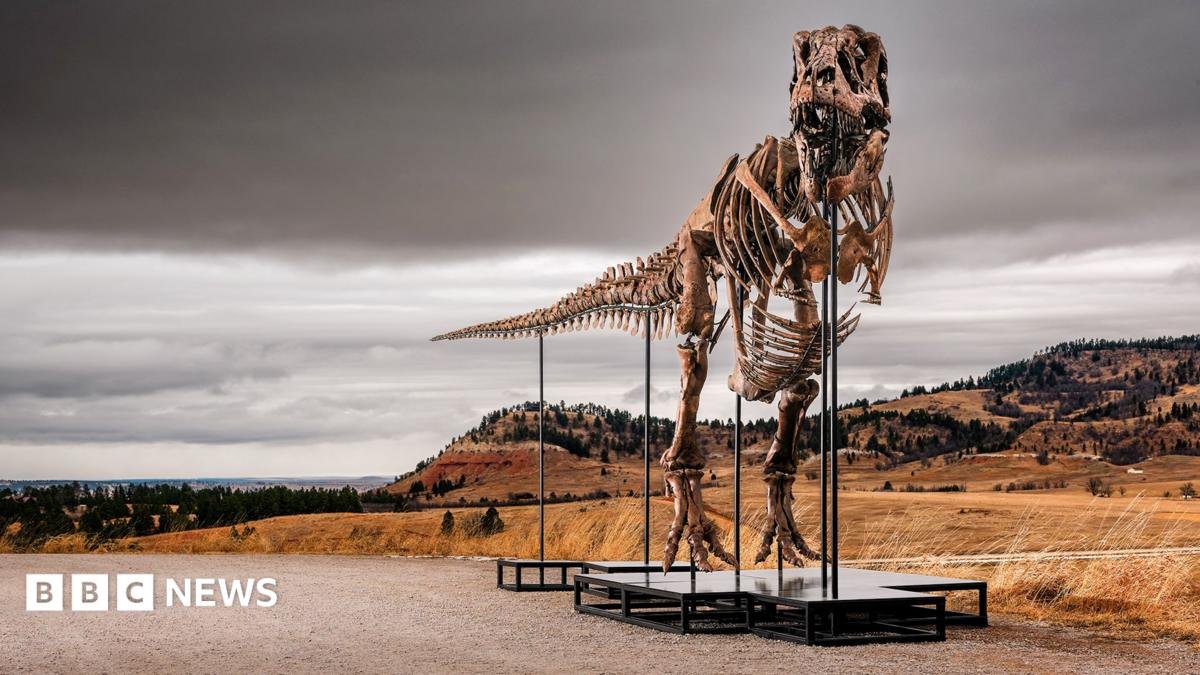
Cassandra Hatton argues that the price of Gus is a reflection of how important a specimen he is.
“Gus is one of the largest and most complete T. rex ever found, 61% of the bones has been identified – in general you find half of the skeleton that’s a major scientific find,” she says.
The condition of the bones also provides deep insight into the kind of life this creature would have had.
“There’s a huge bite mark on the top of the skull, which could have been sustained during a battle. You’ve got broken bones – some of the ribs, you see huge lumps where they broke and they healed.”
Cassandra Hatton says she has reached out to museums all over the world for months to get them to take part in the auction. She wants “something that’s scientifically important to get it into the public trust”.
But she said the price has to reflect the time, skill, expense and risks with recovering dinosaurs. “For a lot of excavators, some of these people are living hand to mouth. They’re not wealthy people.
“They have to invest their own money. It’s not billionaires digging them up.”
But it is billionaires buying them.
Apex, the Stegosaurus, was auctioned to Kenneth Griffin, founder and CEO of the hedge fund Citadel. Griffin has since loaned Apex to the American Natural History Museum for four years.
Museums have for a long time relied on wealthy individuals bequeathing, loaning or donating artefacts to build their science and art collections, explains Dr Smithwick, who recovers and sells fossils professionally.
But unlike pieces of art, there is a big stumbling block to relying on the philanthropy of private estates when it comes to the study of fossils.
The most respected scientific journals will not accept any study done on a specimen in a private collection. It is almost as if it does not exist to the scientific world.
The argument is that scientists need to be able to revisit the fossil over many years – to agree and disagree, to check their findings as other specimens emerge.
“What happens [if] that person gets bored of them, dies, gets divorced. And there have been many cases where specimens have been in private collections, and there’s been a scientific description of them and [that has] gone in the skip,” says Prof Maidment from NHM.
“So it’s actually just not science anymore.”