dailynewsnblog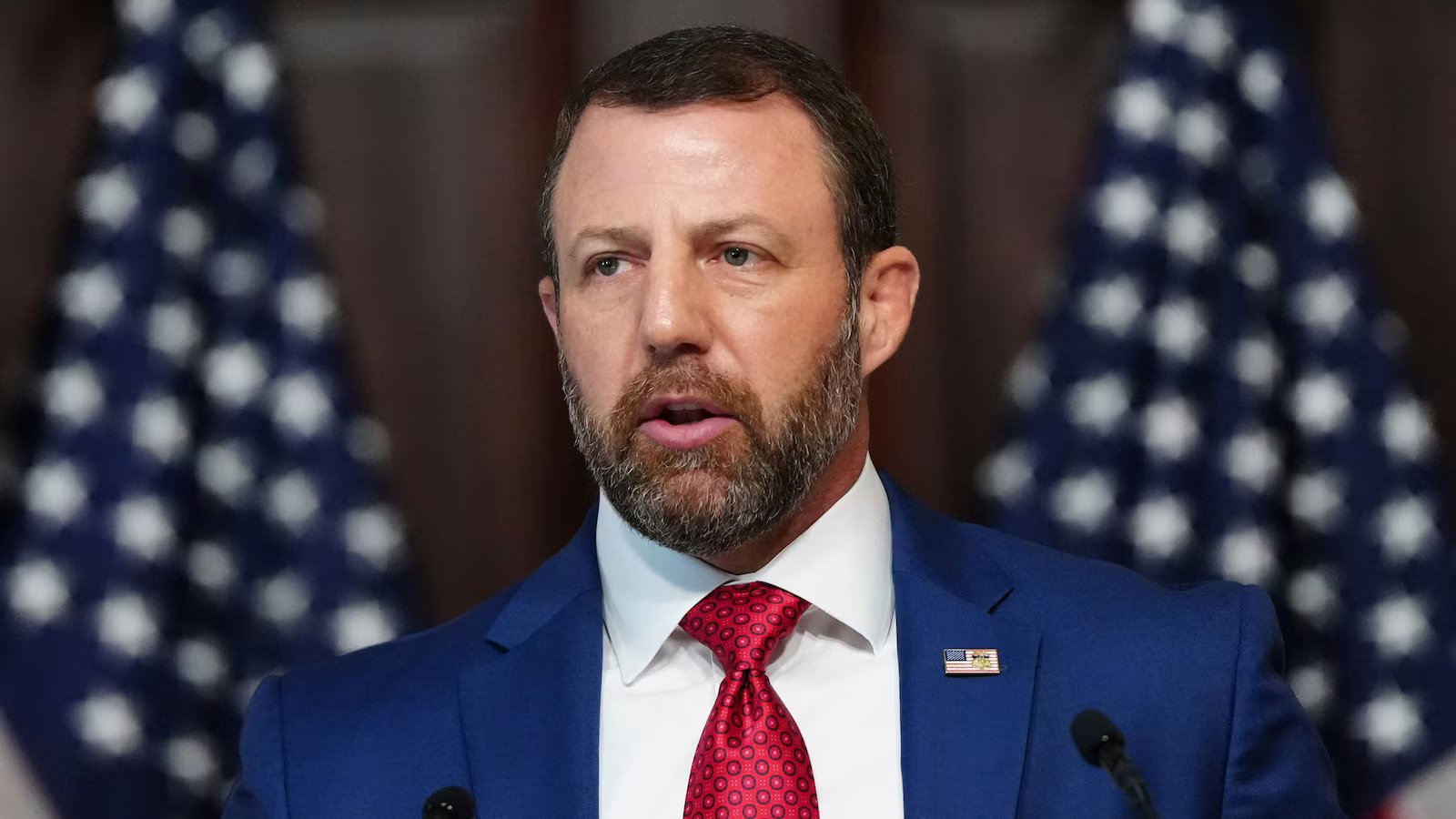
Department of Homeland Security Secretary Markwayne Mullin pressed state election officials on Friday to “scrub” their voter rolls and take other steps to update election security systems, alleging that hundreds of thousands of non-citizens are registered to vote across the U.S. — 250,000 of which the agency claimed came from four states.
DHS is now pushing states to use the expanded SAVE System — a tool maintained by U.S. Citizenship and Immigration Services originally intended to determine eligibility for government benefits — to assess their voter rolls, according to a DHS report released by the White House on Thursday night.

Homeland Security Secretary Markwayne Mullin speaks in the Indian Treaty Room at the Eisenhower Executive Office Building on the White House campus, Friday, July 17, 2026, in Washington.
Julia Demaree Nikhinson/AP Photo
But some experts and state election officials have flagged faulty data using the system in the past.
It is unclear whether DHS used the system to tally up the alleged 250,000 non-citizen registered voters across four states. In his remarks to reporters on Friday, Mullin did not explain exactly how DHS verified its data.
But the agency has repeatedly called on states to use SAVE to audit their voter rolls. The White House referred questions about the report to the DHS. In response to detailed questions about the report, DHS referred back to a Friday social media post from Mullin.
What is the SAVE System?
The SAVE (Systematic Alien Verification for Entitlements) system is not a comprehensive record of American citizens; it is a tool used to search collections of federal records and databases to assist in verifying immigration and citizenship status.
Prior to 2025, the system was restricted to querying known immigrants, non-citizens and naturalized citizens against DHS data to verify their status.
Last year, the Trump administration expanded the SAVE system to verify the citizenship status of all people registered to vote — including natural-born citizens.

A voter completes their ballot at a voting site, in New York, Nov. 4, 2025.
Richard Drew/AP Photo, FILE
A core part of that effort included DHS expanding the ability to query the SAVE system using Social Security numbers and Social Security Administration (SSA) data, enabling broader, bulk searches of state voter rolls using more basic demographic information.
According to a fact sheet on the expanded SAVE system published by USCIS, which has since been taken down, even the administration acknowledged that “SAVE may not be able to confirm U.S. citizenship for an individual who … is not designated as a U.S. citizen in SSA records.”
The fact sheet noted states must “take additional steps when required by SAVE for any case response other than ‘United States Citizen,'” before removing someone from the voter rolls.
The administration’s expansion of SAVE is currently the subject of ongoing litigation, with two federal district courts issuing conflicting rulings this summer on the legality of the new system. The U.S. District Court for the District of Columbia found this summer that the administration’s expansion of the program was in violation of the Privacy Act, the Social Security Act, the Administrative Procedure Act and blocked its use.
The court added that some states have been “actively removing” citizens from voter rolls at the government’s urging “based on inaccurate information.”
But a federal judge in Florida ruled weeks later that the government must continue to provide access to the expanded SAVE system to four states.
The Department of Justice told the D.C. court earlier this month that the government is working to comply with both orders and that access to the system has been restored only to the states subject to the conflicting order. But on Friday, in a reply brief seeking enforcement of the court’s earlier order, the League of Women Voters alleged that DHS was still using the system, citing, in part, Thursday’s report.
How US citizens can be falsely identified as non-citizens
The Social Security Administration, in response to a subpoena in 2023, wrote that “the citizenship [data] SSA maintains merely represents a snapshot of the individual’s citizenship status at the time of their interaction with SSA. SSA’s records do not provide definitive information about an individual’s citizenship status.”
That means it is plausible for naturalized citizens to remain incorrectly categorized as non-citizens in SSA data if they do not proactively update their status with the agency.
In fact, according to a report from the nonpartisan Fair Elections Center on the changes to SAVE, a 2006 audit of SSA data found that, “SSA’s citizenship status data was inaccurate for seven percent of number holders classified as non-citizens in that they were actually U.S. citizens — but had not updated their immigration/citizenship status with SSA.’ That may seem like a small percentage, but in 2006, that translated to 3.3 million U.S. citizens being falsely identified as non-citizens.”

The Social Security Administration’s main campus is seen in Woodlawn, Md., Jan. 11, 2013.
Patrick Semansky/AP Photo, FILE
The Brennan Center for Justice also notes that SSA “only began asking for and maintaining citizenship information for all applicants in 1978. As such, the database does not have comprehensive citizenship information for Americans born before 1978.”
Officials in Utah, Texas flagged inaccuracies
Multiple states that have cooperated with DHS to verify their voter rolls using the expanded SAVE system have also found the tool to be far from infallible.
Utah, which conducted a comprehensive citizenship review using SAVE in 2025, ran more than 71,000 records through SAVE.
That initial assessment found that nearly 9,000 people could not be confirmed as citizens through SAVE. But after a manual review of those individuals, the state found that over 5,600 of those people were citizens, another 5,000 could not be confirmed, and just 27 records were confirmed as non-citizens. Another 25 records were considered “likely non-citizens.”
Earlier this year, Texas’s former secretary of state — who also used the system to help audit the state’s voter rolls — raised concerns about the accuracy, according to a letter obtained via a public records request and published by Votebeat Texas.
Writing to an official at USCIS in April, former Texas Secretary of State Jane Nelson said that her office had identified 2,724 possible non-citizens and that county investigations into those people were ongoing.

“I voted” stickers sit near a ballot box during the Democratic primaries at Denver Public Library, on June 30, 2026, in Denver.
Rebecca Slezak/AP Photo
But she continued: “We want to make sure that you are using the most accurate data.”
“As my staff has informed you, county voter registrars have obtained citizenship documentation from some Texas voters who were identified in the SAVE system as potential Non-citizens,” she wrote.
She added that the state is also “aware of instances in which state driver’s license records inaccurately reflect a person’s current citizenship status. In addition, we have learned of individuals who were mistakenly registered to vote–such as due to a clerical error by a voter registrar–even though they acknowledged on a voter registration application that they are not U.S. citizens.”
Asked by ABC News about the tendency of the SAVE system to flag lawful U.S. citizens as potential non-citizens, a DHS spokesperson said, “USCIS has made enhancements to the SAVE system and to their processes. They have implemented a manual review process to ensure accuracy.”
Four states targeted by DHS, but officials are skeptical
Several other states have declined to run their voter rolls through the SAVE system, including the four — California, New Jersey, Pennsylvania, and Nevada — where the alleged 250,000 noncitizens are registered.
On Friday, Mullin sent letters to the top election officials in those four states. In copies of the letters sent to Pennsylvania and Nevada — and obtained by ABC News — Mullin told the states that he wanted to alert them to “concerning results” found during an analysis of “publicly available voter registration database information.”
But according to letters Mullin sent to the four states, the numbers are based on only a “preliminary review.”
The letters all claim that potential non-citizens were detected using publicly available voter registration data and that, for a portion of those, “registrants for whom the name, date of birth, address and Social Security number match a non-citizen in our files” were flagged, though it’s unclear how the administration obtained Social Security numbers from publicly available voter data, which does not contain that information.
Mullin urged the states to “work collaboratively on identity verification” with the federal government and contact DHS by a July 30 deadline, the letters said.
But on Friday, elected officials in California and Nevada were already expressing skepticism at the DHS assertions.
California Secretary of State Shirley Weber wrote in a statement that she would assess the claims, though she cautioned that her office had yet to receive Mullin’s letter as of Friday morning.
“We welcome legitimate best practices that comply with state and federal law while protecting Californians’ personal information,” Weber wrote. “However, the information provided during the President’s remarks and on the White House website, do not inspire any level of confidence in the methodology used or the conclusions reached.”
Nevada Secretary of State Francisco Aguilar also pushed back preemptively against the data compiled by DHS, calling it “wildly speculative.”
“These numbers are wildly speculative at best and the Department of Homeland Security hasn’t shared anything that backs it up,” Aguilar wrote. “The Trump Administration has persistently asked us for information regarding our voter data and made demands without answering basic questions.”
Sean Morales-Doyle, director of the Brennan Center’s Voting Rights and Elections Program, told ABC News on Friday that the methodology laid out in the letters sent by Mullin was dubious.
“If you say we found 250,000 voters on the rolls that are non-citizens, and then you say a bunch of them we found using publicly available voter data, we found them by matching their name and address and date of birth and Social Security number against the SAVE program. It’s like, well, the publicly available voter data doesn’t give you that. So that doesn’t make any sense,” he said.
Despite repeated requests, DHS did not confirm to ABC whether it used SAVE to conduct its analysis of the four states.
Morales-Doyle described the results as “garbage in, garbage out” if DHS used the SAVE tool to cross-check public voter records.
“I have complete confidence that these numbers are essentially worthless, that they don’t mean anything,” he said. “It conflicts with all available data and history and just clearly cannot be the case that there are this many noncitizens on the rolls.”
-ABC News’ Steven Portnoy contributed to this report.