dailynewsnblog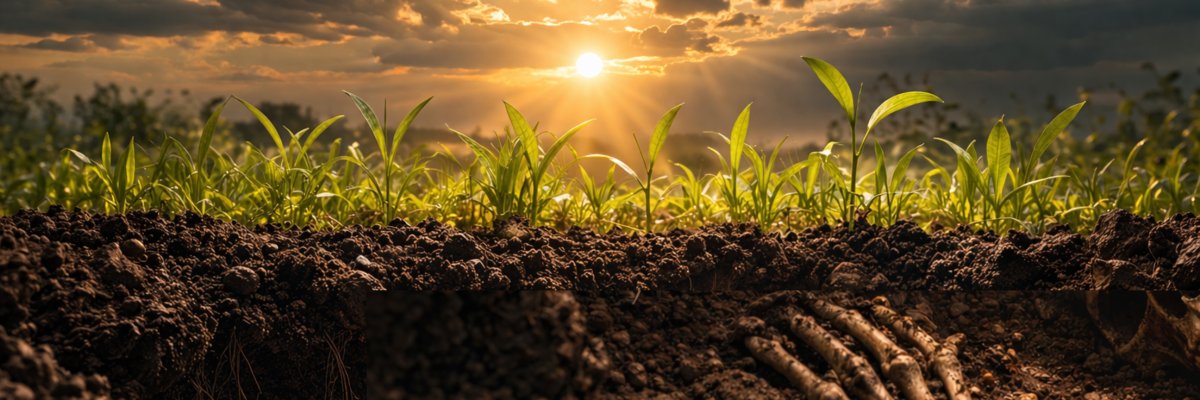
A friend once told me, during a heated debate on climate change when I was passionately arguing that we are destroying the Earth, “The Earth is not at risk. It will survive. It’s humans who are steadily designing their own extinction.”
I paused then, and I understand now.
Because nature is not fragile.
It is balanced.Everything in nature operates within limits. Growth is checked. Excess is corrected. Imbalance is not debated, it is resolved. Sometimes gently, sometimes with devastating force.
That is how life sustains itself.
That is how Earth endures.And then there is us.
We are perhaps the only species that has mistaken capacity for permission. We stretch, extract, dominate, and assume there will be no correction.
But balance is not optional. It is inevitable.
Today, as tensions escalate around Iran, the world is not just witnessing another geopolitical conflict. It is watching a system being pushed out of balance; deliberately, visibly, almost theatrically.
Somewhere, civilians are recalibrating their lives around uncertainty, what to avoid, where not to go, how to remain invisible in a moment when even the ordinary can become a target. Elsewhere, deadlines are issued. Lines are drawn. Consequences are compressed into hours.
And when a leader like Donald Trump suggests that an entire civilisation could disappear “tonight” if a deal is not made, it is not just rhetoric. It is excess.
It assumes that power can move in one direction; without resistance, without consequence, without correction. But that is not how balance works.
There are always two sides.
There is always a counterforce.
When War Becomes a System
There was a time when war was feared. Today, it is anticipated, analyzed, televised, and disturbingly, consumed. Announced in real time on social media, it sends oil prices and commodities rising and falling multiple times within a single day. And now, it is even traded. But what follows imbalance is not just reaction.
On platforms like Polymarket and Kalshi, war is no longer just reported, it is monetized in real time. Hundreds of millions of dollars have already been wagered on scenarios tied to strikes on Iran; timings, escalation probabilities, regime outcomes.
For many, It is opportunity.
When the scale is pushed hard enough to one side, entire systems awaken, not to restore equilibrium, but to benefit from its absence. Markets don’t pause. They position. And in that moment, something shifts.
War stops being just conflict. It becomes conversion;
turning war into probability,
suffering into liquidity,
and uncertainty into profit.
Those closest to power accumulate. Those furthest from it absorb. While some track gains in real time, others lose homes, livelihoods, and lives just as quickly. One side hedges. The other side hungers.
This is how imbalance compounds.
The Illusion of Control
Human systems are built on the belief that control can be absolute.
That one side can dictate outcomes.
That force can exist without consequence.
But nature does not recognise unilateral power.
Every action creates pressure.
Every excess builds resistance.
Every imbalance sets the stage for correction.
What we call escalation…
nature would simply call rebalancing.
When Balance Turns Violent
Correction in nature is not always kind.
A forest left unchecked burns.
A climate pushed beyond limits responds with extremes.
An ecosystem destabilised does not negotiate, it collapses and rebuilds.
Human conflict follows the same logic. When rhetoric crosses into annihilation, when decisions compress millions of lives into deadlines, when war becomes performance; we are not just making choices. We are testing thresholds.
And Nature Always Responds
The danger is not that one side will win. The danger is that in forcing imbalance to its extreme, the correction that follows will not distinguish between sides.
Because balance, once broken hard enough, is restored indiscriminately. That is the part we refuse to understand.
The Real Question
We often ask whether humanity deserves the Earth. But perhaps the more urgent question is this:
Do we understand the rules of the system we are trying to dominate?
Because Earth does not negotiate.
It does not issue ultimatums.
It does not recognise power.
It recalibrates.
And if we continue to act as though there are no limits,
no counterforces,
no consequences,
then the correction, when it comes, will not be political.
It will be existential.
Discover more from Chetnaz Page
Subscribe to get the latest posts sent to your email.