dailynewsnblog
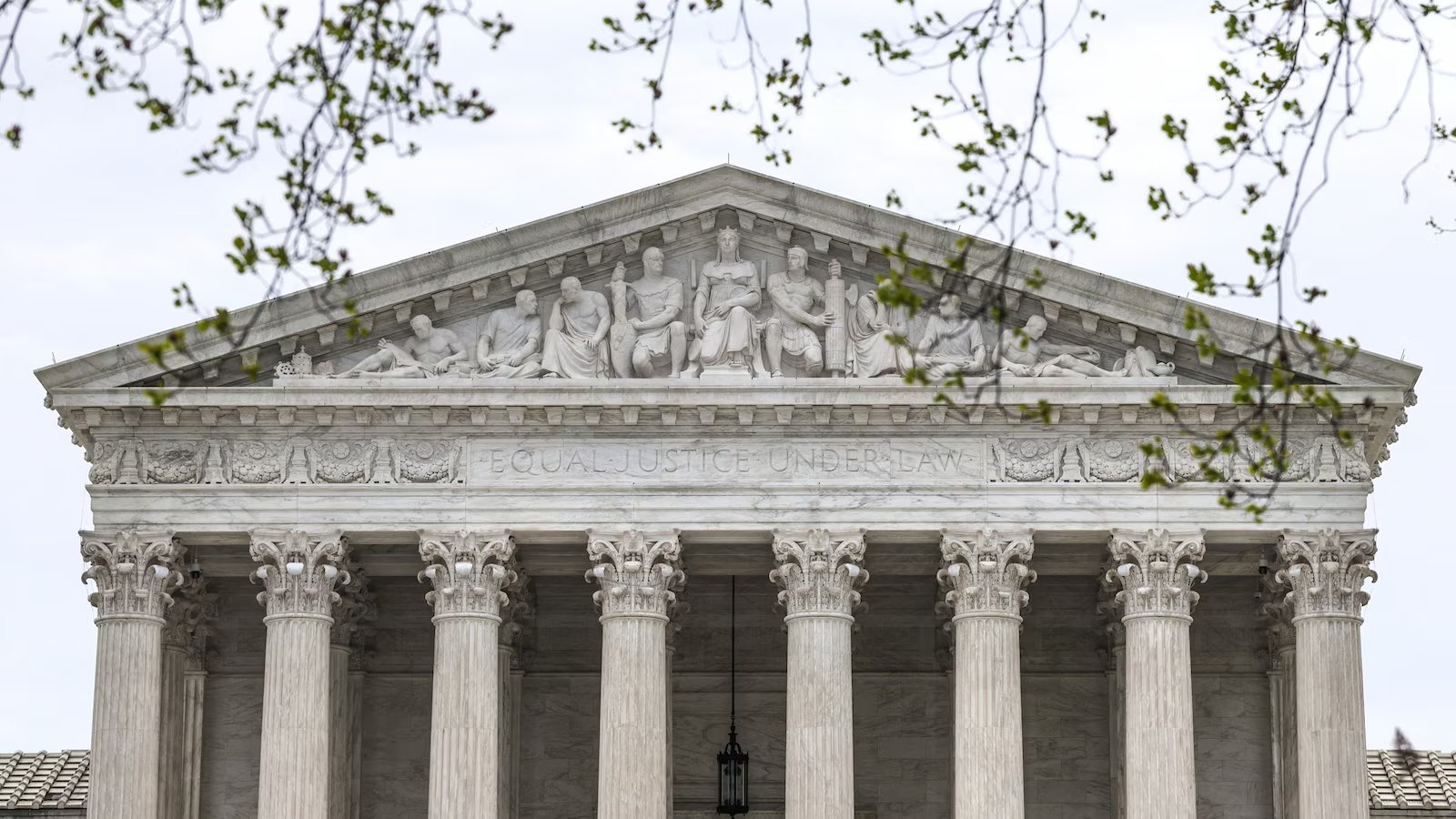
The Supreme Court on Thursday struck down a Hawaii law that required gun owners to get permission before carrying a firearm onto private property like grocery stores, coffee shops and gas stations that are otherwise open to the public.
The case is the latest victory for gun rights advocates before the court since the justices decided in the 2022 landmark Second Amendment ruling in New York State Rifle & Pistol Association v. Bruen that Americans have a broad right to arm themselves in public.
In a 6-to-3 decision, split along ideological lines, the court’s conservative majority held that Hawaii’s gun restriction violated the Second Amendment’s protections.
Writing for the majority, Justice Samuel A. Alito Jr. explained that “the Hawaii law at issue here violates the constitutional right to keep and bear arms.”
The decision is the second time in recent weeks that the justices have sided with gun owners who argued that laws restricting firearms violated the Second Amendment. On June 18, the justices voted unanimously in favor of a Texas marijuana user who argued that gun owners should not be automatically stripped of their rights because of illegal drug use.
In the Bruen case, the court’s conservative majority laid out a new test for gun control laws, finding that courts should analyze whether they align with the country’s “history and tradition” to determine if they met constitutional muster.
In response to that ruling, lawmakers in Hawaii revisited state gun laws, quickly passing a number of new restrictions on concealed carrying of handguns. Among them was a ban on weapons in so-called sensitive places such as schools, parks and beaches.
That law also required people to get explicit permission from owners before carrying weapons onto private property otherwise open to the public. It was that portion of the state’s law at issue before the Supreme Court.
A group of individual gun owners in Maui, along with a gun rights organization, sued in 2023 to challenge the law, asserting it violated the Second Amendment.
Got a news tip about the courts? If you have information to share about the Supreme Court or other federal courts, please contact us.
During oral arguments in January in the case, Wolford v. Lopez, the justices wrangled over how they should apply the Bruen test and how to balance its focus on the country’s history of gun rights with the nation’s tradition of also upholding robust private property rights.
The Trump administration supported the challenge to the gun law. During the argument, Sarah M. Harris, a principal deputy solicitor general, argued that Hawaii’s law would “gut Bruen” by preventing “everyone licensed to carry from doing so at retail establishments or other private property open to the public absent the owner’s express consent.”
Lawyers defending Hawaii’s law asserted that the gun law met the Bruen test and that it flowed from the history and tradition of both the islands and the rest of the country.
The state has long had some of the nation’s tightest gun regulations and is known for rarely granting concealed-carry permits.
State officials pointed to Hawaii’s traditions as a kingdom, including an 1833 law in place during the reign of King Kamehameha III that prohibited “any person or persons” from possessing deadly weapons.
The justices tangled over some of the historical evidence introduced by Hawaii’s lawyers. That included an 1865 Louisiana law that had outlawed carrying guns onto plantations or lands without the owner’s permission, which Hawaii’s lawyers argued showed that the island state’s law had a historical precedent from the mainland as well.
The gun rights activists said the Louisiana law was one of the so-called Black Codes, a series of laws passed by Southern states in a post-Civil War effort to limit the carrying of firearms by formerly enslaved people. While part of the nation’s history, they argued, it was not a statute that should be emulated in the modern day.
Is it not “the height of irony to cite a law that was enacted for exactly the purpose of preventing someone from exercising the Second Amendment right, to cite this as an example of what the Second Amendment protects?” Justice Samuel A. Alito Jr. asked a lawyer for Hawaii.
Justice Ketanji Brown Jackson, one of the court’s three liberals and the first Black woman to sit on the Supreme Court, countered that the Black Codes, too, are part of the country’s history and traditions. The debate, she said, highlighted flaws in the Supreme Court’s new Bruen test.
“To the extent that we have a test that relates to historical regulation, but all of the history of regulation is not taken into account, I think there might be something wrong with the test,” she said.