dailynewsnblog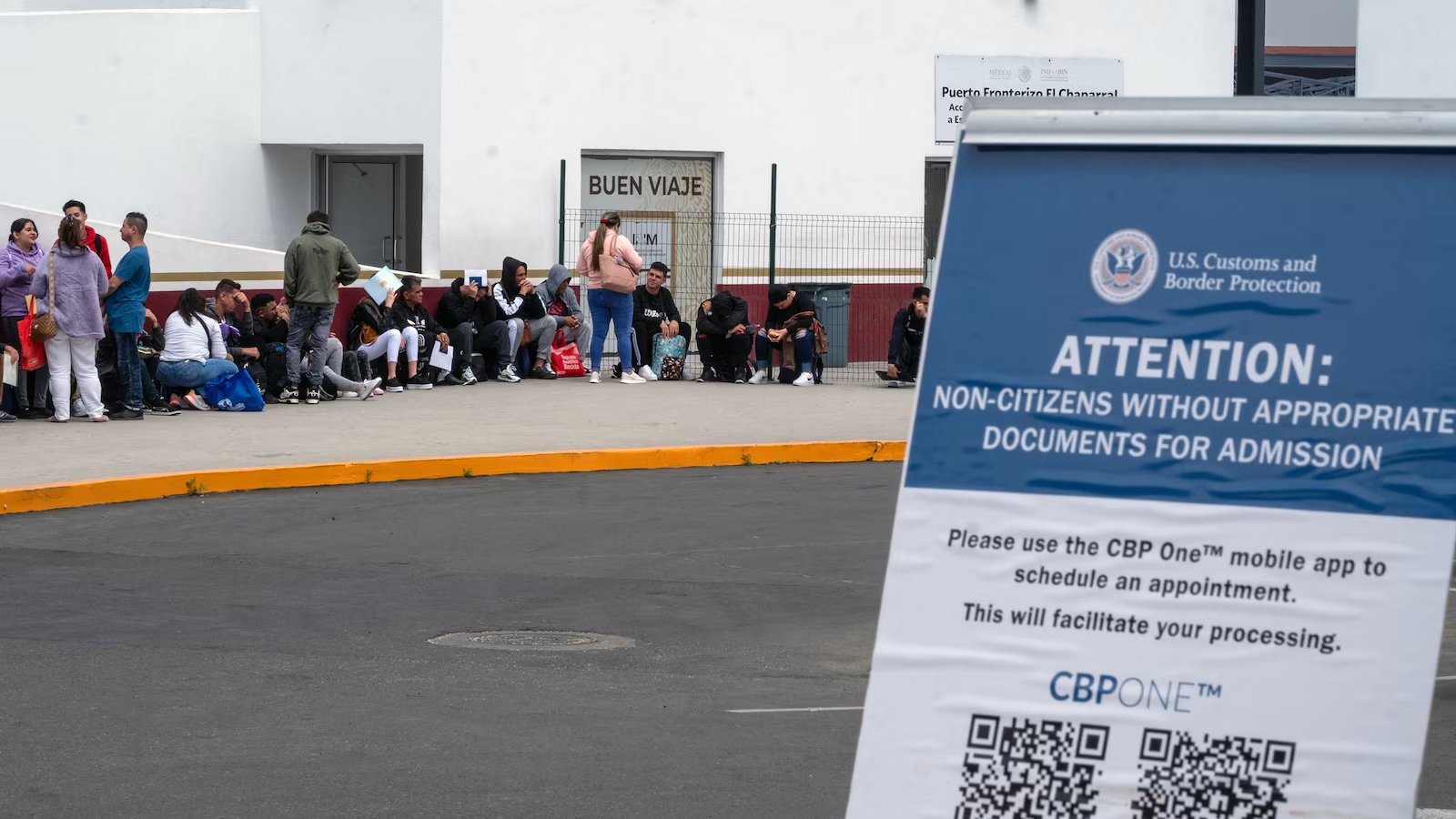
The Supreme Court ruled Thursday that the Trump administration can turn away asylum seekers who approach ports of entry along the U.S.-Mexico border, reversing a lower court decision that the policy likely violates federal law and international treaties.
“We hold that an alien who is standing in Mexico does not ‘arrive in the United States’ by attempting, and failing, to set foot in the country,” Justice Samuel Alito wrote for the court’s conservative majority. “An alien ‘arrives in the United States’ only when he crosses the border.”
The 6-3 decision effectively allows border agents to shut the door to migrants fleeing violence and persecution, and deny them even the chance to seek refuge in the U.S.
Federal law says the opportunity to apply for asylum must be afforded to those who “arrive in” the country.
While the policy was voluntarily rescinded in 2021 after a surge of migrants had overwhelmed border crossings, the government now has the ability to reinstate it if necessary. Trump has so far invoked alternate legal authorities to support his current border crackdown.
“A running back does not arrive in the end zone when he reaches the 1-yard line,” Alito wrote. “A guest does not arrive in a house when he knocks on the front door. An army does not arrive in a city by encamping outside its walls. And a letter does not arrive in a mailbox while it remains in the mail carrier’s hand just inches away.”

Asylum seekers queue at the El Chaparral crossing port to attend their appointment with US authorities at the US-Mexico border in Tijuana, Baja California State, Mexico, June 5, 2024.
Guillermo Arias/AFP via Getty Images
In a dissent, Justice Sonia Sotomayor, joined by Justices Elena Kagan and Ketanji Brown Jackson, said her colleagues were distorting the procedures set out by Congress to protect vulnerable people.
“The Court today holds that the Executive Branch may circumvent all these mandatory procedures by having U.S. immigration officers stand at the border and physically block noncitizens from setting a foot onto U.S. soil. They may do so even if the asylum seeker is at the threshold of a port of entry designated to receive all noncitizens who seek entrance into the country,” she wrote. “Even if the asylum seeker is certain to be persecuted, or killed, if she is turned away.”
Sotomayor invoked the history of the MS St. Louis from World War II, when European Jews sailed across the Atlantic seeking safety in the U.S., only to be turned away and sent back, where most were killed in the Holocaust. Congress enacted the 1980 Refugee Act, in part, to address that “mistake” of the past.
“The consequences of today’s decision are predictable. More people will die. More people will attempt to cross the border illegally, and some will make it while others will not,” she wrote. “More people will turn back and be subjected to violence because of something they cannot or should not have to change about themselves, such as their race, religious, nationality, or political opinion.”