dailynewsnblog
It was to be a kind of austere adventure, one of spiritual importance. Edmonton’s Greg Hudson, like so many Mormons before him and since, was sent off to do missionary work. A church leader told him he would “serve in foreign lands, bringing the gospel to those who have yet to receive the blessings of eternal life.” Then he learned he would spend two years, in constant contact with a church-assigned colleague, on the exotic streets of … southern Ontario. In this excerpt from his memoir “The Missionary: A Memoir of Superheroes, Sin & Saving Souls for the Mormon Church” gives a sense of the grind and, maybe, occasional glory.
I liked being downtown because people in Barrie always seemed to be outside, even in the winter, even after dark. This was mostly thanks to the bus station at one end of Dunlop Street. It injected a constant stream of troubled men and lost women into the city’s streets. There was no shortage of people wandering about who needed the gospel.
“Hi!” I smiled like I was teaching a baby the word happy.
“Hello,” the man holding the other man’s hand said. He was taller.
“How are you guys doing tonight?” I asked.
“We’re fine. Thank you,” said the other man.
“We’re doing great,” I said, pointing to Elder Fields. “That’s my friend, Elder Fields. I’m Elder Hudson. We’re doing great because we’re sharing a true message about Jesus Christ.”
The two men missed their light to cross the street. They were stuck on our corner for another minute. Defeated, the shorter one turned to face us. “Mormons?”
“That’s right! How did you know?” I said.
“I’ve spoken with elders before. You all just have that glow.”
“Virginal glow,” the taller man whispered so we could hear. “Why are you both named Elder?”
“It’s just our title in the Church. It’s what we go by while we’re missionaries. Would you like to talk to elders again?” I asked. “Because I could totally make that happen. I know our message brings happiness.”
“What makes you think we aren’t happy?” the shorter man said.
“That’s the wonderful thing. No matter how happy you are now, I know our message can make you even happier.”
“I don’t think your church really wants us to be happy,” the taller man said. He had been holding the other man’s hand, but had now casually dropped it.
“No way. Why don’t you come to church on Sunday and I’ll show you,” I said. If I had thought there was even an infinitesimal chance that this couple would take me up on my invitation, I wouldn’t have said it. We had been in the city for two weeks. I hardly knew the ward at all.
The light changed. They took each other’s hands. “Thanks. We’re good.”
“You are good! God loves you!” I called to them as they crossed the street. As I turned back to Elder Fields, I nearly hit a man going in the same direction. “I know God loves you, too,” I said.
The thing was, I knew the Church wouldn’t really be the best place for that couple. Not as a couple, at least. Individually, maybe. After all, it wasn’t a sin to be gay, but it was a sin to do gay things. Joining the Church would be tantamount to taking a vow of celibacy.
There was a woman walking toward us, smoking. She was in her forties, probably. Possibly she could be a mother. She could also be homeless.
“I’m Elder Hudson. This is Elder Fields. We’re missionaries from the Church of Jesus Christ of Latter-day Saints. We’re …”
“F—k off. Not interested.”
“OK,” I said. “We will EFF off, but I want you to know our message is true.”
“God loves you!” Elder Fields called.
“I say we count that,” I said.
“As a first discussion?”
“Yeah. No, as a testimony.”
“I don’t know. I didn’t technically testify that I knew God loved her.”
“Yeah, but you expressed a true principle, and you said it as though you knew it was true. You didn’t have to say ‘I know.’ The fact that you’re saying it means that you know it. You know?”
We wandered east to the side of downtown that we went to less often. We didn’t avoid it because of the Hooters restaurant, but I did know that it was there. There was plenty to distract us in the west. That was where the strip club, the Silver Star, was. Not to mention all the posters on display in front of the movie theatre, with their mysterious titles and famous actors looking out at us. They might as well have all been foreign films. Over the course of my six months in the field, pop culture had become inconsequential and inscrutable, which seemed miraculous. That was what happened when you couldn’t watch or read or listen to anything that wasn’t approved by the mission president.
We crossed the street. As we began walking back toward our apartment, Elder Fields stopped a young man wearing a flat-brimmed cap and baggy sweatpants, the backs of which he had tucked into his socks.
“Where you headed this evening?” Elder Fields asked him, sounding a bit like a dad.
“I’m hitting up the Silver Star actually,” he said. His name was Ben. He had just gotten off work. He was a line cook at Hooters.
“Busy night,” I said.

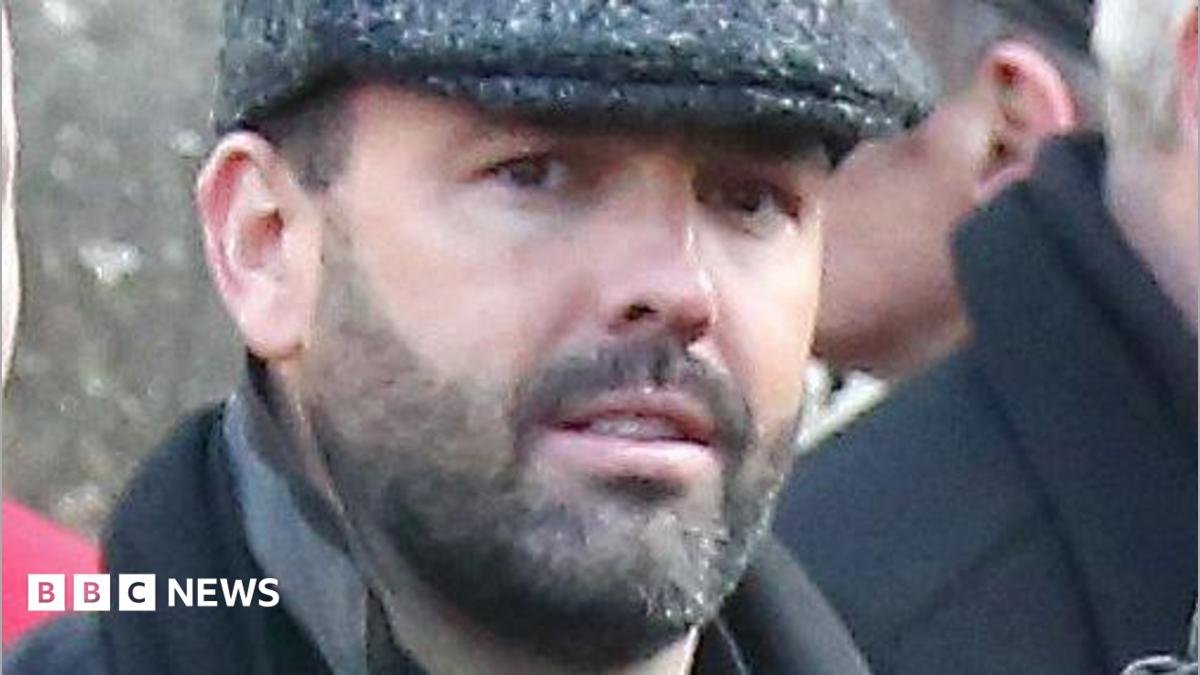
Author Greg Hudson.
Hannah Kastoryano photo
“Just got paid,” Ben said. He walked a little quicker but Elder Fields kept pace. I walked a few steps behind. I couldn’t hear everything that they were saying, but I didn’t want Ben to feel crowded, either. Plus, it’s not like we were going to get very far with a guy who we met on his way to the strip club. Sad, I thought, because he could probably really use some of the Spirit in his life.
“All right, we’ll give you a call tomorrow and set something up,” Elder Fields said, walking back to me. “Oh, and God loves you.”
We started walking up the hill toward our apartment.
I had met Glenn the night before. I saw Glenn crossing the street in front of our apartment at the end of the night and decided to get one last testimony in. His wife, or maybe it was his ex-wife, was Mormon, he said. He was interested in a visit, but he was living in a shelter. We decided to meet Glenn at the library.
Glenn had long, unwashed hair and a big strawberry nose. He wore jeans and a denim jacket over a blue flannel shirt, pretty much a uniform in that neighbourhood. He told us he actually couldn’t stay long because he had to meet his son at school soon and walk him home. He had found a place to live — it wasn’t much more than a room, but at least his son could start living with him.
“I’ve been having a rough go of it lately though, eh,” he said. “That’s why I said I’d meet with yous. I figured maybe it was a sign. Because I could use some kind of sign. Just because I don’t know. It’s been hard lately.”
“And I’m usually a lone wolf. I don’t talk to no one and keep to myself. But it’s hard. It’s hard when no one wants to talk to you. So I been alone for a long time. And I get used to it. It’s who I am. But it’s hard and I don’t know why life is so hard for some people,” he said.
Glenn was proud of his son, he said. Mason was 15 and he was starting to write raps like Eminem, and he was really good at it. Glenn didn’t love rap music, but he never knew his son to be so dedicated to anything before. “But I don’t know how I’m going to pay for him,” he said. “I don’t know what life he’s going to have sharing a room with his dad. But what else can I do?” At least he wasn’t on the streets anymore. The question of Mason’s mother never came up.
Falling back on bearing my testimony felt nearly as cheap as sermonizing, but it was all I knew how to do. “It sounds like you’re going through some things,” I said. “But I know that the message we share can help with all your problems. I don’t mean they’ll go away, but our message will help in other ways. I know that.”
He agreed to meet with us again and he gave us his address. Elder Fields closed with a prayer. We couldn’t really count it as a discussion since we hadn’t done any teaching, but it felt important that we had come.
We walked the block home in silence and then ate a quick lunch at our apartment.
Like all missionary apartments, ours was spartan, decorated like a CIA crash house with maps on the wall covered with pins and stickers of various colours. We lived in a two-bedroom apartment, but the second bedroom was strictly a place to hang our clothes and iron our shirts. There was no other furniture. Our desks were in the living room, facing each other. .
For a missionary, as for someone in a big family, the bathroom was a refuge. The list of places where a missionary could safely be alone was short.
I was taking my morning shower, thinking about Maged’s baptism.
Elder Fields banged on the door. “Elder Hudson, we gotta go!”
I turned off the water and grabbed a towel. “What’s up?” I looked at my watch. Barely 6:30 a.m.
“It’s Maged. Maged called. He’s going back to Egypt.”
“Uh, right now, I think.”
“How right now? Does he have a ride to Egypt?”
“He called from the bus station. I told him that we were on our way.”
“He doesn’t have the Holy Ghost yet.” I scrambled out of the bathroom wrapped in a towel.
“I know that!” Elder Fields said.
People are supposed to get confirmed — receive the gift of the Holy Ghost — the Sunday after their baptism. Maged’s and Megan’s baptisms were on Sunday. That left a whole week where anything could happen . A whole week where you might get deported back to the Middle East. There wasn’t a big LDS presence in Egypt. If Maged was to have any hope of retaining the lessons we taught him, he’d need the Spirit.
Plus, the baptism wouldn’t count if there wasn’t a confirmation.
“Maybe they have a room we could use at the bus station,” I said, while I dialed the phone.
I explained the situation to Bishop Stevens. .
“Bishop is cool if we confirm him before he goes to Egypt,” I said.
Elder Fields was already waiting at the door.
The bus station in Barrie wasn’t large, but it was busy. We didn’t know what bus Maged would be taking or even where he was going. Other than Egypt. We knew he was ultimately going to Egypt.
The place was loud. People were speaking to be heard over the other people speaking to be heard. Some might have been yelling just for the fun of it, or yelling because their brains were broken and exhausted. Over some invisible speakers, I heard a song I recognized from my life before I only listened to hymns.
How bizarre. How bizarre.
Then Elder Fields saw Maged coming out of a bathroom and called out to him. We all embraced. Elder Fields and I walked Maged outside the station and explained what needed to happen. I tried not to be troubled by the fact that he hadn’t remembered.
“So we need to find a place to give you a blessing,” Elder Fields said.
“What about there?” I asked, pointing at the knife-winged metal spirit catcher across the street.

“The Missionary: A Memoir of Superheroes, Sin & Saving Souls for the Mormon Church”
Greg Hudson
400 pages
Penguin Canada
$26.95
Penguin Random House photo
We stopped on the concrete base of the statue. Elder Fields laid his coat down over the wet cement and Maged knelt on it. I put my hands on his head and, by the authority of the priesthood, gave him the Holy Ghost. Then, with our hands still resting weightlessly on Maged’s head, I blessed him that he would be a light unto his family and friends in Egypt, and I prophesied that one day he’d return to Canada and enjoy full membership in the Church. Then, as always, I closed in the name of Jesus Christ, amen.
We walked back to the bus station with the newest official member of the Church of Jesus Christ of Latter-day Saints.
Excerpted from “The Missionary” by Greg Hudson. Copyright © 2026 Greg Hudson. Published by Penguin Canada, a division of Penguin Random House Canada Limited. Reproduced by arrangement with the Publisher. All rights reserved.