dailynewsnblog
Listen to manufacturers and keep your phone out of humid spaces.
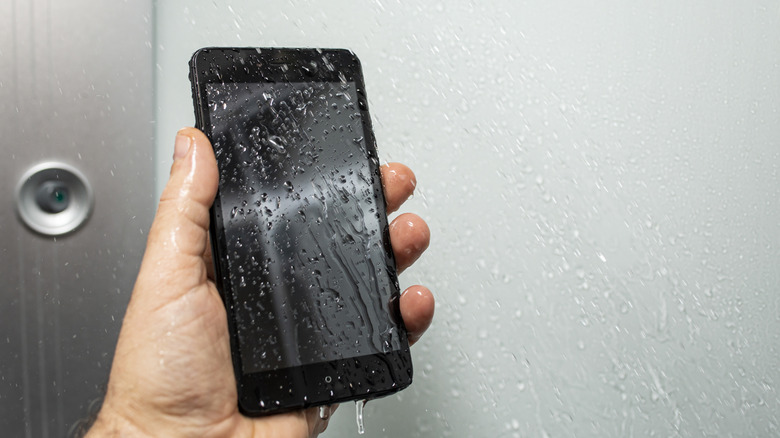
Most current smartphones feature an IP67 or IP68 rating, with the second numerical digit representing water-resistance levels. Neither IP number should ever be confused with “waterproof,” and hot steam is a different animal altogether. Phones are generally described as water-resistant, though the term “waterproof” is inaccurately tossed around quite a bit. Enough that some assume their phones can tolerate water in any scenario.
In a hot shower, that steam can turn back into a liquid, both on and around your phone. That sounds perfectly fine if your phone has an IP68 rating, but water is a relentless force of nature. It will find a way in and that way is through the charging port, speakers, buttons and seals. Combined with heat, it will gradually wear down the built-in protections that keep liquid out.
Phone manufacturers are surprisingly direct about this. Apple’s Support page states that iPhone owners should avoid saunas and steam rooms, and reminds them that liquid damage is not covered under warranty. Google says the same, adding that a Bluetooth speaker is the better option.
Steam, heat and humidity create a different risk
If a phone can survive a spilled drink or a brief dunk in a pool, why is shower steam such a big deal? If we’re talking about brief and limited exposure now and then, it probably isn’t. But immersion and steam exposure are not the same thing. Water resistance ratings are specific to liquid water under certain conditions, not the heat and humid air from a shower. Worse, rapid cooling in a moist environment creates condensation, both inside and outside the device.
Though it’s a separate danger, overly hot bathrooms, saunas and steam rooms can raise temperatures above a smartphone’s operating specs. Most phones have a maximum operating temperature of 95 degrees and not much higher when sitting unused. The heat can cause temperature shutdowns, and it will almost certainly impact the battery’s long-term health.
Besides, placing your phone on a shower shelf or soap dish, especially if it’s close to the spray, is just asking for it. Trying to handle a phone with wet hands is a recipe for drops. Keep it outside the bathroom if possible and use a portable Bluetooth speaker. Many come with the same IP ratings and are definitely more expendable. Bluetooth is more reliable nowadays and can usually handle passing through a door or interior wall.
Can heat permanently damage a phone?
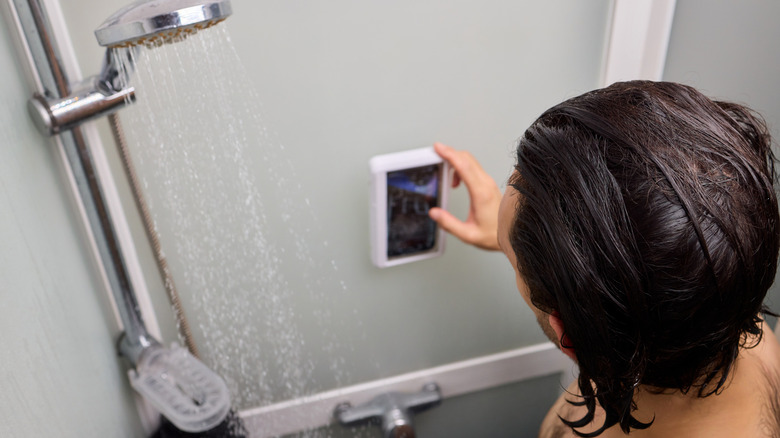
Absolutely. Repeated or significant heat exposure can permanently impact a smartphone and never in a good way. The battery’s capability is a big deal pre-purchase, and heat exposure accelerates battery aging. Those tiny adhesives and seals you can’t see don’t play well with heat and moisture either. The worst part is that the damage is rarely immediately obvious. You may get a liquid damage alert here and there or have to use a magnetic charger while the port dries without realizing the interior components are slowly degrading.
Anytime your phone gets wet, for any reason, wipe it down immediately. Don’t plug anything into the charging port and always keep the ports facing downward. For obvious reasons, avoid using a hairdryer or any method that will heat the phone. A common home remedy is to put the phone in a bowl of rice, but Apple recommends avoiding that as well.
The best possible fix for a wet smartphone is not to get your smartphone wet in the first place. Sure, that sounds like common sense, but that also means keeping it out of a hot, humid room. With just a few extra steps, you can connect to a portable Bluetooth speaker and listen to your music or audiobook while your phone sits safely in the next room. These phones aren’t getting any cheaper, so avoid making it a part of your shower routine and just stick with a colorful loofah and a quality speaker.