dailynewsnblog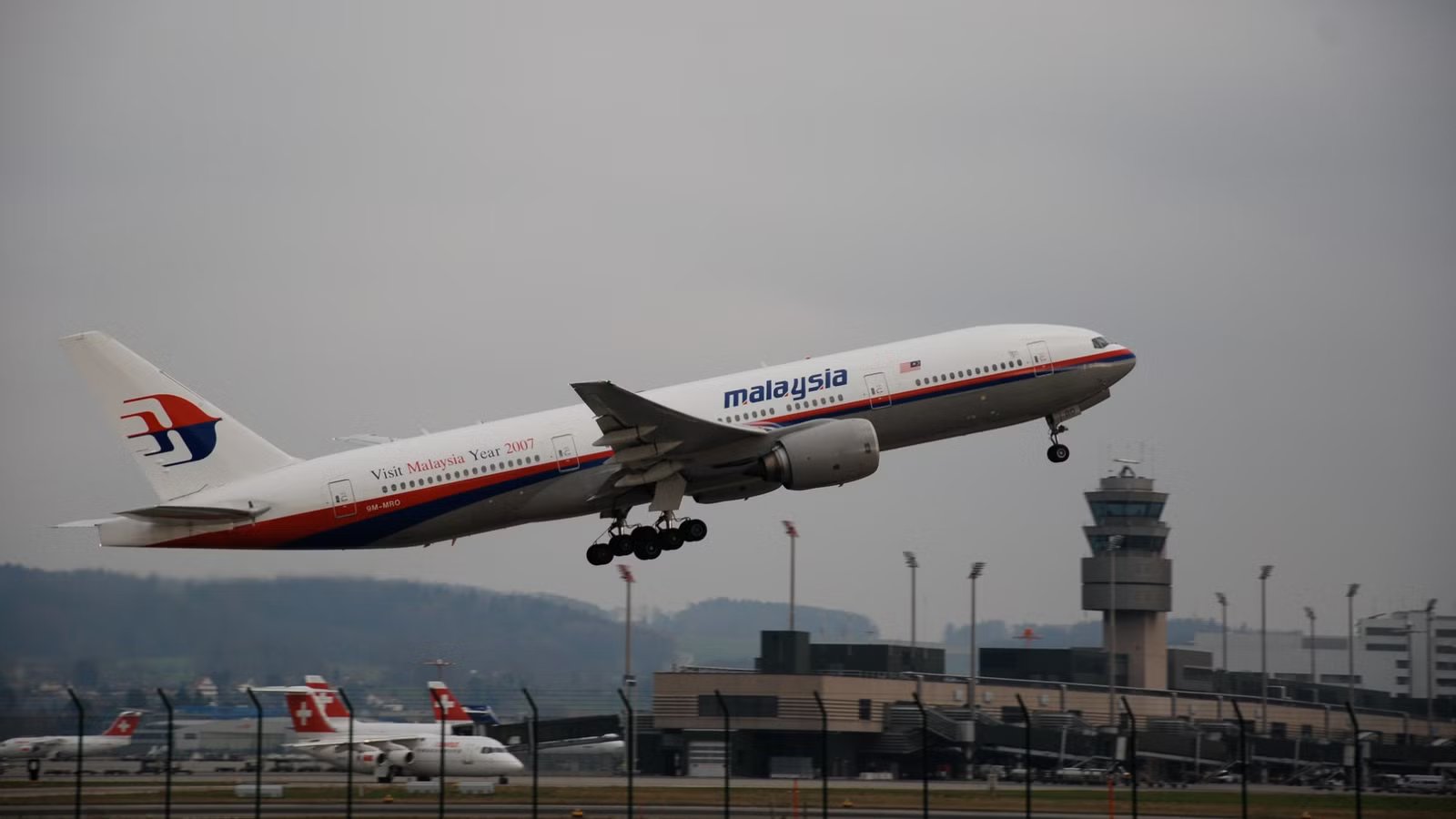
More than 12 years after Malaysia Airlines Flight MH370 disappeared, the Malaysian government has extended its agreement with marine robotics company Ocean Infinity to continue searching for the missing Boeing 777 until June 30, 2027. The decision, announced on June 29, provides another year for underwater search operations in the southern Indian Ocean, where investigators believe the aircraft ended its journey. The extension underscores Malaysia’s determination to provide answers despite more than a decade of unsuccessful searches.
Flight MH370 vanished on March 8, 2014, while operating from  Kuala Lumpur International Airport (KUL) to
  Beijing Capital Airport (PEK) with 239 people on board, including 227 passengers and 12 crew members. Despite becoming the largest and most expensive search effort in aviation history, the aircraft’s main wreckage, including the valuable “black boxes” to help determine the cause of the crash, has never been located. The latest extension offers renewed hope to the families of those on board, even as the mystery remains unsolved.
Ocean Infinity Given More Time To Complete The Mission

According to Reuters, Malaysia’s Cabinet approved a 12-month extension covering the period from July 1, 2026, through June 30, 2027. The agreement allows UK-based Ocean Infinity to continue searching under the same “no find, no fee” arrangement that has governed its latest mission. Under the contract, as reported by Business Times, the company will receive up to $70 million only if it successfully locates the aircraft’s wreckage.
The extension is intended to allow Ocean Infinity to complete the search of approximately 7,428 square kilometers (2,867 sq mi) that remain within the designated search zone. Malaysian authorities said the additional time was necessary because Ocean Infinity must temporarily redeploy its primary search assets to fulfill other commercial commitments between November 2026 and April 2027 before resuming the MH370 operation.
Anthony Loke, Malaysia’s Transport Minister, said in a statement, reported by the Washington Post,
“This decision is a manifestation of the government’s continuous and unwavering commitment to provide a closure for the next of kin.”
Why The Search Continues After More Than A Decade

Ocean Infinity previously searched for MH370 in 2018 without locating the aircraft. Last year, Malaysia signed a new agreement allowing the company to restart operations in a newly identified 15,000-square-kilometer (5,800 sq mi) search area in the southern Indian Ocean, based on updated analysis and refined search methodologies.
Although no confirmed wreckage has been discovered during the renewed campaign, officials continue to believe the targeted area offers the best remaining chance of locating the aircraft. The challenging environment, extreme ocean depths, rough seabed terrain, and seasonal weather conditions have complicated every phase of the search, making operations both technically demanding and time-sensitive.
Over the years, investigators have recovered dozens of debris fragments believed to have originated from MH370 after they washed ashore on islands and coastlines around the western Indian Ocean. However, none of these discoveries has revealed the aircraft’s final resting place or conclusively explained its disappearance, leaving one of aviation’s greatest mysteries unresolved.
Beyond Closure: How Finding MH370 Could Rewrite Global Aviation Safety
New technology and analysis reignite the hunt for MH370’s wreckage.
Families Still Waiting For Long-Overdue Closure

For relatives of the 239 passengers and crew, the extension represents another opportunity to finally obtain definitive answers. Family groups have repeatedly urged Malaysian authorities to continue supporting search efforts whenever new evidence or improved technology becomes available, arguing that ending the search without locating the aircraft would leave too many unanswered questions.
The search remains one of aviation’s most ambitious underwater recovery efforts. Ocean Infinity employs autonomous underwater vehicles capable of mapping the seabed in remarkable detail, using sonar and other advanced technologies to identify potential wreckage across vast stretches of the ocean floor. While these systems represent significant improvements over earlier searches, success is far from guaranteed, given the enormous search area and the passage of time.
Even if the wreckage is eventually found, investigators acknowledge that determining exactly what happened aboard MH370 may remain difficult after more than a decade underwater. Nevertheless, locating the aircraft would likely answer many longstanding questions and provide valuable evidence for investigators, while offering long-awaited closure to families who have spent over 12 years searching for certainty.