dailynewsnblog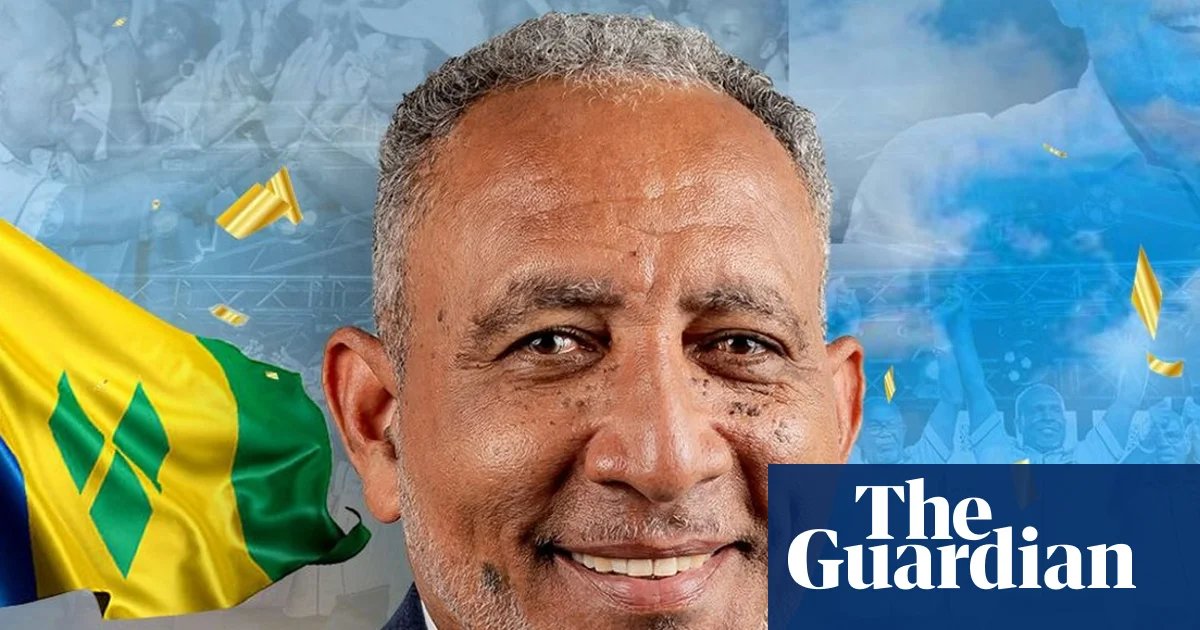
The St Vincent and the Grenadines government has delayed a controversial effort to amend a section of the country’s constitution that the opposition says renders the prime minister ineligible for his position in parliament.
Two bills, among six listed for the parliament session on Tuesday this week, were aimed at clarifying a section of the 1979 constitution governing the citizenship eligibility of members of parliament.
The bills were drafted after the country’s opposition filed election petitions, due to be heard at the eastern Caribbean supreme court in July, questioning the eligibility of Godwin Friday, who became prime minister in November, and Dwight Fitzgerald Bramble, an MP – both of whom hold Canadian as well as Vincentian citizenship.
But amid online outrage and demonstrations near parliament – with protesters brandishing placards that read “constitutional change without the voice of the people” and “Friday and Bramble protecting their Canadian passports” – Friday told MPs he would delay the bills to allow more public debate on the issue.
“We will not be proceeding any further now at this point until we have had these full responses from the public debate on these two very important matters,” he told parliament on Tuesday.
Discussions about the case have become particularly focused on a section of the constitution that details possible disqualifications that would stop someone from being elected or appointed as an MP, including anyone who “by virtue of his own act” is “under any acknowledgment of allegiance, obedience or adherence to a foreign power or state”.
Petitioners pointed to the case of the former St Kitts and Nevis prime minister Denzil Douglas, who in 2020 was ordered by the eastern Caribbean supreme court to vacate his seat after being found in breach of the country’s constitution when he acquired a Dominican diplomatic passport.
The former Trinidad and Tobago prime minister Stuart Young, who is the attorney representing the petitioners, said he was “confident in the merit of the election petitions”, which he said were backed by a sound interpretation of the constitution.
The government’s draft bills would retroactively limit the definition of “foreign power or state” to non-Commonwealth countries, meaning that acquired citizenship from any of the 56 in the Commonwealth would not disqualify someone from holding public office in St Vincent and the Grenadines.
The country’s former prime minister Ralph Gonsalves has warned of a “constitutional crisis”, arguing that the government’s actions undermined the rule of law, judicial independence and electoral trust.
The law lecturer and barrister Adrian Odle raised concerns about the timing of the bill. “When a government tries to change the legal meaning of the constitution while a case on that very issue is already before the court, the public is entitled to ask whether this is genuine law reform or an attempt to resolve a political problem after the fact,” he said.
The government senator Jemalie John dismissed interference claims in an interview with local media. The amendment, he said, clarified “foreign power”, adding that “the case remains before the court” for judges to assess. But parliament, not the judiciary, he argued, must resolve such ambiguities to safeguard voters’ democratic choice.
Dual citizenship has been a highly contentious issue for politicians across the region in recent times. Last year in Jamaica, during its national elections campaign, the leader of the opposition, Mark Golding, who previously held dual Jamaican and British citizenship, gave up his British citizenship after coming under pressure over concerns about his “Jamaican-ness”.
Calistra Farrier, a journalist and the president of the Media Workers Association of Grenada, said the rows over citizenship “underscore a broader Caribbean tension” with the Westminster style of governance that former colonies inherited from Europe.
She said: “How do small states reconcile these constitutional frameworks inherited from our independence period? There’s been very little constitutional reform in the islands over the years. How do we reconcile that with the changing realities, the modern realities that we now live in – for instance, dual citizenship, that is very common now?
“And the next question is: how do we do that without eroding the separation of powers that these constitutions are intended to protect?”