dailynewsnblog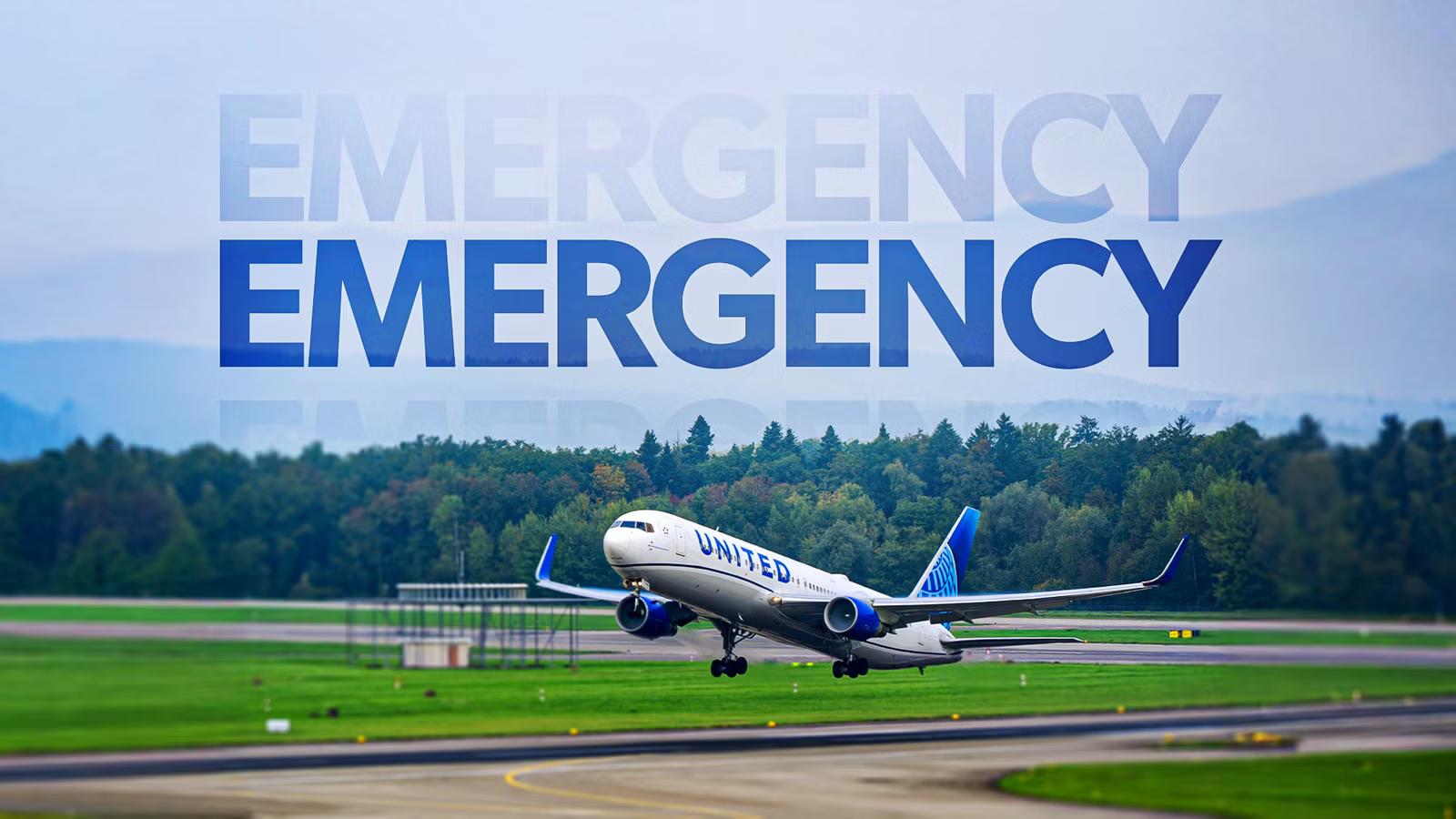
Every day, flight crews around the world set their transponders to squawk 7700 to declare an inflight emergency. The code appears on air traffic control screens as an immediate alert, but it does not distinguish between a cabin depressurization requiring oxygen masks and an emergency descent and steam rising from a galley oven that the crew wants checked on the ground.
Both situations produce the same four digits. During the week of August 27, we tracked five separate squawk 7700 events on the Simple Flying Flight Tracker that illustrate the range of situations the code covers. The five incidents included a  United Airlines Boeing 767-300ER that lost cabin pressure over the Mediterranean, and two Wizz Air Airbus A321neos that declared fuel emergencies simultaneously after a lightning strike knocked out an airport’s air traffic control systems.
There was also an Air Canada Cargo freighter that climbed to its service ceiling before turning back to its departure airport, a Eurowings 737 that diverted for steam from a galley oven, and a Jet2 737 that made an unexplained diversion to Paris. No one was injured, and all five aircraft landed safely.
Loss Of Cabin Pressure Over Sardinia

United flight 127 departed Rome Leonardo da Vinci-Fiumicino Airport (FCO) at 3:20 PM local time on August 27, bound for Washington Dulles International Airport (IAD) on a planned 10-hour transatlantic crossing. The aircraft operating the flight was a 767-300ER, registered as N649UA. Less than an hour into the flight, while cruising at 33,000 feet over the western Mediterranean near Sassari on Sardinia’s northern coast, the crew lost cabin pressure.
They squawked 7700, initiated an emergency descent to 10,000 feet, and diverted to Barcelona-El Prat Airport (BCN). The aircraft landed safely on runway 24R at approximately 5:00 PM local time with emergency vehicles positioned alongside the runway as a precaution. A loss of cabin pressure at FL330 is a time-critical emergency. At 33,000 feet, the time of useful consciousness without supplemental oxygen is approximately 30-90 seconds depending on the individual.
The crew’s immediate response is to put on oxygen masks, begin an emergency descent to an altitude where passengers can breathe without supplemental oxygen, typically 10,000 feet or below, and divert to the nearest suitable airport. The descent from FL330 to 10,000 feet takes about 4-5 minutes at emergency descent rates.
The oxygen masks in the passenger cabin deploy automatically when cabin altitude exceeds approximately 14,000 feet, providing supplemental oxygen to passengers during the descent. According to The Aviation Hub, N649UA is 34.1 years old, delivered to United in July 1992. It is one of 37 examples of the 767-300ER in the carrier’s fleet. 34 are currently active, with an average fleet age of 30.5 years. Whether the aircraft’s age played any role in the pressurization fault remains unclear.
United canceled the original UA127 rotation and scheduled the aircraft to ferry empty from Barcelona to Washington the following day as UA3937. The airline has not publicly disclosed the cause of the cabin pressure loss. The 767-300ER is scheduled for eventual replacement by the 787 and A321XLR across United’s transatlantic network, but United has not announced a specific retirement date for N649UA or the 767 fleet as a whole.
Lightning Knocks Out Luton’s ATC & Two Wizz Air Flights Declare Emergencies Simultaneously

On the same evening as the United diversion, two Wizz Air flights heading to London Luton Airport (LTN) declared emergencies within minutes of each other. Neither aircraft had a mechanical problem. Both were running out of fuel because the airport they were trying to reach had temporarily stopped accepting arrivals after a lightning strike hit ground air traffic control equipment, according to The Traveler.
Wizz Air flight 5378, an Airbus A321neo registered as G-WUNE operating from Turin to Luton, was among multiple aircraft instructed to enter holding patterns over southeastern England as controllers assessed the damage to Luton’s ATC systems. As the holds extended beyond what the crew’s fuel planning had accounted for, the aircraft’s remaining fuel approached the minimum reserve threshold.
The crew squawked 7700 to secure priority handling and diverted south to London Gatwick Airport (LGW), landing safely with emergency vehicles positioned as a precaution. Within minutes, Wizz Air flight 2601, another A321neo, registered as G-WUKN operating from Prague to Luton, reached the same fuel threshold in the same holding pattern and declared its own emergency. That crew diverted northeast to London Stansted Airport (STN).
The same ground event caused both emergencies, not anything on either aircraft. Severe thunderstorms moving across southeastern England produced the lightning strike that disrupted Luton’s ATC infrastructure. Inbound flights that were already in the terminal area had limited options while controllers ran safety checks and restored systems. Wizz Air operates high-frequency short-haul schedules with fuel loads planned efficiently around expected conditions.
Extended unplanned holding erodes those reserves faster than the flight plan anticipated. When remaining fuel drops below predetermined regulatory thresholds, the crew must escalate from a minimum-fuel advisory to a formal emergency declaration. Both Wizz Air crews reached that point at roughly the same time because both aircraft were holding in the same disrupted airspace under the same fuel-planning constraints.
Catch what other trackers miss
Emergency squawks, holds, NOTAMs — live signals, no signup.
Open tracker
Catch what other trackers miss
Emergency squawks, holds, NOTAMs — live signals, no signup.
Open tracker
An Air Canada Cargo 767 Climbs To 41,000 Feet, Then Comes Right Back Down

Air Canada Cargo flight 7249 was operated by a 767-300ER freighter registered as C-FPCA on August 27, according to AIRLIVE. It departed  Dallas/Fort Worth International Airport (DFW) from runway 36L at 3:25 AM CDT for a scheduled three-hour freight run north to Montréal–Trudeau International Airport (YUL).
Flight tracking data shows the aircraft climbed to 41,000 feet, the 767’s maximum service ceiling and an unusually high altitude for a cargo freighter on a routine domestic sector. Shortly after reaching that altitude, the crew squawked 7700. Air traffic control vectored the aircraft into a U-turn back toward Texas while the crew initiated a rapid descent to 10,000 feet.
The descent profile, from 41,000 feet to 10,000 feet in a matter of minutes followed by a return to the departure airport, is consistent with a pressurization issue or an air system anomaly, though Air Canada has not publicly confirmed the cause. The 37-year-old freighter landed safely back on Runway 36L at DFW slightly more than an hour after departure and taxied directly to the same cargo stand it had left earlier that morning.
This incident received less attention than the United and Wizz Air emergencies that day because it involved a cargo aircraft with no passengers onboard. The squawk 7700 declaration and the rapid descent followed the same procedural logic as the United 767’s cabin pressure event over Sardinia: get to a breathable altitude quickly and land at the nearest suitable airport. Air Canada has not publicly disclosed the cause of the emergency.
Smoke From A Galley Oven Diverts A Eurowings 737 To Paris

Eurowings flight 590 departed Cologne/Bonn Airport (CGN) at approximately 8:40 PM local time on August 29 bound for Palma de Mallorca with 131 passengers onboard. The aircraft was a 737-800 registered as OK-TSU, operated by Czech carrier Smartwings under a wet-lease arrangement for Eurowings, the Lufthansa Group’s low-cost subsidiary.
While cruising at approximately 26,000 feet over French airspace south of Paris, the cabin crew detected steam or smoke emanating from the aft galley area. The source was subsequently attributed to a galley oven, so the captain declared an emergency, squawked 7700, and initiated a descent toward  Paris Charles De Gaulle Airport (CDG), the nearest suitable airport. The aircraft landed safely at approximately 10:00 PM local time.
Emergency vehicles and airport fire services were positioned at the runway as standard procedure for any aircraft squawking 7700 but did not need to intervene. There was no fire and no injuries. A Eurowings spokesperson stated the following day that the landing was made “as a precaution” and that “the safety of the passengers and crew was at no time at risk.” Steam from a galley oven is at the lower end of the severity spectrum for a squawk 7700 event.
The crew could not determine in real time whether the steam was from a benign source or the early stage of an electrical fire behind the galley panels. In a pressurized cabin at altitude, any smoke or steam of uncertain origin triggers a response calibrated for the worst case rather than the most likely one. The crew treated it as a potential fire until the aircraft was on the ground and they confirmed the source. 131 passengers spent the night in hotels in Paris and were rebooked on subsequent flights to Mallorca. The aircraft was inspected, cleared, and returned to service.
A 27-Year-Old Jet2 737 Makes An Unexplained Diversion To Paris

Jet2 flight 1473 departed London Stansted Airport (STN) at approximately 8:10 AM on August 30 bound for Ibiza Airport (IBZ). The aircraft was a 737-800 registered G-JZHF. About an hour into the flight, while cruising at 35,000 feet over northern France, the crew made a 180-degree turn and squawked 7700. Air traffic control prioritized the aircraft for an approach into CDG, where it landed safely on runway 27L shortly before 11:00 AM. G-JZHF first entered service in 1999, making it approximately 27 years old at the time of the incident. The aircraft previously operated with Dutch low-cost carrier Transavia before joining Jet2’s fleet.
Jet2 or any regulatory authority has not publicly confirmed the cause of flight 1473’s emergency. Flight tracking data shows the aircraft completed the 180-degree turn cleanly, descended into Paris without further incident, and was met by emergency crews that did not need to intervene. The aircraft was later cleared to continue to Ibiza, suggesting the issue was resolved or deemed non-critical after inspection on the ground at CDG.
Not every squawk 7700 produces a public explanation. Airlines are not required to disclose the cause of a diversion to the media, and many precautionary diversions are resolved on the ground without a formal report being published.1473 is one of those cases where the emergency code was transmitted, the aircraft landed safely, and the reason remains between the crew, the airline, and the maintenance team that inspected the aircraft in Paris.