dailynewsnblog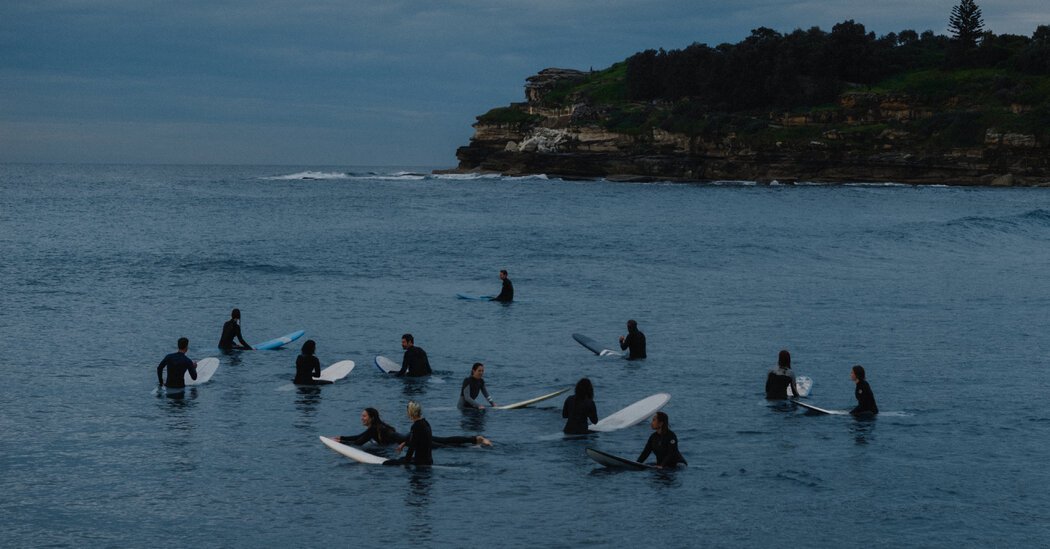
Jason Iggleden sits in a weathered teal camping chair on a rocky outcrop overlooking Australia’s most famous stretch of coastline, Bondi Beach in Sydney. He peers at the screen of his drone controller as the machine flies over the water, searching for the flick of a tail or a shadow slipping through the swell. Mr. Iggleden and his drone are here most mornings before sunrise and before the lifeguards set up for the day.
He is watching for sharks.
“I’ll never say it’s safe to go in because no one’s ever going to be safe out there 100 percent. But the drone, in my opinion, is the best way to monitor the beach,” said Mr. Iggleden, who has been watching the ocean from the sky for eight years.
Although shark attacks are rare in Australia, Sydney is on high alert after a period of increased activity. Last month, a suspected great white shark mauled a schoolteacher at the popular Coogee Beach, a few miles from Bondi. Then, there were back-to-back shark sightings along the coast, prompting authorities to close Sydney’s beaches for several days.
In a bid to keep oceangoers safe, officials in New South Wales, where Sydney is, increased funding for the state’s aerial shark surveillance last month. The drone program, which is managed by Surf Life Saving New South Wales, will now run year-round at about 70 beaches. Previously, the program ran during the summer months and school vacation periods.
Once drone pilots spot a potentially dangerous shark, they will alert lifeguards, who can sound the shark siren and clear the water. In the first week of July, at the start of the expanded program, several beaches were closed after sharks were spotted.
James Bassam, chief remote pilot for Surf Life Saving New South Wales, said the service completed 100,000 drone flights in the past fiscal year and spotted 2,300 sharks. This year, they project 500,000 flights. They have already been inundated with people applying for paid positions to be pilots, Mr. Bassam said.
“We’re not turning anybody away because we do need all the help we can get,” he said.
For the most part, Mr. Iggleden welcomes more eyes in the sky. But he cautions that drone pilots need to be properly trained to identify shark species so that the siren is not set off for less dangerous species, leading people to become complacent.
In the days after the Coogee shark attack, Mr. Iggleden spotted a great white shark — one of the deadliest species — near some oceangoers at Bondi. Because the lifeguards had not started work, he snapped into action.
He dropped the drone near a swimmer, flashing its lights to alert them to the shark’s presence. The swimmer gave the drone a thumbs-up sign and began paddling toward shore. Mr. Iggleden shares this type of footage on social media and updates his subscribers on the ocean conditions each morning.
Australia relies on a range of other methods to try to mitigate shark attacks. It is one of the few countries to use shark nets, which critics say can be dangerous for all marine life, as well as drumlines — floating traps with hooks that snare sharks, then alert officials so the animals can be released.
Culum Brown, a professor of marine biology at Macquarie University in Sydney, said reports of shark interactions were increasing along with the number of beachgoers.
“The more people that are in the water, the more likely we are to come into contact with the animals that live there,” he said.
In the past 10 years, there were 274 shark incidents across Australia, of which 28 were fatal, official data shows. In the decade prior, there were 195 incidents, of which 21 resulted in death.
Mr. Brown said he would like to see greater integration of artificial intelligence in drone monitoring. The technology could help pilots identify shark species and what threat they posed. Officials will trial at least two new A.I. systems later this year.
Ocean swimmer Pascal Blanquer said he was of two minds about the increased surveillance.
“I swim every day, very early, so I know there’s some risk involved with what we’re doing,” he said, adding: “It’s nice to know, but then sometimes I’d rather not know.”
When Mr. Blanquer saw the footage of a shark lurking near Bondi on Mr. Iggleden’s feed, as well as large schools of fish, he said he decided to swim elsewhere for a few days.
After several hours of flying, Mr. Iggleden started to pack up his equipment. He will head home to edit his footage and upload it to social media before he returns in the evening to do another shift before sundown.
Although the work was nerve-racking at times, he wouldn’t stop, he said.
“It’s very fulfilling. I’m proud of what I’m doing.”