dailynewsnblog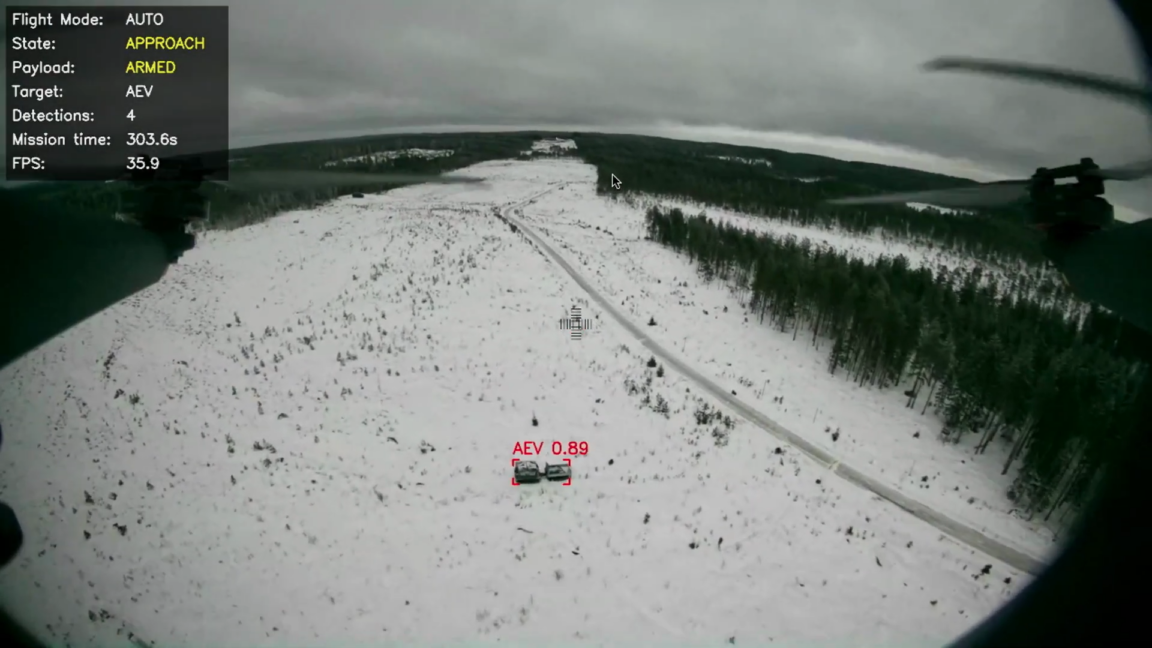
“We built a functioning concept of how we do this for a surveillance and reconnaissance system based on a drone,” Hellander told Ars. “This is something we have also done in public demonstrations in Sweden.”
Scaleout is participating in the Affordable Loitering Modular Ammunition (ALMA) project headed by BAE Systems Bofors that aims to develop a low-cost, autonomous kamikaze drone. The ALMA concept was first publicly demonstrated during a Winter Demo 2026 event held in Sweden in January.
That demonstration showed how a drone could autonomously “detect, identify and geolocate all potential spotted threats with the use of AI,” according to a Scaleout Systems presentation about ALMA’s capabilities. “All data is handled by dedicated onboard computing, allowing the system to perform in real-time without any external processing.”
Using its onboard AI capabilities, the drone automatically prioritized the highest-value target as defined by its mission—in this case, an armored engineering vehicle—and flew to that target to drop an explosive on it. A human operator could still control and direct the drone, but the drone carried out the mission on its own without direct human commands.
In June, Scaleout also tested its technology at a Swedish Air Force base in Uppsala, where the Swedish military already has a license to use Scaleout’s main software platform. That demonstration showed how a forward-deployed computing node at the military base could still run its own AI inference and active-learning processes after losing connection with a central computing node in Scaleout Systems’ lab. Once the connection was restored, the local AI model updates were shared with the central computing node.
This federated learning strategy, which allows the decentralized network of AI models to learn from aggregated data, could eventually scale across entire geographic regions or countries, Hellander explained. “In principle, you can unlock collaboration between NATO member states,” he said.