dailynewsnblog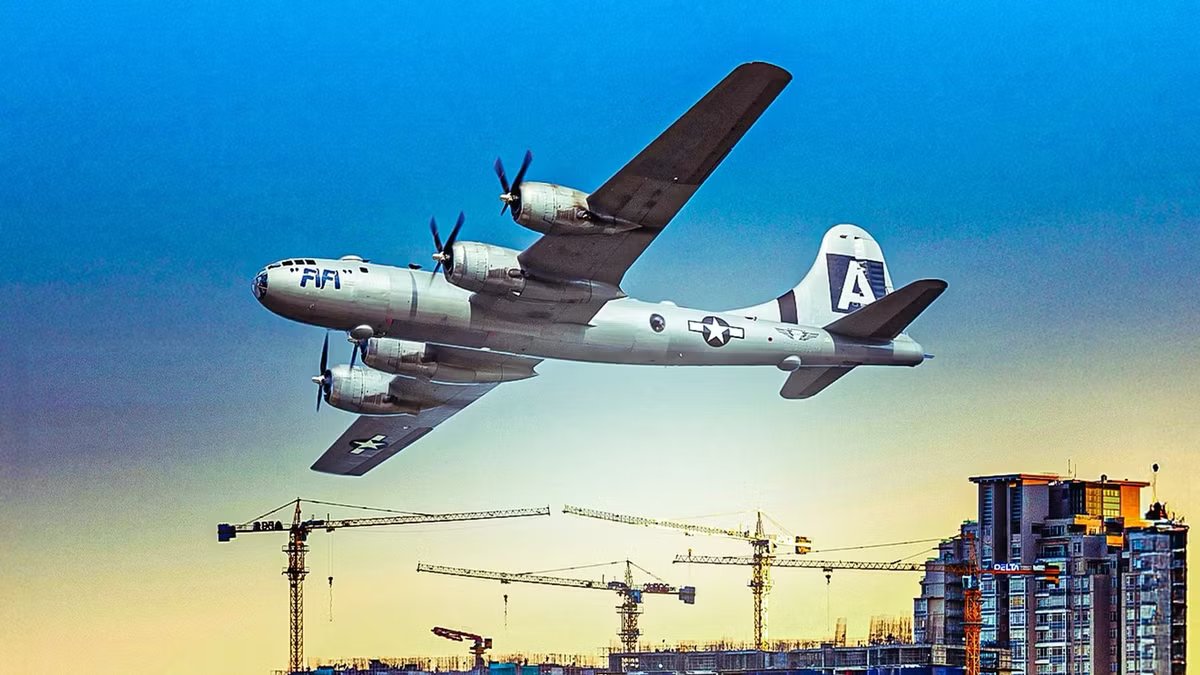
Thousands of former military aircraft survive today, and a meaningful slice of them still fly, from single-seat fighters in private hands to four-engine bombers touring the US under a nonprofit banner. The FAA’s guidance on former military aircraft covers turbine-powered ex -military types over 9,000 pounds (4,082 kg) and more than 3,000 pounds (1,361 kg) of thrust, while most WWII-era piston fighters and bombers instead fly under a Limited or Experimental Exhibition airworthiness certificate, categories built specifically to let surplus military aircraft operate safely in civilian hands for exhibition, education, and airshow work rather than for carrying paying passengers on demand. Aircraft in the Limited category must still conform to a recognized type certificate and pass an FAA safety review before they can fly at all, while types without a civil type certificate, including WWII heavy bombers, are certificated Experimental Exhibition instead.
This list is necessarily a small sample of a very large picture: with everything from primary trainers to jet fighters still airworthy somewhere in the world, any six-aircraft list has to leave out far more than it includes. All six below trace back to the US Army Air Forces, the World War II-era predecessor of today’s Air Force, and all six fly today with the Commemorative Air Force (CAF), a nonprofit whose roster gives a clean cross-section of just how different “still flying” can look. Precise, independently sourced fleet counts are hard to come by for every type, so the survivor numbers below are the best publicly available estimates, drawn from enthusiast registers, museum records, and the CAF itself, rather than an exhaustive worldwide census.
The B-25 Mitchell Still Flies Thanks To Its Simple Design
A rugged bomber with about 40 still flying

North American B-25 Mitchell first flew in August 1940 and went on to fame in April 1942, when 16 B-25Bs led by Lt. Col. Jimmy Doolittle launched from the carrier USS Hornet to bomb Tokyo, a mission no one had thought a land-based medium bomber could fly. Of the nearly 9,900 Mitchells built, Simple Flying reports that around 40 are still believed to be in flying condition today, kept airworthy largely by museums and warbird operators who fund maintenance through public rides.
The surviving Mitchells are more than museum pieces, however. A small number still take to the air at airshows and special events, offering a rare chance to see, and hear, a World War II medium bomber operating much as it once did. Their continued operation is possible thanks to the specialist restoration, maintenance and pilot expertise of the warbird community.
The CAF flies at least two Mitchells, “Yellow Rose” and “Maid in the Shade”, the latter one of only 34 B-25Js still flying. Both aircraft retain the twin Wright R-2600 engines, rated at roughly 1,700 HP (1,268 kW) each, and the twin-tail, tricycle gear layout that made the Mitchell easy to fly hard from rough forward airstrips eighty years ago. Beyond the Doolittle Raid, Mitchells went on to serve as low-level strafers and skip bombers across the Pacific and Mediterranean theaters, praised for absorbing battle damage that would have downed a less rugged design, though as a twin-engine medium bomber, it never carried the strategic weight of the war’s heaviest four-engine types.
The B-24 Liberator Is The Rarest Flying Bomber On This List
Only one Liberator still flies today

Consolidated built more B-24 Liberators than any other American military aircraft of any type, with production commonly put at more than 18,000 examples, according to Airplanes Online, making it the most-produced multi-engine aircraft in aviation history. Yet of roughly 14 complete Liberator airframes that survive today, only one remains airworthy, as previously covered by Simple Flying, a rarity ratio far steeper than almost any other bomber of the war.
That sole flying example is the CAF’s Diamond Lil, restored under the Collings Foundation before passing to the CAF, now touring more than 120 cities a year. Built around a 110-foot (33.5 meters) wingspan and powered by four Pratt & Whitney R-1830 engines, the Liberator’s high-aspect-ratio Davis wing gave it a top speed of 303 miles per hour (488 km/h), faster than the more famous B-17, as documented by The National WWII Museum of New Orleans. Liberators flew in every WWII theater, from anti-submarine patrols over the Atlantic to the costly low-level raids on the Ploesti oil refineries in Romania, and the type’s twin bomb-bay compartments could carry up to 8,000 pounds (3,629 kg) of ordnance, and industrial achievement that arguably outweighs the Mitchell’s but still sits in the shadow of the Flying Fortress in popular memory.
The B-24 was also unusual in how widely its production was distributed. Consolidated could not build Liberators fast enough at its own plants, so Ford’s Willow Run facility near Detroit became the largest single B-24 factory, eventually turning out thousands of aircraft alongside production lines in San Diego, Fort Worth, Tulsa and Dallas. The program was an extraordinary exercise in American mass production: different factories built aircraft to the same basic design, while components and subassemblies flowed through a vast network of suppliers. By the end of the war, the Liberator had become less a single aircraft built by one company than an industrial system spread across the United States.
The transport that helped win the war

The military C-47 Skytrain was a wartime adaptation of the civilian Douglas DC-3 airliner, and together the family became the Allies’ indispensable transport, so vital that General Dwight D. Eisenhower later named it, alongside the Jeep, the bazooka, and the atomic bomb, as one of the tools that won the war, as reported by CBSnews. More than 10,000 C-47s were built for the US military alone, on top of the DC-3s already flying commercially, and the type went on to haul troops, tow gliders, drop paratroopers, and evacuate wounded on every front of the war.
The single most historically significant survivor is maybe That’s All, Brother, the lead aircraft of the main Allied airborne assault on Normandy, which dropped pathfinders ahead of more than 800 other C-47s and over 13,000 paratroopers in the early hours of June 6, 1944. Sold into civilian service after the war, its identify was lost for years, until Air Force historians found it in a Wisconsin boneyard in 2015: the CAF restored it to its exact 1944 D-Day configuration, and, as documented by EAA, it returned to the sky in January 2018, later flying back across the Atlantic to Normandy for the 75th and 80th D-Day anniversaries.
Unlike the other aircraft on this list, the C-47/DC-3 family’s legacy runs well beyond any single airframe: thousands of surplus examples reentered civilian life after 1945 and helped rebuild commercial aviation worldwide, and a number of unmodified DC-3s still fly paying passengerson short regional routes today.
Fewer Than Ten B-17 Flying Fortresses Remain Airworthy Out Of Nearly 12,731 Built
Fewer than ten Fortresses remain airworthy

 Boeing, Douglas and Lockheed built 12,731 B-17 Flying Fortresses, of which roughly 4,375 were lost in combat, yet Simple Flying puts the number still airworthy today at fewer than ten, out of about 45 complete airframes that survive at all. As the backbone of the US Eighth Air Force’s daylight bombing campaign over Germany, the B-17 became the visual symbol of American strategic air power in Europe, bristling with up to 13 .50 caliber machine guns and able to limp home on heavily damaged engines and airframes that would have downed other bombers.
The CAF’s own example, “Sentimental Journey”, is a B-17G built in late 1944, delivered too late for combat, and later flown as an air-sea rescue aircraft and wildland fire bomber before its 1978 donation to the CAF’s Arizona Wing. Restored with the help of the original Boeing engineering drawings, it is powered by four Wright R-1820 Cyclone engines rated at 1,200 HP (895 kW) each, giving it a top speed around 300 miles per hour (483 km/h) as documented by the Hill Aerospace Museum, and it now tours the country as part of the CAF’s Flying Legends of Victory Tour.
That combination of combat importance and survival rarity puts the B-17 firmly in third place. More examples survive than the B-24, but only a handful can still fly, despite the Fortress being one of the most recognizable and historically significant bombers of World War II.
The P-51 Mustang Is The Most Common WWII Fighter Still In The Air
The most numerous WWII fighter still flying

More than 15,000 North American P-51 Mustang were built before production ended in 1946, and the type remained in frontline military service in some air forces into the 1980s. As mentioned by Simple Flying, the enthusiast registry MustangsMustangs tracks 311 complete Mustang airframes today, of which around 150 to 160 remain airworthy, a survival rate that still makes the Mustang the most numerous WWII fighter still in the air. That relative abundance traces back to production scale, and a global network of parts suppliers and Merlin-engine specialists across the US, the UK, and South Africa has kept a meaningful fraction of them flying decades after military retirement.
The CAF’s own example, “Gunfighter”, is a P-51D built at North American’s Inglewood, California plant, and accepted into the US Army Air Forces in March 1945. It carries a Packard-built Rolls-Royce Merlin engine rated at 1,490 HP (1,111 kW), giving it a top speed over 400 miles per hour (644 km/h) and a service ceiling of 41,000 feet (12,497 meters), and it has flown the airshow circuit for more than 35 years. Fitted with drop tanks, P-51 Mustangs could escort B-17s and B-24s deep into German airspace, and their pilots were credited with destroying nearly 5,000 enemy aircraft during the war, more than any other Allied fighter type, finally giving the bombers the sustained daylight air superiority they could not secure on their own.
Only Two B-29 Superfortresses In The World Still Taking Off Under Their Own Power
FIFI and Doc still fly today

Nearly 3,970 Boeing B-29 Superfortress were built, the first American bombers with a pressurized crew cabin, letting an 11-man crew operate above 30,000 feet (9,144 meters) without oxygen masks. Despite that huge production run, only two B-29s remain airworthy anywhere in the world today: the CAF’s “FIFI” and a second example, “Doc,” based in Wichita, Kansas. No other aircraft on this list carries the same historical weight: B-29s “Enola Gay” and “Bockscar” dropped the atomic bombs that ended the war in the Pacific, making the type arguably the single most consequential aircraft of the 20th century.
“FIFI” was built in 1945, served as a postwar testbed, and was rescued from Arizona desert storage by the CAF in the early 1970s before being restored to flying condition. She now headlines the CAF’s AirPower History Tour, giving members of the public one of the only remaining chances anywhere to fly aboard, or simply watch, a Superfortress under its own power.
The B-29’s remote-controlled gun turrets, aimed through an early analog fire-control computer, were another wartime first. Combined with its pressurized crew cabin and other advanced systems, they made the Superfortress far more technologically sophisticated than any other aircraft on this list.
Catch what other trackers miss
Emergency squawks, holds, NOTAMs — live signals, no signup.
Open tracker
Catch what other trackers miss
Emergency squawks, holds, NOTAMs — live signals, no signup.
Open tracker